The Four Great Beauties are four ancient Chinese women renowned for their beauty which they skillfully exercised to influence Chinese history. Although each of the Four Great Beauties frequently appear as the subjects or objects of arts, one seldom learns much of them beyond their names, descriptions of their looks and brief mentions of their skills. This is common in ancient Chinese works related to female performers, or courtesans. In their legends, the Four Great Beauties were, in fact, heavily implied as courtesans themselves. Their legends illustrate applications of the early Chinese education utilized and perfected by the ancient courtesans of China, which was then preserved by Confucius as part of his philosophy.

Dedicated to the women who have graced the pages of history, from ancient to modern times.
Showing posts with label arts and culture. Show all posts
Showing posts with label arts and culture. Show all posts
Monday, June 13, 2016
The Four Great Beauties, and the Arts of the Courtesans in Ancient China
The Four Great Beauties, and the Arts of the Courtesans in Ancient China | Ancient Origins


Tuesday, August 25, 2015
The war-hungry women written out of photographic history
The war-hungry women written out of photographic history
 Lee Miller was famous for her shots of the second world war, but there were many other women in the line of fire whose photographs have faded into obscurity: meet Gerda Taro, Catherine Leroy and Françoise Demulder
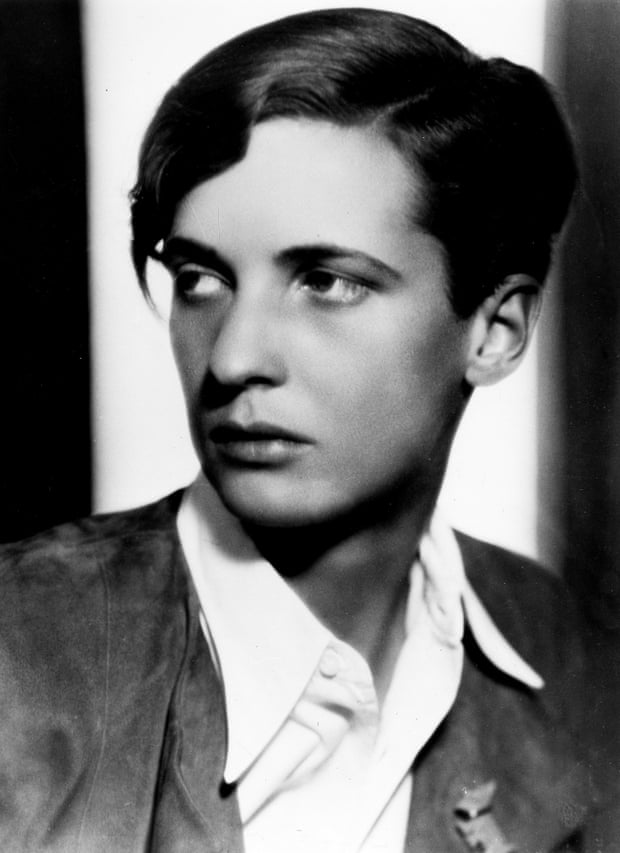 Lee Miller was famous for her shots of the second world war, but there were many other women in the line of fire whose photographs have faded into obscurity: meet Gerda Taro, Catherine Leroy and Françoise Demulder
My new novel has a fictional woman photographer as its protagonist (Amory Clay, 1908-83), one whose working life occupies a large swath of the 20th century and, in the course of my research into the profession, I uncovered what seemed to me like a forgotten sorority of female photographers. In the first half of the last century such photographers were legion – they flourished and happily made their living and reputation alongside their male counterparts, and it was something of a revelation to discover these names and look at the images they made. I say “forgotten”, but no doubt if you’re a curator or a historian of photography or a specialist in the development of the art form then the names of these female photographers will be familiar – but they weren’t to me and, as I looked and read and dug deeper into their world, I became more and more astonished at the work I discovered.
William Boyd’s new novel, Sweet Caress, is published on 27 August.
Tuesday, May 7, 2013
Muse: Monika Pon-su-san

From BBC News:
Earlier this year Vladimir Tretchikoff's portrait Chinese Girl, often referred to as The Green Lady, was sold for almost £1m ($1.5m) at auction in London - a reflection of its status as one of the most popular prints ever made. The model, Monika Pon-su-san, recalls what it was like to be thrust into the limelight.
One day in 1950, a curly-haired stranger walked into my uncle's laundry in Cape Town, where I worked.
He stood there as I served a customer, his eyes fixed on me the whole time. He only spoke when we were alone together in the shop.
"Hello!" he said. "I'm Tretchikoff. I'd love to paint you."
At that time Vladimir Tretchikoff wasn't very famous but by chance I had read about him in a newspaper just the Saturday before.
So I was a bit nervous, but I said yes. He picked me up after work and took me back home.
Thursday, March 8, 2012
Events Celebrating Women
China: Bald Girls, a feminist art show in the 798 arts district of Beijing opened on Saturday at the Iberia Center for Contemporary Art. The exhibition, which features paintings, installations, sculptures and photographs, runs through April 3. See further details in this article from the New York Times.
England: The London Metropolitan Archives is hosting a day of talks and presentations which explores the lives of women as reflected in historical records and literature. This event marks International Women's Day and the 200th anniversary of Dickens. See BBC article for further details.
USA: At the next meeting of the Five Cities AAUW chapter on March 19 at the Arroyo Grande Women’s Center on Vernon Street, Cohon, McCall and Slater will present their portrayals of historic women. For more details view this article from the San Luis Obispo Tribune.
Saturday, November 19, 2011
The Woman Formerly Known As Margaret Tudor
From The Guardian:
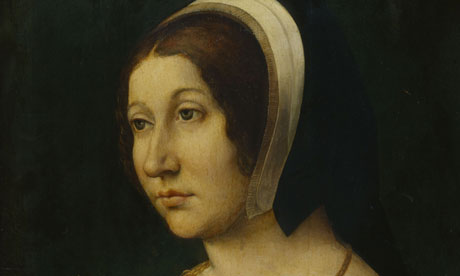
Owned by the Revd WH Wayne from at least 1886; sold by Wayne to A Smith of Albert Gate Art Galleries, from whom it was purchased by the National Portrait Gallery. Purchased 1898 (NPG 1173).
The National Portrait Gallery acquired this portrait as Margaret Tudor, sister of Henry VIII and wife of James IV of Scotland. However, both the style and the lack of any securely identified portraits of Margaret Tudor make this identification unlikely. The painterly technique suggests a French or possibly Flemish origin. The woman's costume is also in the style of French court dress of the early 16th century. Her gold jewellery and the stylised pomegranate and leaf pattern, commonly reproduced on expensive silks of the period, hint at her noble status. Recent microscopic examination of her medallion has revealed a horseman hunting with a falcon. Falconry and courtly love were frequently linked in medieval literature, so it is possible that this woman is wearing a love token.
Tuesday, November 8, 2011
Women in Roman Mosaics
From the Science Codex:
Numerous images of women appear in Roman mosaics. The majority are inspired in mythology – goddess, heroines and other protagonists of countless legends – although other flesh and blood women, probably dominae, their daughters, handmaidens and servants, are also documented. "The most significant aspect of these images is the different roles they reflect and their contribution to the construction of certain stereotypes, not just in the Roman world, but also throughout history and up to the present", points out Luz Neira, Associate Professor of Ancient History in the Department of Humanities: History, Geography and Art, and a researcher at UC3M's Institute of Culture and Technology.
Friday, August 5, 2011
Lifting The Veil of the Forbidden City
From Xinhuanet:

Beijing's Palace Museum, also known as the Forbidden City, is steeped in history, dreams and tears, which are perfectly reflected in Ah! The Forbidden City.
Li Shaobai's photos and Jiang Guofang's paintings, in the book published in English by the Foreign Languages Press, are both easy on the eye and provide food for though
Painter Jiang, meanwhile, tries to revive the lives of the former inhabitants of the Forbidden City on canvas, getting into the minds of these historical figures.
Jiang also has an eye for pretty palace women, including the empress, concubines and princesses. Although they dressed in gorgeous clothes and ate delicious food, they were spiritually bereft. With so many women serving one man, few of them had the chance to be with the emperor. Their rooms were often empty and perhaps the high walls and deep courtyards were like gilded cages to them.
Thursday, June 16, 2011
Lady Anne Clifford
Lady Anne Clifford was a patron of the arts who should have inherited an estate including five great castles across the north of England after the deaths of her two brothers and father.
But her father - George Gifford, the third Earl of Cumberland, who had risen to prominence as an admiral in Queen Elizabeth's navy and was noted for his skill in jousting - had quietly promised his estate to his brother.Instead of her vast estate, the 15-year-old Lady Clifford was left £15,000 in compensation but this did not satisfy her and she set to reclaim her inheritance which Edward II granted the family and decreed should pass to the eldest heir, whether male or female.The struggle was to last most of her life and, eventually, in 1643, aged 54, she regained the lands and moved back to her estate, including the castles of Skipton, Brougham, Brough, Pendragon and Appleby.Lady Clifford dedicated herself to restoring the mostly ruined buildings to their former glory, restored several churches in the ancient county of Westmorland and built almshouses for the poor.
Further Links:

Tuesday, April 12, 2011
Digging Up The Mona Lisa
Italian researchers are planning to dig up bones in a Florence convent to try to identify the remains of a Renaissance woman believed to be the model for the Mona Lisa. If successful, the research might help ascertain the identity of the woman depicted in Leonardo da Vinci's masterpiece – a mystery that has puzzled scholars and art lovers for centuries and generated countless theories.
The project aims to locate the remains of Lisa Gherardini, the wife of a rich silk merchant named Francesco del Giocondo. Tradition has long linked Gherardini to the painting, which is known in Italian as La Gioconda and in French as La Joconde. Giorgio Vasari, a 16th-century artist and biographer, wrote that Leonardo painted a portrait of del Giocondo's wife.
Fake Amarna Princess On Show
A fake ancient Egyptian statue has returned to the museum in Greater Manchester which was tricked into paying £440,000 for it.
Bolton Council bought the Amarna Princess in 2003 after Christie's and the British Museum authenticated the figurine as 3,300 years old.
But the statue of the granddaughter of King Tutankhamun was created by Shaun Greenhalgh in his shed in Bolton.
It, and other fakes, will go on display at Bolton Museum from 16 April.
See post from 16th November 2010 - Fake Amarna Princess
Thursday, January 13, 2011
Tower of London Mural
The Tower of London has allowed scientists to use eye-scanning software and infrared laser technology on a mystery Medieval wall painting which has baffled curators at the royal landmark.
A team led by Nottingham Trent University’s Dr Haida Liang used a portable Optical Coherence Tomographer, which allows them to see layers beneath the surface of paintings, and multispectral scanning – known as PRISMS – to investigate areas of the 14th century Byward Tower wall painting.

Tuesday, December 28, 2010
Secret Lives of the Great Artists' Lovers
For as long as man has painted, he (and it usually is a he) has painted his lovers. Look at any of the great works of Western art and, chances are, you will find a mistress, girlfriend, wife or prostitute centre stage.
They may not announce themselves as such, going under the discreet title of Woman Sewing, Girls Bathing or simply Repose. But they’re there all right, these soul mates and play mates, lighting up the canvas with a particular kind of intimacy.
As all these examples suggest, a cloud of suspicion hung over male artists and their choice of female subjects. Painting a wife or sister might seem the obvious way of sidestepping adverse comment, but the problem was that at that time the act of putting a respectable woman on view tarnished her reputation. So there was no choice but to go looking for women who had nothing to lose and perhaps something to gain – the affection of an interesting man, the warmth of the studio, a meal – by becoming public property.
Tuesday, December 14, 2010
New Mona Lisa Theory
An Italian researcher has sparked new controversy over the world's most famous painting by claiming Leonardo da Vinci painted tiny letters into the eyes of the Mona Lisa which may finally reveal the disputed identity of his model.
To arrive at a theory worthy of The Da Vinci Code, Dan Brown's 2003 bestseller, researcher Silvano Vinceti avoided the Mona Lisa's enigmatic smile and instead gazed deep into her eyes with the help of high-resolution images.
"Invisible to the naked eye and painted in black on green-brown are the letters LV in her right pupil, obviously Leonardo's initials, but it is what is in her left pupil that is far more interesting," said Vinceti, the chairman of the Italian national committee for cultural heritage.
Vinceti said that the letters B or S, or possibly the initials CE, were discernible, a vital clue to identifying the model who sat for the Renaissance artist. She has often been named as Lisa Gherardini, the wife of a Florentine merchant, but Vinceti disagreed, claiming Leonardo painted the Mona Lisa in Milan. He said he would announce his conclusions next month.
Tuesday, November 16, 2010
Fake Amarna Princess
A fake ancient Egyptian statue will return to a museum in Greater Manchester which displayed it believing it was genuine.
Bolton Museum bought the Amarna Princess for £440,000 in 2003 after the British Museum authenticated it.
Forger Shaun Greenhalgh made the statue in a shed in the back garden of his Bolton home. He was jailed in 2007 for conning museums and art houses.
The statue will return to the museum in April as part of a collection of fakes.
Sunday, September 12, 2010
Mona Lisa's Childhood Home Found
The woman behind one of the world's most famous paintings was born in a humble house in Florence, according to new documents. Rossella Lorenzi gets the story and you can view the video here at Discovery News.
Saturday, January 9, 2010
Dubai: FREEJ
From the Daily Star:
Rampant development, modern etiquette and the erosion of traditional values have so enraged four Dubai grannies that they plan to conquer the world. Um Saeed, Um Saloom, Um Allawi and Um Khammas, the veiled, sassy grandmothers from the hit cartoon TV series “Freej” have won the hearts of viewers across the Gulf as they dole out advice, insults and do battle with the encroaching modern world.
Now the creator of the Gulf Arab region’s first animated TV series is in talks with international companies to take Freej global and work on new animation projects for children.
Exhibition: The Eglinton Tournament
From BBC News:
A set of paintings depicting a 19th Century jousting tournament in Ayrshire are to go on display in the area. East Ayrshire Council has successfully raised £85,100 to buy the Eglinton watercolours by James Henry Nixon.
The works depict scenes from a Medieval re-enactment tournament staged by the 13th Earl of Eglinton in 1839. Historic shields, which furnished the knights' tents, were also bought for £7,000. The works will go on display at Dean Castle, Kilmarnock, next year.
The Eglinton Tournament, which took place over three days in August 1839, highlighted the 19th Century fascination with all things Medieval. Privately funded by Lord Eglinton at a cost of £40,000 and held in front of the castle on his Ayrshire estate, the spectacle included a procession, jousting by tilt and mêlée, a banquet and a ball.
Sunday, January 3, 2010
Helen Lewis
A Belfast-based choreographer who survived the Auschwitz concentration camp has died aged 93.Helen Lewis, who had a long association with the Lyric Theatre, settled in Northern Ireland after WWII.Born in Czechoslovakia, she trained as a dancer and having made a new life in Belfast became involved in dance teaching and choreography.In 1992 she published a widely acclaimed autobiography A Time To Speak which recounted her time in the camp.
Saturday, August 29, 2009
Women & History
For the Bookworms:
- Divas on Screen: Black Women in American Film by Mia Mask (article @ Vassar Info News)
- Wandering Women and Holy Matrons: Women as Pilgrims in the Later Middle Ages by Leigh Ann Craig
- The Bayeux Tapestry: New Interpretations edited by Dan Terkla, Martin Foys and Karen Eileen Overbey (post @ Medieval News)
- Women, Armies & Warfare in Early Modern Europe by John A Lynn II
- The Marvelous Hairy Girls: The Gonzales Sisters and Their Worlds by Merry Wiesner-Hanks
Blogs of interest
- Women in the Bible - a beautiful blog of biblical art
Sunday, August 9, 2009
Twisted History
Excellent article from Anne-Elisabeth Moutet @ the Telegraph:
According to a new study, Hollywood films that take liberties with the past damage people's knowledge of history – even when they once knew the correct facts. But while this is likely true, it's nothing new. Writers from Shakespeare to Walter Scott have fired our imaginations with gross but entertaining fallacies: Cleopatra, Richard the Lionheart and Richard III have never recovered from the extreme makeovers they received according to Elizabethan or Victorian tastes.
Alexandre Dumas rewrote the Counter-Reformation in France; Schiller created folk heroes from scratch (a revisionism abetted and amplified by the Italian librettists employed by Donizetti, Bellini or Verdi).
Dickens's image of the French Revolution was 100 times more powerful than Carlyle's, imprinting the English mind with a deep distrust of liberté, egalité et fraternité. And the best historians were unable to salvage the Emperor Nero's reputation after the hatchet-job in Henryk Sienkiewicz's best-seller, Quo Vadis.
On screen, too, for every painstakingly accurate – yes, superbly entertaining – I, Claudius, there are a dozen Troys, Gladiators and Romes. And yet even if they scramble the viewer's knowledge, these works still send people in droves to classical history courses, and fire up lasting enthusiasms. Old Carlyle can't have recruited a tenth of the amount.
Subscribe to:
Posts (Atom)