Showing posts with label biblical women. Show all posts

Sunday, November 5, 2017

Searching for Truth in Bones: The Mysterious Relics of Mary Magdalene


Mary Magdalene is one of the most fascinating people from the times of Jesus. Although every year there are more and more people who follow her as if she were a super-heroine, her story has been misunderstood for centuries. But modern discoveries about her are helping to put her back in the right place in history. Her relics are located in different parts of the world and are a link between this mysterious woman and her modern followers.
The role Mary Magdalene played in Jesus’ life is still uncertain, however, it seems that she was an important companion. We don't know too many things about her life, but even the bible confirms the strong bond between Mary and Jesus - much stronger than between his other students. It is well depicted in the scene when Mary Magdalene recognizes him after the resurrection, according to John (20:17): ''Jesus said to her, “Do not cling to me, for I have not yet ascended to the Father; but go to my brothers and say to them, ‘I am ascending to my Father and your Father, to my God and your God.’”

read more here @ Ancient Origins

Friday, June 16, 2017

Gospel of Jesus's Wife Likely a Fake

A papyrus holding text that suggests Jesus Christ was married and whose authenticity has been a matter of intense debate since it was unveiled in 2012 is almost certainly a fake.


Karen King, the Harvard professor who discovered the Gospel of Jesus's Wife and has defended its authenticity, has now conceded that the papyrus is likely a forgery and that its owner lied to her about the provenance and his own background.

The concession comes after Walter Fritz, a resident of North Port, Florida, revealed that he is the owner of the papyrus that claims Jesus had a wife. Fritz said this to Ariel Sabar, a journalist for The Atlantic who wrote an exposé published June 15.


read more here @ Live Science (17th June 2016) and Live Science (3rd February 2015)
and @ Women of History (13th July 2014) and Women of History (25th August 2015)


Sunday, May 21, 2017

The Truth Behind the Story of Dinah and the Red Tent

Biblical historian Ralph Ellis readily admits the Bible is not short of tales of violence, epic blood-shed and revenge. 


Hidden away in Chapter 34 of the book of Genesis, the first book of the Old Testament, is the story of Dinah.

One of the shortest yet most dramatic Old Testament tales, the story is one of rape, murder and pillage, with family feuds and bloody acts of revenge thrown in.

And now it is about to hit our screens in a new mini-series with steamy sex scenes, gory murders and even baby-snatching.

"The reality is very different, It is good that people get to hear the story of Dinah, because it actually makes the historical accounts that we find in the Bible more real."

read more here @ Wales Online and @ Christianity Today


Sunday, May 14, 2017

Lifting the Veil on Queen of Sheba's Perfume

From Popular Archaeology in October 2016:
It is mentioned more than twenty times in the Bible, where it is one of the gifts offered by the Three Wise Men. Frankincense (also called olibanum), one of the world's oldest fragrances, is a gum resin that exudes from the bark of Boswellia trees, which grow in countries bordering the Red Sea and the Gulf of Aden. It has been used for more than 6,000 years by every civilization, from Mesopotamia to the present. Regularly burned during religious ceremonies, it contributes to the very particular smell of churches. Despite its long history and the large amount of research dedicated to it, the exact nature of the molecules that give frankincense its distinctive fragrance surprisingly remained unknown.

read entire article here @ Popular Archaeology

Sunday, July 13, 2014

Gospel of Jesus' Wife

In September 2012, Harvard’s Hollis Chair of Divinity Karen L. King announced the discovery of a Coptic papyrus fragment that includes the text “Jesus said to them, ‘My wife …’” After an extended silence while the papyrus was subjected to extensive scientific tests, Harvard’s Divinity School announced that “testing indicates ‘Gospel of Jesus’s Wife’ papyrus fragment to be ancient,” following the April 2014 issue of Harvard Theological Review’s (HTR) publication of carbon-14, paleographical, spectroscopy and other scientific analyses. Harvard Divinity School’s website includes updated images, Q & A and other resources on the papyrus.

However, the subject is still open for debate. In the second postscript to his forward in the same issue of HTR, Brown University’s Leo Depuydt writes, “All this still leaves me personally 100% convinced that the Wife of Jesus Fragment is a forgery.”

Just when the debate regarding the authenticity of the “Gospel of Jesus’ Wife” reached a fevered pitch, it was silenced. The Harvard Theological Review pulled King’s article, and Smithsonian suspended the airing of a documentary about the papyrus. HTR announced that the fragment would undergo testing, though the lack of specific information frustrated interested scholars and journalists (see: Bible History Daily: Is the Harvard Theological Review a Coward).

The “Gospel of Jesus’ Wife” is back in the April 2014 issue of Harvard Theological Review. HTR gives the papyrus fragment considerable treatment beyond Karen L. King’s critical presentation of the papyrus; the issue includes a paleographic analysis by Malcolm Choat, a chemical ink analysis by James T. Yardley and Alexis Hagadorn, microspectroscopy results by Joseph M. Azzarelli, John B. Goods and Timothy M. Swager, spectrometry radiocarbon analyses by Gregory Hodgins andNoreen Tuross, a condemnation as a forgery by Leo Depuydt, and, finally, a response by Karen L. King.


See Also:
Harvard Divinity School: The Gospel of Jesus' Wife

Queen Helena of Adiabene


Queen Helena of Adiabene lived in the first century C.E. in the semi-autonomous kingdom of Adiabene in the upper Tigris region of Assyria. She famously converted to Judaism and spent many years in Jerusalem—where her generosity and piety earned her a lasting legacy.

In “Queen Helena’s Jerusalem Palace—In a Parking Lot?” in the May/June 2014 issue of BAR, R. Steven Notley and Jeffrey P. García explore Queen Helena’s Jerusalem tomb and the recently excavated Jerusalem palace that might belong to her.

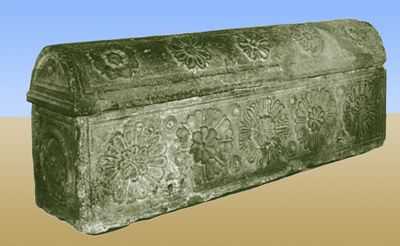
Louis Félicien de Saulcy excavated the Tomb of the Kings—really the tomb of Queen Helena of Adiabene—in Jerusalem in 1863. He discovered five sarcophagi in the tomb, as well as a broken sarcophagus lid. 

Essentially, the only line of argument for the identification of the sarcophagus with Helena is (a) Queen Helena of Adiabene was buried in one of the chambers in the tomb, and (b) the woman buried in the inscribed sarcophagus is called “queen.”


Who Was Queen Helena?
Helena of Adiabene was queen of Adiabene (a Persian province on the northern Tigris and vassal kingdom of the Partihian Empire) and sister-wife of Monobaz Bazaeus I (source: Josephus . Jewish Antiquities xx. 4, § 3;). With her husband she was the mother of Izates II and Monobaz II. She was possibly Zoroastrian prior to her conversion to Judaism c.30CE.


Helene played an important role in the succession of her son, summoning the nobles of the kingdom and informing them that it had been her husband’s wish to nominate Izates king. Declining their advice to put Izates’s brothers to death in order to avoid plots against him, she instead placed her elder son, Monobazus, as guardian of the country until the return of the heir. Josephus lauds her for all these sage decisions.  On Izates’s death in 55CE, she returned to Adiabene to see her elder son Monobazus crowned king. 

The Talmud speaks of important presents which the queen gave to the Temple at Jerusalem which included a golden candlestick (sometimes called a lantern) and golden plate (also referred to as a plaque); she was also generous with gifts to aid the famine stricken city of Jerusalem in 46–4CE.

She died shortly after the coronation of Monobazus c.56CE, having moved to Jerusalem. The bodies of both Helene and Izates were then buried in the royal sepulchre (pyramidal tomb) she had built while in the city.  These tombs are now said to be located in the catacombs known as the "Tomb of the Kings", said discovered in the 19th century by Louis Felicien de Saulcy.


See Also:
Haaretz: A Royal Return
Chabad dot org: Queen Helena


Sunday, November 24, 2013

Awan - The Wife of Cain

From Biblical Archaeology:
While there are many examples of strong and inspiring men and women in Genesis, the book is also packed with stories of dysfunctional families, which is evidenced from the very beginning with the first family—Adam, Eve and their two children, Cain and Abel. In no short amount of time—just 16 verses after announcing the birth of Cain and Abel in Genesis 4—Cain has murdered his younger brother and is consequently exiled from the land.
Given that the wife of Cain is only mentioned once in the Old Testament, she would not be counted among the famous women in Genesis. Nevertheless, her identity is still worth investigating. Who did Cain marry? Mary Joan Winn Leith first explores the traditional Jewish and Christian answers that contend that the wife of Cain was another daughter of Adam and Eve. According to this reasoning, Cain would have married his sister—one of Abel’s twin sisters no less, according to the Genesis Rabbah.

Wikipedia goes further and names the sister:
The Targumim, rabbinic sources, and later speculations supplemented background details for the daughters of Adam and Eve. Such exegesis of Genesis 4 introduced Cain's wife as being his sister, a concept that has been accepted for at least 1800 years. This can be seen with Jubilees 4 which narrates that Cain settled down and married his sister Awan, who bore his first son, the first Enoch, approximately 196 years after the creation of Adam. Cain then establishes the first city, naming it after his son, builds a house, and lives there until it collapses on him, killing him in the same year that Adam dies.

From The Book of Jubilees, Chapter 4 at Sacred Texts:
And Cain took ’Âwân his sister to be his wife and she bare him Enoch at the close of the fourth jubilee. And in the first year of the first week of the fifth jubilee, houses were built on the earth, and Cain built a city, and called its name after the name of his son Enoch.

An interesting love triangle theory from Diabolical Confusions:
According to some Hebrew and Islamic scholars, the reason Cain’s heart was not righteous was because of a woman: their sister, Awan. It is believed that Awan was intended for Abel, but Cain fell in love with her. This can be seen in the Book of Jubilees. Adam & Eve had nine (9) children. And this is where the story takes an interesting turn. Genesis, by the way, has no problems with incest, specifically brothers an sisters marrying. That is because there is no other option at this point. So, from this point of view, God has favored Abel in both marriage AND sacrifice.

From Folklore & Mythology Electronic Texts: various versions of the story of Cain & Abel


Tuesday, October 8, 2013

Rahab the Harlot


In the Book of Joshua, Rahab (a heroine nonetheless known as “Rahab the Harlot”) assisted two Israelite spies in escaping out a window and down the city wall of Jericho. Who was Rahab in the Bible? A Biblical prostitute or just an innkeeper? Did she live on the wall of Jericho or within it, in what is known to archaeologists as a casemate wall? Anthony J. Frendo addresses these questions about the life of Rahab in the Bible in the September/October issue of Biblical Archaeology Review. Whether or not she was a Biblical prostitute, archaeology may at least be able to answer whether Rahab lived on or in the casemate wall of Jericho.

More on Rahab:
Rahab the Prostitute from about.com
Profiles of Faith: Rahab - From Harlot to Heroine from the Good News
Who Was Rahab The Harlot? from Share Faith
Rahab from Women of the Bible
Rahab from Jewish Virtual Library


Thursday, March 1, 2012

Queen of Sheba


The legend of the Queen of Sheba came face-to-face with reality this week after an archeologist uncovered vast amounts of gold and temple ruins in the Queen’s former domain.


Almost 3,000 years since the Queen is said to have ruled, archeologist Louise Scholfield told media she found an enormous ancient gold mine in the land that once was Sheba, now moden-day Ethiopia and Yemen, The Guardian reported.

Heading the excavation in northern Ethiopia, Ms Schofield said she knew she had struck lucky when she found a 20ft stone stele with a sun and crescent moon, the “calling card of the land of Sheba”.

Friday, September 2, 2011

Mistresses Who Changed History

From Slate:
Before Monica Lewinsky, Camilla Parker Bowles, or Marilyn Monroe, there was Hagar—the world's first known mistress.

Several millenniums later, the mistress remains a tenuous position, as historian Elizabeth Abbott explores in her new book, Mistresses: A History of the Other Woman, out this week. Since Hagar's era, however, a handful of women have learned to parlay their scandalous relationships into positions of power—and some have changed history in doing so.

The accompanying gallery illuminates the lives of 10 women who used their time wisely. Each won a place in the history books because of their male attachments. But without their own formidable talents and intellects, most would not have been so admired by their lovers in the first place. Beauty, for these seductresses, was only the beginning.
See also: "Why mistresses have everything to do with marriage" from Huffington Post.

Sunday, July 3, 2011

Ancient Ossuary of Miriam

Three years ago the Israel Antiquities Authority Unit for the Prevention of Antiquities Robbery acquired a decorated ossuary bearing an engraved inscription. The ossuary was discovered by antiquities robbers who plundered an ancient Jewish tomb of the Second Temple period. During the course of the investigation it was determined that the ossuary came from a burial cave in the area of the Valley of ’Elah, in the Judean Shephelah.

Israel from the late first century BCE until the beginning of the second century CE. The front of the ossuary that was found is decorated with a stylized floral motif above which is a long Aramaic inscription engraved in Jewish script:

‘Miriam Daughter of Yeshua Son of Caiaphas, Priests [of] Ma'aziah from Beth ’Imri’
(or, an alternative reading: ‘Miriam Daughter of Yeshua Son of Caiaphas, Priest of Ma'aziah from Beth ’Imri’)


And from the Telegraph:
The ossuary bears an inscription with the name "Miriam daughter of Yeshua son of Caiaphas, priest of Maaziah from Beth Imri."

An ossuary is a stone chest used to store bones. Caiaphas was a temple priest and an adversary of Jesus who played a key role in his crucifixion.

The Israel Antiquities Authority says the ossuary was seized from tomb robbers three years ago and has since been undergoing analysis. Forgery is common in the world of biblical artefacts.

The IAA says in Wednesday's statement that microscopic tests have confirmed the inscription is "genuine and ancient."

Tuesday, January 25, 2011

TONIGHT: Mary: From Jewish Maiden to Global Mother

Tonight at 7:00 p.m. in the Flagler College Auditorium located at 14 Granada Street, Historic City News readers are invited to attend a presentation from guest speaker Miri Rubin; medieval and early modern history professor at Queen Mary University of London.

Rubin’s topic will be “Mary: From Jewish Maiden to Global Mother” and is part of Flagler College’s Cecile & Gene Usdin Judeo-Christian Lecture series.

Saturday, January 1, 2011

Virgin Mary According to the Qu'ran

One of the most intriguing and touching stories of the Qur'an, the holy book of Islam, is the story of the Virgin Mary, mother of Jesus. Mary is a highly revered figure in the Qur'an, not just because she was the mother of Jesus, but also on her own right as a woman of great devotion.

She is auspiciously referred to as chosen, purified and truthful. Mary is depicted in terms that transcend the confines of natural law and as a manifestation of God's blissful grace. Her story is vividly told in two chapters of the Qur'an; first chapter named after her family (Family of Imran) and the second named after Mary herself.

Sunday, December 19, 2010

St Ismeria - More on the Legend

The story of Ismeria was discovered by Catherine Lawless, a history lecturer at Ireland's University of Limerick, in two manuscripts from 14th- and 15th-century Florence, Italy. But while it's tempting to believe that these recently unearthed papers shed new light on the Virgin Mary's family, Lawless told AOL News that, just like "The Da Vinci Code," the tale is almost certainly a work of fiction.

There is no biblical-era evidence to support the manuscripts' assertion that Ismeria was the mother of St. Anne, who later gave birth to Mary. (Other medieval sources suggest Ismeria may have been Anne's sister). Instead, Lawless suspects that the story may have been created by a religious order as a "morality tale" intended to teach Florentine women how to be good wives, and later, widows.

Saturday, December 11, 2010

St. Ismeria - Greatgrandmother of Jesus

From Sify News:

A historian has identified the great-grandmother of Jesus.

According to Florentine medieval manuscripts analyzed by a historian, the great-grandmother of Jesus was a woman named St. Ismeria.

St. Ismeria likely served as a role model for older women during the 14th and 15th centuries.

The legend of St. Ismeria sheds light on both the Biblical Virgin Mary's family and also on religious and cultural values of 14th-century Florence.

Lawless studied the St. Ismeria story, which she said has been "ignored by scholars," in two manuscripts: the 14th century "MS Panciatichiano 40" of Florence's National Central Library and the 15th century "MS 1052" of the Riccardiana Library, also in Florence.

"According to the legend, Ismeria is the daughter of Nabon of the people of Judea, and of the tribe of King David," wrote Lawless.

She married "Santo Liseo," who is described as "a patriarch of the people of God." The legend continues that the couple had a daughter named Anne who married Joachim. After 12 years, Liseo died. Relatives then left Ismeria penniless.


Tuesday, September 21, 2010

Ruth

The Story of Ruth is set in the time of Judges (Reference: Ruth 1-4).

Elimelech, a native of Bethlehem, migrated to Moab at a time of famine. He was accompanied by his wife, Naomi, and his two sons, both of whom married Moabite women.

Elimelech and his two sons died in Moab. Naomi decided to return to her own people in Bethlehem. Ruth, her Moabite daughter-in-law insisted on going with her.

On their return, the two women found themselves living in poverty; and Ruth, as a foreigner, had additional pressures to cope with (See Note).

In due course, Ruth met Boaz. Not only was Boaz a rich and generous farmer living in Bethlehem, he was a distant relative of her husband's family. Moved by her loyalty to Naomi, Boaz fulfilled his family duty and married Ruth, even though Ruth was not an Israelite.

Ultimately, Ruth became the great-grandmother of King David.

Note:
At the time that the story of Ruth was written, ethnic purity was being enforced among the returning exiles. Many existing mixed marriages between Jews and non-Jews were being deliberately broken up, and there was increasing hostility against people of all other races.

Wednesday, August 25, 2010

Digging Up Women

Stories of men abound in the Bible, laying bare for us what men did and calling for our applause at their heroism. Archaeology at Bethsaida too tells us that they built walls and roads, fought wars against the Assyrians and maybe even the Romans, went fishing, congregated at the city gates to conduct business and religious rites, and drank beer and wine. But the Bible tells us little about the contribution of women. It touches lightly on the patriarch’s wives and a few others of exceptional strength and ingenuity: Hanna, Deborah, Miriam, Esther, Abigail, Hulda, Judith. We are conscious when we read of these women; they were operating outside their usual domain, albeit they were using the skills learned at the hearth.

Friday, November 27, 2009

Review: The Making of Mary Magdalen

From the Blog - Theophilogue comes this review of "The Making of Mary Magdalen in Medieval Legends" by Katherine L. Jansen:

The following is a book review of Katherine L. Jansen’s renown scholarly contribution to medieval studies that focuses on how so many legends developed during the Medieval period about Mary Magdalen to the point that she became second only to Mary (the mother of Jesus) in veneration. She doesn’t just tell us how these stories developed, but what they say about medieval notions of godliness/sanctity/piety. She shows how the supply and demand principle can also be applied to preaching during the medieval period (and probably to preaching in every age). That is, she shows how Mary Magdalen was shaped into all sorts of colorful legendary images to fit the needs of the day as perceived by the preachers of the day. The friars couldn’t help but let their imaginations run wild with the Magdalen stories in order to use her as the “model” alternative to whatever they perceived as the corruption of society. The legends developed because they were practical for preaching.

Saturday, August 29, 2009

Women & History

For the Bookworms:
  • Divas on Screen: Black Women in American Film by Mia Mask (article @ Vassar Info News)
  • Wandering Women and Holy Matrons: Women as Pilgrims in the Later Middle Ages by Leigh Ann Craig
  • The Bayeux Tapestry: New Interpretations edited by Dan Terkla, Martin Foys and Karen Eileen Overbey (post @ Medieval News)
  • Women, Armies & Warfare in Early Modern Europe by John A Lynn II
  • The Marvelous Hairy Girls: The Gonzales Sisters and Their Worlds by Merry Wiesner-Hanks

Blogs of interest

Saturday, April 11, 2009

Mistress of the Lionesses

From Physorg.com:
"Tel Aviv University archaeologists Prof. Shlomo Bunimovitz and Dr. Zvi Lederman of the Department of Archaeology and Ancient Near Eastern Civilizations have uncovered an unusual ceramic plaque of a goddess in female dress, suggesting that a mighty female "king" may have ruled the city. If true, they say, the plaque would depict the only known female ruler of the region.

The plaque itself depicts a figure dressed as royal male figures and deities once appeared in Egyptian and Canaanite art. The figure's hairstyle, though, is womanly and its bent arms are holding lotus flowers - attributes given to women. This plaque, art historians suggest, may be an artistic representation of the "Mistress of the Lionesses," a female Canaanite ruler who was known to have sent distress letters to the Pharaoh in Egypt reporting unrest and destruction in her kingdom.

Around 1350 BCE, there was unrest in the region. Canaanite kings conveyed their fears via clay tablet letters to the Pharaoh in Egypt, requesting military help. But among all the correspondence by kings were two rare letters that stuck out among the 382 el Amarna tablets uncovered a few decades ago by Egyptian farmers. The two letters came from a "Mistress of the Lionesses" in Canaan. She wrote that bands of rough people and rebels had entered the region, and that her city might not be safe. Because the el-Amarna tablets were found in Egypt rather than Canaan, historians have tried to trace the origin of the tablets."