Showing posts with label medieval women. Show all posts

Tuesday, September 7, 2021

Ludmila, the first Czech saint, grandmother of Wenceslas, martyred 1100 years ago

Saint Ludmila, the first historically documented Duchess of Bohemia, was martyred 1100 years ago this September – strangled by assassins sent by her own daughter in law. Best known today as the grandmother and educator of the Czech patron saint “good King Wenceslas”, Saint Ludmila was among the few women in history to de facto rule over Bohemia.

Princess Ludmila, as she is also known, was the wife of Bořivoj, founder of the Přemyslid dynasty. Sometime in the late 9th century, he converted to Christianity during a visit to the court of Great Moravia, and was allegedly baptised by none other than Saint Methodius, the Byzantine missionary known along with his brother Cyril as the “Apostles of the Slavs”.

Little is known for certain about Ludmila’s life before the death of her husband, other than that she was the daughter of a Sorbian prince, likely born in Mělník, central Bohemia, married Bořivoj in her teens, and had as many as six children with him.

But, says Dr Jakub Izdný of the Institute of Czech History at Charles University, author of a new book on Ludmila published ahead of the 1100-year anniversary of her death, she is the first historically known Czech woman, and quite likely the first woman to rule Bohemia.

read more here @ Radio Prague International

Saturday, December 12, 2020

Abortion and Contraception in the Middle Ages

Today, conversations around abortion in modern Christianity tend to take as a given the longstanding moral, religious and legal prohibition of the practice. Stereotypes of medical knowledge in the ancient and medieval worlds sustain the misguided notion that abortive and contraceptive pharmaceuticals and surgeries could not have existed in the pre-modern past.

This could not be further from the truth.

While official legal and religious opinions condemned the practice, often citing the health of women, a wealth of medical treatises produced by and for wealthy Christian women across the Middle Ages betray a radically different history—one in which women had a host of pharmaceutical contraceptives, various practices for inducing miscarriages, and surgical procedures for the termination of pregnancies. When it came to saving a woman’s life, Christian physicians unhesitatingly recommended these procedures.


read more here @ Scientific American


Saturday, May 26, 2018

Be Celebrating the Treatment of Women in Anglo-Saxon England

Article from author Lynda Telford @ History News Network:
What was the way of life for most ordinary women during the early Middle Ages in England? The answer is surprising. In Anglo-Saxon England – before the Norman Conquest in 1066 – men and women enjoyed relatively equal rights and social, cultural and religious conditions. Compare that situation with the changes brought by the Norman Conquest – a woman became a possession.   Over eight hundred years of hard struggle for women’s basic rights – and to get back the legal safeguards that Anglo-Saxon women took for granted!

Sunday, November 5, 2017

The witch trial that made legal history

Article in BBC News about the Pendle witch trials:

In recent years children as young as three have given evidence in court cases, but in the past children under 14 were seen as unreliable witnesses. A notorious 17th Century witch trial changed that.
Nine-year-old Jennet Device was an illegitimate beggar and would have been lost to history but for her role in one of the most disturbing trials on record. Jennet's evidence in the 1612 Pendle witch trial in Lancashire led to the execution of 10 people, including all of her own family.
Her convincing evidence was believed by the jury and after a two-day trial all her family and most of her neighbours were found guilty of causing death or harm by witchcraft.
Ultimately though, Jennet fell victim to the very precedent she set herself in 1633. Twenty years after the trial she too was accused of witchcraft along with 16 others by 10-year-old Edmund Robinson.
read more here @ BBC News

read also: Mary Sharratt's "Daughters of the Witching Hill"

Saturday, June 24, 2017

Women in the Medieval World

Modern portrayals of medieval women tend toward stereotypical images of damsels in distress, mystics in convents, female laborers in the fields, and even women of ill repute. In fact, women’s roles in the Middle Ages were varied and nuanced, and medieval depictions of womanhood were multi-faceted. Illuminating Women in the Medieval World, on view June 20 –September 17, 2017 at the J. Paul Getty Museum at the Getty Center, reveals the vibrant and complex medieval representations of women, real and imagined, who fill the texts and images within illuminated manuscripts, Art Daily said.


Illuminating Women in the Medieval World will be on view June 20 through September 17, 2017 at the J. Paul Getty Museum. The exhibition is curated by Christine Sciacca, former assistant curator of Manuscripts at the J. Paul Getty Museum, now Associate Curator of European Art, 300-1400 CE at The Walters Art Museum. A richly illustrated book, Illuminating Women in the Medieval World, will be published by Getty Publications to complement the exhibition.

read more here @ PanAmerican

Side Note: I was lucky to have a preview of the booklet accompanying the exhibition. It is a beautifully illustrated work, with carefully selected manuscripts to enhance each chapter which is depicted in the exhibition. We have topics covering the ideals of womanhood (christian saints and martyrs), "warnings" on behaviour (adultery, wantoness), daily life (courtship, marriage, childbirth, death), women in the arts (artists and illuminators), and finally a small section on the renewed interest in women of history.


Sunday, May 14, 2017

Medieval Mothers Had to Marry and Murder to Get Their Way

Love this article from the Smithsonian:

In the rough-and-tumble setting of medieval England, royal mothers were expected to do far more than just ensure their children, the future monarchs, were healthy and well-educated. She had to wield all her influence and patronage to keep her son in power—and keep her husband from killing him.

Before the Norman Conquest of 1066, royal succession was not fixed. The inheritance rights of young children were often passed over to ensure that an experienced warrior was on the throne. It provided the perfect recipe for royal intrigue, and mothers with sons to defend often faced down tradition—and their own husbands—along the way. Queens were supposed to value their roles as both wives and mothers, but when forced to pick between the two, their children always came first.

By the 13th century, an orderly law of succession began to take shape in England. These days, English royals must fend off the paparazzi instead of Vikings. What remains the same for royalty is the experience of parenting in the public eye—one that’s always trained on mothers of children who will wear the crown.

read entire article here @ the Smithsonian


Saturday, May 6, 2017

The historical heroines you've never heard of

From Boadicea of the Iceni to Queen Victoria, there is no shortage of women who have made their mark on history.


But for every Eleanor of Aquitaine or Elizabeth I, there have been many more whose efforts have gone unrecognised, largely because of their sex.

Now a new BBC series, the Ascent of Women, aims to change all that and shed light on the forgotten heroines of the past.

From the start, says presenter and historian Amanda Foreman, men have 'conspired' to control speech while women, lacking the educational opportunities of their male peers, have failed to realise that 'speech is power'.

But not everyone has been content to remain silent. From the Celtic warrior queen who kept the Romans from her door to the Sumerian priestess who invented literature, meet the women who deserve to be remembered.

read about these amazing women here @ The Daily Mail


Sunday, April 9, 2017

Richard III & His Women

Hard on the heels of the discovery of Richard II in the carpark over the medieval location of Grey Friars, we have the following interesting articles - here is a small snippet from all three.

The Princess and the Gene Pool: The Plantagenet rebel who held the secret to Richard III’s DNA - post by author Sarah Gristwood in Medievalist dot net (February 2013)

Here Sarah talks about the fascinating life of Richard's eldest sister, Anne, and how it was her descedents that provided the important mitochondrial DNA for the identification of Richard.
Richard III is perhaps the most controversial figure in British history and historians will long be discussing what new light the finds cast on his story. But the long-forgotten Anne was herself a creature of scandal – a woman who openly took a lover; divorced her husband; and kept his family lands anyway. A Plantagenet princess who acted with all the freedom of a Manhattanite on the make today.
Even if Richard himself had been survived by children, they wouldn’t have carried this particular gene strand. Nor would the present royal family, descended from another of Cecily’s sons. The mitochondrial DNA concerned can be passed only through the female line. So the identification goes back to Anne, who was born in 1439, the first surviving child of Richard, Duke of York and his wife Cecily, the beautiful ‘Rose of Raby’. She was only seven years old when in 1447 she was married – presumably at first in name only – to Henry Holland, fifteen year old heir to the Duke of Exeter, a great nobleman descended from John of Gaunt and thus in the line of succession to the throne.
 Read more here @ Medievalist


Our second items comes from author Elizabeth Ashworth, posted on her blog (July 2013).

Richard III, his mistress, and his illegitimate children
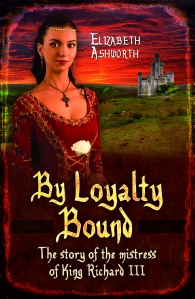
BLB book jacket jpegMuch has been written in fiction, and in some non-fiction, about the love between King Richard III and his wife, Anne Neville. But what if it isn’t true? What if Richard’s mistress was the great love of his life?  We may not know much about the mother or mothers of John and Katherine but we do know a little more about them from contemporary records.

Here Elizabeth discusses the two known illegitimate children of Richard III, and the women who might possibly be the mothers.  Then Elizabeth put forth another candidate:

In my novel By Loyalty Bound I suggest a new name for the mother of Richard’s illegitimate children: Anne Harrington. Although this is also based on speculation as the other names are, there is some circumstantial evidence that she may have been his mistress.
read more here @ Elizabeth Ashworth's blog


Now this third item is the most intriguing - and comes directly from the dig itself. Again, posted on Medievalist dot net (March 2015)

Lady in the Lead Coffin revealed
A mysterious lead coffin found close to the site of Richard III’s hastily dug grave at the Grey Friars friary has been opened and studied by experts from the University of Leicester.
Inside the lead coffin, archaeologists found the skeleton of an elderly woman, who academics believe could have been an early benefactor of the friary – as radiocarbon dating shows she might have been buried not long after the church was completed in 1250 (although analysis shows her death could have taken place as late as 1400).
The high status female was in one of 10 graves discovered in the grounds of the medieval complex, including that of Richard III, six of which were left undisturbed. Those that were examined were all found to have female remains.
Documents dating back to the time of the burials – about 700-years – name a lady called Emma, who was married to John of Holt. In September of that year, 1290, the Bishop of Lincoln issued an indulgence granting 20-days off Purgatory for anyone who would say ‘a Pater and a Ave for the soul of Emma, wife of John of Holt, whose body is buried in the Franciscan church in Leicester’. However, little is known about her, including what she looked like, her age at death or where in the friary church she was buried.

read more here @ Medievalist

Sunday, March 19, 2017

Medieval Mongolian Noblewoman Found In Compost Pit

Couple unearth remains of 'rich' female buried up to 1,000 years ago with her rare Chinese bronze mirror.

Natalia Filina, 31, and her husband were digging in their garden when they hit stones. In the hole they were digging as a compost pit, they found not only a skeleton but also a bronze mirror some 9.9 centimetres in diameter and 0.5cm thick. Police called in the Institute of Mongolian, Buddhist and Tibetan Studies in Ulan-Ude, and experts found additional remains. 

The medieval woman was lying in a wooden coffin made of log, covered with birch bark. The bronze mirror is believed to date to the 10th to 13th centuries, which perhaps indicates the age of the burial. Detailed tests will be carried out to determine when she lived.

Read Article from December 2015 @ The Siberian Times

Wednesday, February 22, 2017

Chacoan Society - Medieval Matriarchy

A new genetic analysis of the burial chamber of a complex prehistoric society known as the Chacoans in New Mexico has found that elite status was passed down through the maternal line from 800-1130AD.


The Chacoans - one of North America’s earliest complex societies - are particularly difficult to study because they did not use a written language.

'Pueblo Bonito' is the largest of these great houses with over 800 rooms. Ancestral 'Pueblo' Native Americans, known as Chacoans, occupied the structure between AD 828 and 1126. 

Read More Here @ Daily Mail

Thursday, October 27, 2016

Medieval Movement of Belgian Holy Women

Beguines were a religious movement of women who weren’t wives but also weren’t fully ordained in a religious order. There is a long history of Christian mystics, and they occupied a twilight zone in which they could move between the secular and religious worlds. They didn’t need to bear the burden of married life, but also weren’t forced to seclude themselves as nuns did, leading active and economically useful lives as single women. 
The movement founds its origin in 12th century when mulieres religiosae, holy women, began grouping together in cities of present day Belgium, the Netherlands, Germany and Northern France. Here they lived in voluntary poverty and preached sexual abstinence, while living lives in the service of the poor and marginalized. One such holy woman, the 23-year old widow Juetta of Huy, left her family in the city of Liege around 1181 to serve lepers. She then spent the last 36-years of her life immured as an anchorite.
Around 1230 these holy women had started to be called “beguines”, a term that was most likely initially used pejoratively, but whose original meaning is lost to history. Some of these communities formed separate, walled communities called beguinages, located just outside the city walls. 
Read More here at Atlas Obscura - Medieval Beguines


Saturday, October 15, 2016

Powerful Norman Women

Powerful Norman women: Gunnor, Emma of Normandy, Matilda and Sichelgaita | History Extra
History tends to focus on kings, warriors and bishops – but a number of 11th-century women were hugely influential in war, state and church. Leonie Hicks introduces a quartet of powerful Norman women.
This article might best begin by paraphrasing a popular bon mot: ‘behind every successful Norman man was a brilliant woman’. Here I will focus on four of them: Gunnor (c950–1031), Emma of Normandy (c985–1052), Matilda of Flanders (c1031–1083) and Sichelgaita (1040–1090).
We are fortunate that enough evidence survives from the 11th and 12th centuries to provide insights into the lives, activities and roles expected of the women who married Normans, or who were themselves Norman and married into other ruling houses. Chronicles such as the History of the Normans by Dudo of Saint-Quentin, and works by Orderic Vitalis, Amatus of Montecassino and Anna Comnena, furnish us with glimpses into how these women were regarded by their contemporaries.

Continue reading article from History Extra


Tuesday, May 10, 2016

Mysterious Braided Hair May Belong to Medieval Saint

A braided head of hair found buried beneath a medieval abbey in England has given up some of its secrets, thanks to a scientist’s curiosity about the relic, which he first saw when he was a schoolboy.
Jamie Cameron, an archaeological research assistant at the University of Oxford in the United Kingdom, first visited Romsey Abbey, near the city of Southampton, on a school field trip when he was 7 years old.
Cameron said he became curious about the abbey’s display of a brightly colored and braided head of hair, which had been found in a lead casket buried beneath the abbey floor. But at the time, nothing was known about the identity of the hair’s owner. [See photos of the mysterious braided hair found at Romsey Abbey]

Friday, January 17, 2014

Medieval Women & Armour

Rather interesting article from  - What Kind of Armour Did Medieval Women Really Wear:

We know that skimpy armor that shows off a woman's cleavage is rather impractical for combat and that sculpted "boob plate" armor can be a hazard to your health, but on occasions that women did don armor in medieval Europe, what kind of armor did they actually wear? And is shapely, feminine armor a modern convention, or does it have some roots in the Middle Ages?
Even if they aren't necessarily historically accurate, depictions of armor worn by men in European historical fictions or European-inspired fantasies tend to have at least some basis in fact, whereas women's armor is often depicted in a more fantastical manner. There are, of course, the infamous body-bearing suits of armor with scale mail bras and chain mail loin clothes that seem to scream, "Please, stab me in my fleshy stomach!" And then there is the overly sculpted boob-plate breastplate for suits of plate mail, which gives fictional woman warriors the appearance of femininity, but places a rather dangerous metal protrusion right at the wearer's sternum.

Wednesday, January 1, 2014

History of the Hennin

Nothing says “princess” like a pointy, cone-shaped hat. From kids’ costumes to medieval paintings, the cone hat—more formally known as a hennin (or henin)—is a sure sign of royalty. But here’s something you might not know about the hat that adorn the heads of pale-skinned ladies: they were actually modeled after the hats of Mongol warrior queens.

Medieval PoC points to the book Secret History of the Mongol Queens, where author Jack Weatherford writes:
The contraption struck many foreign visitors as odd, but the Mongol Empire had enjoyed such prestige that medieval women of Europe imitated it with the hennin, a large cone-shaped headdress that sat towards the back of the head rather than rising straight up from it as among the Mongols. With no good source of peacock feathers, European noblewomen generally substituted gauzy streamers flowing in the wind at the top.

Sunday, December 15, 2013

Tale of Trotula

Time has not been kind to the woman known as Trotula Plataerius, Trotula di Ruggiero or Trotula of Salerno. Was she the author of the famous 11th century De passionibus mulierum (On the Diseases of Women) or was she a mythical.

Now the controversy continues with this article from :
These arguments came to a head in the 1500s, when historians and doctors announced that there never was a Trotula in the first place. Since then, she's become a semi-mythical figure. Even those who believe in her existence sometimes doubt her work. The few facts that anyone has pertaining to the woman - that she may have been from a noble family, that she may have had a physician for a husband or a son - have been used to attribute the book to male relatives who used her name as a cover.

See article from
International Journal of Cosmetic ScienceVolume 30, Issue 2, pages 79–86, April 2008
Among these women, there was Trotula de Ruggiero (11th century), a teacher whose main interest was to alleviate suffering of women. She was the author of many medical works, the most notable being De Passionibus Mulierum Curandarum (about women’s diseases), also known as Trotula Major. Another important work she wrote was De Ornatu Mulierum (about women’s cosmetics), also known as Trotula Minor, in which she teaches women to conserve and improve their beauty and treat skin diseases through a series of precepts, advices and natural remedies. 


From Google Books:


Tuesday, October 1, 2013

Collegiate Foundress: Dervorguilla of Galloway


From BBC News:

An Oxford University college may have taken its name from a medieval lord, but it was under the watchful eye of his widow that it thrived.

Balliol College claims to be the institution's oldest college, and is currently celebrating its 750th year.

John Balliol was spurred into the charitable act of its foundation after being whipped for upsetting a bishop.

But he died shortly after its formation in 1263 and it was Dervorguilla of Galloway under whose guidance the college blossomed.

The grief-stricken widow kept her husband's heart on her at all times, safe in a silver casket.

And she was determined Balliol College would make its mark, according to Dr John Jones, its archivist.

Tuesday, March 13, 2012

Canonisation of Hildegard von Bingen


The Catholic Church seems ready to codify what music lovers have known for nearly a millennium: Hildegard von Bingen is a saint. Vatican Insider reports that Pope Benedict XVI will canonize the visionary Medieval composer this coming October.

Whether you're a confirmed Catholic, an apocalyptic atheist or a devout druid, if you haven't tuned in to Hildegard's work, you could be in for a revelation.

Thursday, January 26, 2012

Bizarre History of the Pregnancy test

From i09:
Nowadays, finding out if you're pregnant is relatively easy — but it wasn't always that way. Over the centuries, people have come up with downright strange and sometimes revolting tests to figure out whether or not a person is knocked up. Some of them were useless, some required being a chemist in the bathroom, and some caused major ecological disasters.


The thing about pregnancy, as a condition, is most people eventually figure out their status on their own. Pregnancy tests, for much of history, have seemed unnecessary.


Still, people have always tried to find ways to peek inside themselves. Some people want to make an early announcement to family. Some need to put their names on a six-year-long waiting list for a private kindergarten, and hope that a year's worth of kids drop out of the running. Some just wish to experience the sheer joy of peeing on something scientific. Whatever the reason, all those who grab a stick and run to the ladies' room are participating in a long, occasionally-destructive, and sometimes outright loony march of scientific progress.

Friday, September 2, 2011

Mistresses Who Changed History

From Slate:
Before Monica Lewinsky, Camilla Parker Bowles, or Marilyn Monroe, there was Hagar—the world's first known mistress.

Several millenniums later, the mistress remains a tenuous position, as historian Elizabeth Abbott explores in her new book, Mistresses: A History of the Other Woman, out this week. Since Hagar's era, however, a handful of women have learned to parlay their scandalous relationships into positions of power—and some have changed history in doing so.

The accompanying gallery illuminates the lives of 10 women who used their time wisely. Each won a place in the history books because of their male attachments. But without their own formidable talents and intellects, most would not have been so admired by their lovers in the first place. Beauty, for these seductresses, was only the beginning.
See also: "Why mistresses have everything to do with marriage" from Huffington Post.