Showing posts with label women and warfare. Show all posts

Sunday, September 10, 2017

How the British treated 'hardcore' Mau Mau women

From the University of Cambridge:

New research on the treatment of 'hardcore' female Mau Mau prisoners by the British in the late 1950s sheds new light on how ideas about gender, deviancy and mental health shaped colonial practices of punishment.
The research, published in the Journal of Eastern African Studies, was conducted by Gates Cambridge Scholar Katherine Bruce-Lockhart and is the first study to make use of new material on a camp in Gitamayu used to hold "hardcore" female detainees.
Bruce-Lockhart is interested in the treatment of "hardcore" Mau Mau women in the final years of the Emergency Period, one that was marked by uncertainty, violence and an increasing reliance on ethno-psychiatry.
From 1954 to 1960, the British detained approximately 8,000 women under the Emergency Powers imposed to combat the Mau Mau Rebellion in Kenya. The majority of female detainees were held in Kamiti Detention Camp and its importance has been widely acknowledged by historians.

Friday, June 16, 2017

TIMELINE: A History Of Women In The US Military

In January 2017, the first female Marines graduated from infantry school. In 2016, the first female soldiers became infantry officers. Air Force Gen. Lori Robinson also took over as leader of U.S. Northern Command in 2016, becoming the first female service member to lead a unified combatant command and thus the highest ranking woman in U.S. military history. We also saw female enlisted sailors deploy on submarines for the first time ever.


In every case, these were historic firsts for the armed services, and a reminder that the military still has a long way to go before it is a truly integrated institution. But, since the United States first declared itself an independent nation, American women have found ways to serve their country despite resistance from men, sometimes going as far as impersonating male soldiers to join the fight at the frontlines.

In honor of International Women’s Day and Women’s History Month, Task & Purpose has compiled a list of historic milestones that changed the course of our nation — milestones set by servicewomen who refused to accept the status quo and paved the way for the next generation. This is by no means a complete timeline; this is simply a snippet of those accomplishments.

read more here @ Task & Purpose


Tuesday, August 25, 2015

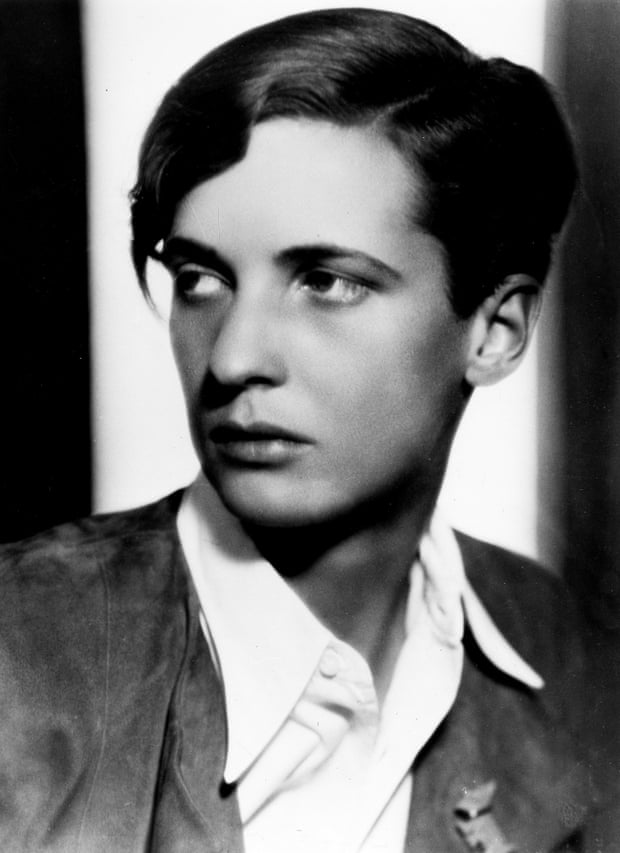
The war-hungry women written out of photographic history

The war-hungry women written out of photographic history


Lee Miller was famous for her shots of the second world war, but there were many other women in the line of fire whose photographs have faded into obscurity: meet Gerda Taro, Catherine Leroy and Françoise Demulder


My new novel has a fictional woman photographer as its protagonist (Amory Clay, 1908-83), one whose working life occupies a large swath of the 20th century and, in the course of my research into the profession, I uncovered what seemed to me like a forgotten sorority of female photographers. In the first half of the last century such photographers were legion – they flourished and happily made their living and reputation alongside their male counterparts, and it was something of a revelation to discover these names and look at the images they made. I say “forgotten”, but no doubt if you’re a curator or a historian of photography or a specialist in the development of the art form then the names of these female photographers will be familiar – but they weren’t to me and, as I looked and read and dug deeper into their world, I became more and more astonished at the work I discovered.

William Boyd’s new novel, Sweet Caress, is published on 27 August.


Sunday, November 24, 2013

The Lady in Number 6

The Lady in Number 6 - Malcolm Clarke's documentary profiles 109-year-old pianist Alice Herz Sommer, the oldest living Holocaust survivor, who shares her story on the importance of music, laughter and how to live a long happy life. 

Alice Herz-Sommer is known for her grace and wisdom. The 109-year-old, who is the oldest living pianist and Holocaust survivor, is undoubtedly one of the most inspirational people in the world.
Now, a documentary called "The Lady In Number 6" is telling her incredible story from beginning to end -- but just the 11-minute preview in itself is amazing enough.
"Every day in life is beautiful," Herz-Sommer says in the video above. "Every day. It's beautiful."
The 38-minute-long documentary is directed by Malcolm Clarke and produced by Nicholas Reed and has already been shortlisted for the Academy Awards' documentary short subject category, according to the Los Angeles Times.


Website dedicated to Alice -> http://nickreedent.com


Book on Alice -> A Century of Wisdom by Caroline Stoessinger


Sunday, February 3, 2013

Lionesses of Syria


Syrian President Bashar al-Assad has recruited an army of women to guard checkpoints and carry out security checks in an attempt to plug the holes left by defections and casualties in his dwindling army.

Up to 500 women have been drafted into the new paramilitary force known as the 'Lionesses for National Defence.' 

They have been in trained at a boot camp in Wadi al-Dahab in the Syrian city of Homs.

They form part of the recently formed 10,000-strong National Defence Force (NDF), a key part of Assad's counter insurgency strategy, as the president desperately tries to regain control of the country's towns and cities.

Decked out in army fatigues and armed with Kalashnikov assault rifles, the women have also been seen guarding areas of Homs where the majority of locals are known to support the government's regime.


Tuesday, September 11, 2012

WWII Female Marine Honoured


After training at Camp Lejeune in North Carolina, Campbell was sent to Camp Pendleton in San Diego, where women Marines operated the military bases while every able-bodied Marine man was engaged in combat.


“Without women stepping up to the plate in WWII, there was no way those stations could have stayed open,” James said.


During the WWII era, women soldiers had catchy nicknames like “WACS” or “WAVES,” which are both acronyms for women in the Army and Navy respectively.

Campbell was one of the 18,000 women Marines who were enlisted during WWII between 1943 and 1946, James Martin said.


That number was reduced to just a few thousand near the end of the war, until 1948 when Congress voted to give women “full-fledged status in the military,” he said.

Sunday, August 5, 2012

Mary Louise Rasmuson

From the New York Times:

Mary Louise Rasmuson, who joined the Women’s Army Corps when it was formed during World War II,  rose to be its director under two presidents and later found a new life as a civic leader and philanthropist in the young state of Alaska, died on Monday at her home in Anchorage. She was 101.


In 1948, the corps was renamed and made a permanent part of the Army. Women were not allowed in combat roles, but their responsibilities gradually increased. They became aircraft mechanics, trained men in sending code, rigged parachutes and worked as cryptologists in the cold war. Mrs. Rasmuson spent four years in Europe as an Army adviser before President Dwight D. Eisenhower named her director of the corps in 1957. President John F. Kennedy reappointed her in 1961.


Sunday, June 3, 2012

"Napalm Girl" Photo Turns 40


From KTUL:


It only took a second for Associated Press photographer Huynh Cong "Nick" Ut to snap the iconic black-and-white image 40 years ago. It communicated the horrors of the Vietnam War in a way words could never describe, helping to end one of the most divisive wars in American history.
But beneath the photo lies a lesser-known story. It's the tale of a dying child brought together by chance with a young photographer. A moment captured in the chaos of war that would be both her savior and her curse on a journey to understand life's plan for her.
"I really wanted to escape from that little girl," says Kim Phuc, now 49. "But it seems to me that the picture didn't let me go."


Wednesday, May 30, 2012

Women Violated in War Denied Memorials

From We:news:
Japanese officials are trying to remove a small monument to Korean "comfort women" in New Jersey. Rochelle Saidel says these and other women violated by war are still being denied official recognition.

In the early 1990s, Kim Hak Soon was the first former comfort woman to speak out, at the age of 67, and her testimony inspired other women to do the same. Within one year more than 200 other Korean women who had been enslaved as comfort women came forward. They have joined together, supported each other and shared their experience.


Wednesday, April 18, 2012

Ancient Female Gladiator


A small bronze statue dating back nearly 2,000 years may be that of a female gladiator, a victorious one at that, suggests a new study.


If confirmed the statue would represent only the second depiction of a woman gladiator known to exist.

The gladiator statue shows a topless woman, wearing only a loincloth and a bandage around her left knee. Her hair is long, although neat, and in the air she raises what the researcher, Alfonso Manas of the University of Granada, believes is a sica, a short curved sword used by gladiators. The gesture she gives is a "salute to the people, to the crowd," Manas said, an action done by victorious gladiators at the end of a fight.

The female fighter is looking down at the ground, presumably at her fallen opponent.


It’s not known where the statue was originally found, though it is currently in the Museum für Kunst und Gewerbein Hamburg, Germany.  

The rarity of such statues likely reflects the idea that female gladiators in ancient Rome were scarce. They were banned by Emperor Septimius Severus in A.D. 200 with only about a dozen references to them in ancient writing surviving to present day. The only other known depiction of them is a carved relief from the site of Halicarnassus (now in the British Museum) that shows two female gladiators fighting. There have been claims made in the past of burials of female gladiators being uncovered, but none has attracted widespread support among scholars.  

Wednesday, February 8, 2012

Anna - Countess of the Covenant

I have just finished reading the fascinating story of Lady Anna Mackenzie - Anna, Countess of the Covenant by Lady Mary McGrigor - and what a tale it is.

Lady Anna was the daughter and co-heiress of Colin Mackenzie, 1st Earl of Seaforth, who aged 19yo, married young Alexander Lindsay, Earl of Balcarres (1640) at the height of the English Civil War.  Both Anna and Alexander were Covenanters - Presbytarians who opposed the return of Catholicism as the religion of Scotland. The Balcarres also were strong supporters of the monarchy under Charles I - and the return of Charles II and the ousting of the Parliamentarians led by Oliver Cromwell.


The Parliamentarians were in the ascendancy, and Alexander fled into the Scottish Highlands following his military defeat.  In a rare and almost unheard of action, Anna accompanied her husband on both his campaign and his exile in Holland, enduring all the hardships along the way.  Anna took her two daughters with her into exile but left behind her two young sons in the care of a family friend.  Their lands forfeited, Anna was granted the role of Governess to the future King William III at the Hanover Court.


The Balcarres returned to Scotland ahead of the return of Charles II of England - Alexander was ill and would die, leaving Anna in a perilous financial situation.  Anna would find some consolation with a second marriage, to Archibald, 9th Earl of Argyll.  However, their adherence to Scottish Presbytarianism put them at odds with the Catholic James, Duke of York (future King James VII & II).  When Argyll attempted to overthrow James, he was convicted of treason, imprisoned - although he would escape both prison and execution with the aid of his daring step-daughter Sophia who, with Anna, suffered in his stead.

Both Anna and Argyll were now confirmed outlaws - their huge estates forfeited, Anna again found herself in dire financial straits.  Argyll meanwhile set about planning for the ousting of James in favour of William of Hanover and his wife Mary (daughter of James).  Argyll would pay the ultimate price for his loyalty to the Hanovers - he was executed (1689).  Anna would spend the remaining years seeking financial compensation from the monarchy for the lost estates of both hers and Argyll's heirs.

Anna would die at the age of 85yo (1708) - "she lived through the reign of four Stewart kings and one who, although his mother was the daughter of Charles I, and his wife was a daughter of James VII & II, was of Dutch nationality."  Anna was said to have been a woman of great virtue, integrity, piety, beauty and intelligence.  She endured much which no doubt molded her into the remarkable woman that she was.

Lady Mary McGrigor successfully brings to life this amazing woman who did much for the monarchy but was largely forgotten by history.

Further Information:


Wednesday, January 4, 2012

Women, War and the Making of Bangladesh. Remembering 1971

From the Express Tribune:
“War destroys the vulnerable and unfortunately the individual sufferings of non combatants are seldom highlighted,” Dr Yasmin Saikia, author of Women, War and the Making of Bangladesh. Remembering 1971, said at the launch of her book on Tuesday. The book was launched at Forman Christian College.

Dr Saika, a professor of history at the Arizona State University, explained that the book is about families with memories of violence and trauma, “missing in the archives of history of the war.”

The book records the sufferings of Bengali and Bihari women, some of them raped and tortured during the 1971 war. The author said she had interviewed 250 families over 10 years. Those interviewed included those directly affected by the war. Some of them were perpetrators of sexual violence.

Dr Saikia said she wanted to focus on the war as traumatised women’s experience and not as a War of Liberation, as widely accepted by the Bangladeshi public. She said from the day that she had started writing the book, she had consciously tried to avoid avoided writing a particular type of history. “I tried to persuade these women to speak up about their personal experiences, including the war babies,” she said. She said some of the women had lost their citizenship and for some writers their credibility.

Wednesday, September 28, 2011

BBC Accused of Belittling Florence Nightingale

A group of nursing academics has written to Lord Patten, chairman of the BBC trust, claiming the corporation has made at least two films containing "unsubstantiated and fictional portrayals" of the founder of modern nursing.

They have written to bring up what they describe as "the BBC's persistent, hostile and greatly erroneous treatment of Florence Nightingale" in the films.

In the letter, they have asked the BBC to withdraw two films - Florence Nightingale: Iron Maiden (2001) and Reputations: Florence Nightingale (2008) - from distribution.

They have written that the two hour-long films "attack and belittle Nightingale" and make "misleading" claims about her.

Sunday, September 25, 2011

Women in Wartime

From the Star Tribune:
Sorry, but to address the disconnect between what nurses do in a war zone and life on the front lines, this story must be told. It comes from Lynn Bower, an Army nurse in the emergency room in Long Binh, South Vietnam, in 1971. She needed to cut away a soldier's uniform to treat his wounds. Struggling, "I went to grab his belt at the waist and when I pulled ... he came apart at the waist. He just opened up."

Bower's story is on page 43 of "Sisterhood of War: Minnesota Women in Vietnam" by Kim Heikkila, a new book published by the Minnesota Historical Society Press. It is perhaps the most traumatic story amid the next hundred or so pages, but it provides a necessary underpinning to the accounts from 14 other nurses who served with little public notice during the Vietnam War.

The story explains, for instance, Kay Bauer's barely stifled snort at the suggestion that nurses knew little of the front lines. "There is no such thing as a front line," said Bauer, who now lives in Coon Rapids. "The war is everywhere."

Monday, August 8, 2011

Farewell White Mouse

Nancy Wake biographer Peter FitzSimons knew Australia's 'force of nature' better than most.

"I've dealt with many strong personalities in both football and journalism and writing books, I've never dealt with a stronger pure personality than Nancy" he remarked fondly in an interview with Louise Maher on 666.

Wake's heroism is well documented, but through writing her biography Peter FitzSimons grew to know her as a friend visiting her regularly at her home in London.

"I would bring her bottles of gin...one of her great passions was gin!"

But it was, as with the rest of the world her bravery during conflict that FitzSimons was intrigued by.  "She had anger inside her, a volcano that was its best and most useful in wartime launching ambushes on German soldiers" he described.

And it seems that Nancy Wake was as much of a force to be reckoned with in her later years as she was during her time with the Resistance.

"We had many blues until we both came to the conclusion that she was ten times the man I would ever be" recalled her biographer.

See also: The West
The war dead buried in and around Montlucon will be joined by one of their bravest comrades next spring.  Nancy Wake, the fearless Resistance fighter and leader who relished killing Germans as much as she enjoyed a gin and tonic, will have her ashes scattered in the central French town she helped rid of Nazis in 1944.  During the celebrations following the German evacuation of Montlucon, some Spanish Resistance fighters wrapped some local wildflowers in their national flag and presented it to her.  She will now be scattered among the wildflowers on Montlucon.


Saturday, July 23, 2011

Women Survivors of The Alamo

In a July 10 column, reader Richard Villanueva asked if there were other female survivors of the siege and battle of the Alamo besides his great-great-great-grandmother Andrea Castañon Villanueva. Known as Madam Candelaria, the innkeeper's wife lived more than 100 years and became legendary for telling generations of reporters and tourists her stories of having nursed Texian defenders.

Like several figures associated with this engagement, Madam Candelaria is not considered by some historians to have been a survivor of the Alamo because she came and went at will, rather than being confined to the compound from Feb. 23, 1836, when Mexican troops first fired on the fort, through the March 6 battle.

However, historian Dora Elizondo Guerra counts her among seven women survivors, all related to men fighting with the Texians.

Guerra, a former librarian at the DRT Library on the Alamo grounds, recently researched the battle's noncombatants. Her list corresponds closely to the individuals named in the Handbook of Texas entry on Alamo noncombatants.

Sunday, June 26, 2011

Rape in Wartime - Part II

A growing movement wants to peel back that rug. Scholars are revisiting old testimonies and documents -- and seeking new ones. Authors have published works to inspire conversation. Psychologists want to help survivors heal from their secrets. Activists, including feminist writer and organizer Gloria Steinem, hope these victims of the distant past can help shape a better future.

But the topic of sexual violence during the Holocaust is fraught with controversy. Some observers believe it's a subject not sufficiently widespread or proven to warrant broad attention. Others fear it's driven by a microscopic view that deflects focus from what needs to be remembered. And still others feel that by pushing the issue, it may harm survivors who've suffered enough.

What everyone can agree on is this: When it comes to learning from those who lived through the Holocaust, time is running out.

Editor's Note: This is the second of two stories focusing on rape as a tool of war. The first story looked at the role of interviewers of rape victims. Both stories contain graphic language; discretion is advised.

Friday, June 24, 2011

Rape In Wartime

It began as a headache. Then her throat started to feel tight. A dull pain welled in her chest and her joints ached.

But Victoria Sanford continued to do the interviews. Even in the middle of the night, the women in Guatemala always managed to find her, the "gringa" they heard had come to listen to them.

It was the early 1990s, years before the international community would formally recognize the Guatemalan government's role in the systematic rape of its Mayan women -- and decades before the current violence in Libya and elsewhere around the Middle East would once again remind the world of the brutal effectiveness of rape as a weapon of war.

Editor's Note: This is the first of two stories focusing on rape as a tool of war. The second story, being published tomorrow, looks at the untold stories of rape in the Holocaust. Both stories contain graphic language; discretion is advised.


Wednesday, April 20, 2011

Rebecca Carr by Steve Martin

From PAL-ITEM:
The Wayne County Soldier's Registry for the Civil War lists more than 3,500 men. In that book is one woman who "earned an honored place among the Wayne County soldiers that fought."


The directory states, "besides furnishing two sons and a husband for the army, she volunteered her own services as nurse to the 36th Indiana Regiment and received a pension of her own."
Her name was Rebecca Carr.

Women & Warfare

From the Waverley Leader - Remembering our ANZAC Women:
WHILE most of the focus on Anzac Day highlights the many soldiers who fought for their country in military conflicts, a strong group of ladies will also pause on April 25 to remember their contribution.

Oakleigh Carnegie RSL life member Verna Phillips will be one of them.

The 88-year-old joined the Australian Army during World War II in 1942 after seeing notices posted in the city encouraging women to take on administration and office jobs.


From Third Coast Digest - Band of Sisters:
America’s female soldiers are breaking new ground both here and abroad. They are fighting and dying just like the men do.

It is this phenomenon that led author Kirsten Holmstedt to focus two books on the stories of female soldiers, both in the Iraqi theatre and after they returned home.


From the Arizona Republic - Woman Who Spied For The Union:
"Nurse," written by Marissa Moss, tells the true tale of teenager Sarah Emma Edmonds, who dressed as a man and enlisted in the Union Army under the name Frank Thompson. Thompson rescued the wounded on battlefields, nursed them and served as a spy, disguising herself as a slave to get behind Confederate lines.