Sunday, June 26, 2011

Love in the time of Mughals

From the Sunday Pioneer:
Mughal history, as we know it, is all about how the Muslim rulers won over vast tracts of land and established kingdoms that promoted art, literature and culture. They ruled with an iron fist, battled palace intrigues and mercilessly suppressed opposition. Some like Aurangzeb were religious despots, while others like Akbar were liberal enough to even promote a new brand of all-inclusive religious structure — Din-e-Elahi.

While the Mughal empire was largely male-dominated, there were flashes of female dominance, even if at subaltern levels. But while they have been dealt with by some classic and even modern-day historians, few have attempted to tackle the subject of sexuality among the Mughal society’s influential women. Perhaps, it is because authors have considered the issue as peripheral to the larger story. Nevertheless, it is an important gender perspective, more so as it deals with a society where women were behind veils and their affairs were rarely discussed. This book provides a fresh and scholarly insight into the private lives of Mughal women, without being voyeuristic.

Rape in Wartime - Part II

A growing movement wants to peel back that rug. Scholars are revisiting old testimonies and documents -- and seeking new ones. Authors have published works to inspire conversation. Psychologists want to help survivors heal from their secrets. Activists, including feminist writer and organizer Gloria Steinem, hope these victims of the distant past can help shape a better future.

But the topic of sexual violence during the Holocaust is fraught with controversy. Some observers believe it's a subject not sufficiently widespread or proven to warrant broad attention. Others fear it's driven by a microscopic view that deflects focus from what needs to be remembered. And still others feel that by pushing the issue, it may harm survivors who've suffered enough.

What everyone can agree on is this: When it comes to learning from those who lived through the Holocaust, time is running out.

Editor's Note: This is the second of two stories focusing on rape as a tool of war. The first story looked at the role of interviewers of rape victims. Both stories contain graphic language; discretion is advised.

Friday, June 24, 2011

Female Genocide & Pauline Nyiramasuhuko

From BBC News:
Judges at the UN-backed court for Rwanda is to hand down a verdict for the only woman to be charged with genocide before an international court.

Pauline Nyiramasuhuko, 65, was a government minister in 1994 in Rwanda when 800,000 people - mostly from the Tutsi ethnic group - were killed.

Along with four former local officials and her own son, she is accused of organising massacres as well as the rape of women and girls.

She denies all the charges.

Mrs Nyiramasuhuko was Rwanda's minister for family and women's development at the time of the genocide.

The prosecution at the International Criminal Tribunal for Rwanda (ICTR) accuses her of taking part in the government decision to create militias throughout the country. Their mission was to wipe out the Tutsi population as fast as possible.

Mrs Nyiramasuhuko is accused of ordering and assisting in the massacres in her home district of Butare in southern Rwanda. Along with her son, who was in his early 20s at the time, she is also accused of organising the kidnap and rape of Tutsi women and girls.

Rape In Wartime

It began as a headache. Then her throat started to feel tight. A dull pain welled in her chest and her joints ached.

But Victoria Sanford continued to do the interviews. Even in the middle of the night, the women in Guatemala always managed to find her, the "gringa" they heard had come to listen to them.

It was the early 1990s, years before the international community would formally recognize the Guatemalan government's role in the systematic rape of its Mayan women -- and decades before the current violence in Libya and elsewhere around the Middle East would once again remind the world of the brutal effectiveness of rape as a weapon of war.

Editor's Note: This is the first of two stories focusing on rape as a tool of war. The second story, being published tomorrow, looks at the untold stories of rape in the Holocaust. Both stories contain graphic language; discretion is advised.


Podast: Women in Ancient Europe

Gender archaeology is a method of studying past societies through their material culture by closely examining the social construction of gender identities and relations. Gender archaeology itself is based on the ideas that even though nearly all individuals are naturally born to a biological sex (usually either male or female, although also intersex), there is nothing natural about gender, which is actually a social construct which varies between cultures and changes through time.

Gender archaeologists examine the relative positions in society of men, women, and children through identifying and studying the differences in power and authority they held, as they are manifested in material (and skeletal) remains. These differences can survive in the physical record although they are not always immediately apparent and are often open to interpretation. The relationship between the genders can also inform relationships between other social groups such as families, different classes, ages and religions.
 

Caroline Harriet Haslett

From the Irish Times:
THE VITAL ROLE played by domestic technology in allowing for greater gender equality has been widely recognised for some time now. By liberating women from much of the drudgery of domestic chores and extraordinarily labour-intensive tasks such as laundry, these developments were critical in facilitating greater female workforce participation.
 
A sizeable body of academic work has been written examining the social and economic repercussions of domestic technology. However, it speaks volumes that while the histories of the “domestic industrial revolution” focus on how they altered the lives of the women who used them, we rarely give as much thought to those women who were instrumental in creating such a revolution.

Chief among those was Caroline Harriet Haslett, the pioneering early 20th-century electrical engineer who spent her working life encouraging the adoption of technology in the cause of female emancipation. In many respects, her story foreshadows the sweeping changes in the role of women in society, but as so often with innovators and pioneers, she had to forge her own path with few antecedents to smooth the way.

Wednesday, June 22, 2011

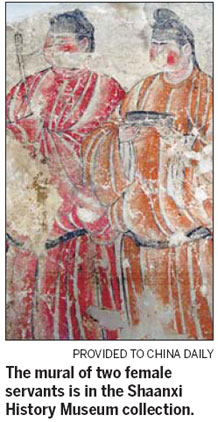
Women of the Tang Dynasty

The Tang Dynasty (AD 618-907) is widely acknowledged as one of the most glorious periods in Chinese history. Even today, many overseas Chinese neighborhoods are known as "Tang People's Streets".

The Tang Dynasty was characterized by openness, particularly with respect to women, quite unlike any other period in China. Tang people worshipped natural beauty and skinny Tang women were the exception rather than the rule.

Their unorthodox approach was also reflected in their dress.

Women in Pakistan

From the Express Tribune:
While we have seen phenomenal changes take place across the world in recent decades, the status and fate of women, who have been so badly treated through the centuries in almost all cultures, hasn’t changed much.

But in Pakistan, their situation has become worse and thus it comes as no surprise that we were recently rated as one of the worst countries in the world when it comes to the way we treat women. Already among the ten most corrupt states of this world, Pakistan ranks even higher when it comes to maltreatment of women. Only in war-torn Afghanistan and the Congo is their plight worse and their lives and honour more threatened.

Tuesday, June 21, 2011

Female Chief at Parris Island

For the first time in its 96-year history, a female general is taking charge at the famed Marine Corps training depot at South Carolina's Parris Island.

Brig. Gen. Loretta Reynolds, who is also known as the first female Marine to ever hold a command position in a battle zone, takes charge Friday at the installation south of Beaufort.

Parris Island graduates about 20,000 Marines annually and is the only site where female enlisted Marines are trained to enter the service.

Reynolds is a native of Baltimore and a 1986 graduate of the Naval Academy. She has worn the Marine Corps uniform for 25 years. 

As a one-star general, Reynolds becomes only the third female general officer in the more than 200,000-member Marine Corps. The service has two two-star female generals, one in the active duty ranks and another in the Marine Corps Reserve.