Showing posts with label human rights. Show all posts

Tuesday, April 10, 2012

Liberian Women Divided Over Nobel Prize

Leaders of three of Liberia’s foremost women’s peace advocacy groups – the Liberia Women’s Initiative (LWI), the Mano River Women Peace Network (MARWOPNET) and the Women In Peace-building Network (WIPNET) – are at loggerheads apparently over who might have been more deserving of the prestigious Nobel Peace Prize, won in part by two daughters of Liberia.

The 2011 Nobel Peace Prize, according to the Chairman of the Norwegian Nobel Committee, Thorbjørn Jagland, was awarded to two Liberian women, President Ellen Johnson Sirleaf and Leymah Gbowee, and a Yemeni co-winner, for “their non-violent struggle for the safety of women and for women’s rights to full participation in peace-building work.”

The two Liberian peace and human rights campaigners shared the Prize with Yemeni activist Tawwakol Karman.

But eminent personalities of the women’s movement in Liberia, including Mother Mary Brownell and Madam Theresa Leigh-Sherman, have described the awarding of the Prize to Leymah Gbowee as a misplaced decision by the Nobel Committee because, according to them, Gbowee “should have been there when the bullets were flying.”

Saturday, December 10, 2011

Julia Taft - Humanitarian & Notable Women

I received a review copy of Ann Blackman's "Off To Save The World: How Julia Taft Made a Difference" and am certainly glad that I had the opportunity to read and review this book.


From the promo:
In Off to Save the World Blackman paints a mosaic of a witty, determined and idealistic woman who not only ran some of the most dramatic relief efforts of her generation, but also influenced the debate at home as the international spotlight moved from Vietnam, Cambodia and Laos to the collapse of the Soviet Union to ethnic conflicts in Africa and the former Yugoslavia.

Taft, who married into a famous Republican family, dedicated herself to restoring honor and dignity to those far less fortunate than herself. Starting in 1975 when she was 32 years old, Taft directed the task force that managed the resettlement of refugees from the Vietnam War. Over the years, she basically invented the way the United States government responds to natural and man-made disasters around the world, and continued to direct many relief efforts. 

For more than three decades, Julia Taft was one of the United States’ top humanitarian relief experts, friend and ally of the world’s most impoverished people. She was, simply put, a legend in her field.

I read this tome of barely 140 pages in a day - it was such an easy, free flowing work that was hard to put down - the more I read, the more I had to discover more about Julia. It is more in the style of anecdotal memoir not a full blown biography bogged down with facts and more facts.  It is concise and each stage of Julia's amazing life is covered in enough detail to succinctly convey the author's point.

Julia was one of the first women to embark upon a career devoted to the care and welfare of others.  Humanitarian work had not the priority nor the publicity it has today.  Julia threw herself wholeheartedly into her work and brought the plight of those less fortunate to the forefront.

Highly recommended for all those interested in the accomplishments of this extraordinary woman.

Obituary from the New York Times

About the author:
In her long career as a news correspondent for TIME magazine and the Associated Press, Blackman covered American politics, social policy, the changing role of women, cultural trends and the powerful personalities that make up Washington society. While with TIME, Blackman spent three years in Moscow as a foreign correspondent. Her assignments at the AP included the Watergate hearings, presidential politics, the Iranian hostage crisis and the assassinations attempts on Governor George Wallace and President Ronald Reagan.

Her earlier books include Seasons of Her Life: A Biography of Madeleine Korbel Albright (Scribner/Simon & Schuster, 1998); The Spy Next Door(co-author) about the secret life of FBI turncoat Robert Hanssen (Little Brown, 2002), and Wild Rose, the story of Civil War spy Rose O’Neale Greenhow. (Random House, 2005).


Saturday, November 19, 2011

Prevention of Anti-Women Practices Bill

From The News:
The civil society has lauded the passage of the Prevention of Anti-Women Practices Bill by the National Assembly, hoping that it will help protect women’s rights once it sails through the Senate.
 Hilda Syed, a senior member of the Women Action Forum, told The News that it was a wonderful piece of news, adding, however, that the task now was to pass the bill from the Senate as well.
 “The domestic violence bill stayed in the Senate for three months after which it lapsed but we are adamant to pass it through. Similarly, as soon as the amendments are made to this bill, it should come into force so that its efficacy is not compromised,” she said.
Zohra Yusuf of the Human Rights Commission of Pakistan said that the unanimous acceptance of the bill by the NA was a positive sign for sure as it made certain “evil practices” illegal. But given the history of such laws being interpreted wrongly or not implemented at all, awareness of the law enforcement authorities is also needed.
 She said that the bill was focusing on the punishment aspect at the moment, and it should also take into account the problems women faced while reporting inheritance issues.
 “Recently, Bangladesh announced equal property rights for women on International Women Day which did not go down well with the clerics (there). But at least it is a step in the right direction. We need to focus on that as well.”

Wednesday, June 22, 2011

Women in Pakistan

From the Express Tribune:
While we have seen phenomenal changes take place across the world in recent decades, the status and fate of women, who have been so badly treated through the centuries in almost all cultures, hasn’t changed much.

But in Pakistan, their situation has become worse and thus it comes as no surprise that we were recently rated as one of the worst countries in the world when it comes to the way we treat women. Already among the ten most corrupt states of this world, Pakistan ranks even higher when it comes to maltreatment of women. Only in war-torn Afghanistan and the Congo is their plight worse and their lives and honour more threatened.

Tuesday, June 7, 2011

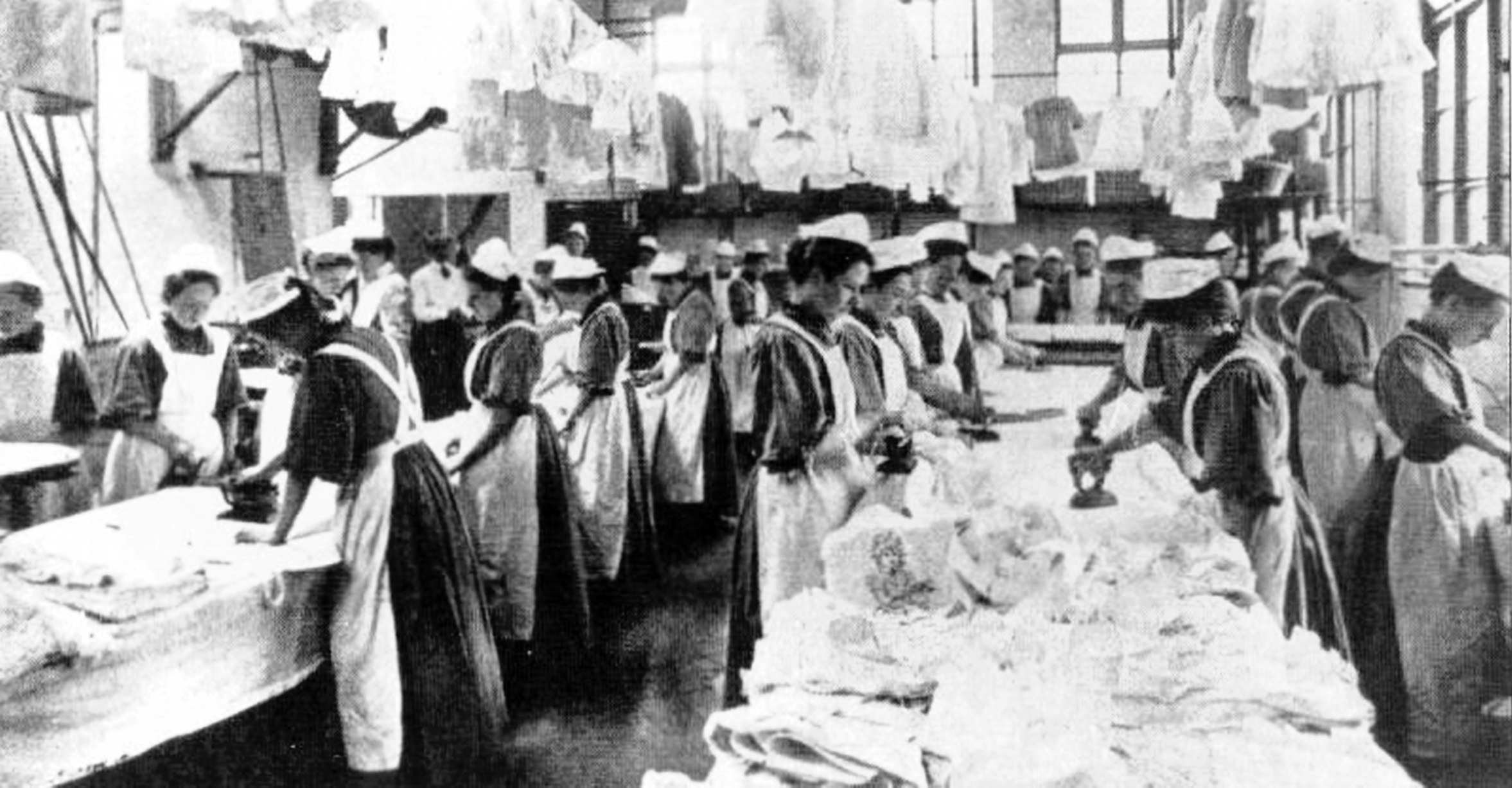
Ireland: Magdalene Investigation

The Government should set up a statutory investigation into allegations of torture and degrading treatment against women committed to Magdalene Laundries.
 
It should also punish the perpetrators and provide redress to the women who suffered, the United Nations Committee Against Torture has recommended.
 
In a report detailing its "concluding observations" on Ireland's record of protecting the rights of those in detention, the committee has also strongly criticised the State's "inadequate" response to alleged reports that it cooperated with rendition flights.
 
The report, which was published this morning following two days of hearings before the committee in Geneva last month, also criticises the conditions in Irish prisons, the treatment of asylum seekers and the State's failure to prosecute anyone from evidence gathered in the Ryan report into abuse of children in residential institutions.
 
In a series of recommendations regarding the alleged committal of women to Magdalene Laundries, the committee says it is "gravely concerned" at the failure by the State party to protect the girls and women. It criticises the State for failing to regulate or inspect the laundries, where it is alleged physical, emotional abuses and other ill-treatment were committed. These may have amounted to violations of the UN convention against torture, according the report.

More on the Magdalene Laundries:

Sunday, November 14, 2010

FREE!! Aung San Suu Kyi

From BBC News:
Burma's pro-democracy leader Aung San Suu Kyi has addressed a large crowd of her supporters, a day after her release from house arrest.

"The basis of democratic freedom is freedom of speech," she said at her party's offices, Reuters reports.

Ms Suu Kyi was allowed to leave her Rangoon house when her sentence expired on Saturday. She had been detained for most of the past two decades.

World leaders and human rights groups have reacted with joy at her release.

Sunday, September 5, 2010

Northern Ireland: Women Rescued From Prostitution

Fifteen women have been rescued from sex traffickers in a major crackdown on brothels in Northern Ireland, it was announced today.

The women, who are from EU countries, were being forced to work as prostitutes in Belfast, the PSNI said. Police arrested three people in connection with the raids.

Detective Chief Superintendent Roy McComb, head of the PSNI organised crime branch, said: "This is modern-day slavery where human beings are treated like commodities by sophisticated organised crime gangs who are making substantial criminal profits from the sex trade.

"These gangs have no thought for the health and well-being of their victims. They see them simply as instruments to help them generate cash."

Sunday, August 29, 2010

Fight to Save Sakineh

About 300 people from rights organizations have demonstrated in Paris to urge Iran to lift its death sentence on an Iranian woman convicted of adultery.

The protesters carried banners reading "Let's Save Sakineh," in honor of Sakineh Mohammadi Ashtiani, a 43-year-old mother of two who has been sentenced to death by stoning for adultery.

After international protests, Iran lifted the stoning sentence last month, but she could still face execution by hanging.

Iran-born women's rights activist Anna Pak told Saturday's Paris crowd that Iran must "stop killing men and women" after alleged forced confessions.

Sihem Habchi, of a noted French group representing downtrodden minority women, said Ashtiani symbolizes the "right to be a woman."

Sunday, August 22, 2010

Welsh Brothel Sex Slave Shame

Nearly 100 trafficked women from Eastern Europe and Asia are thought to be working in Welsh brothels, according to a new police report detailing the extent of people trafficking in Wales.

The figures were released by Britain’s top cops as they revealed that an estimated 2,600 women have been trafficked in to England and Wales to work in the sex industry.

The Setting the Record report from the Association of Chief Police Officers (Acpo) found that about 17,000 of the estimated 30,000 women working in off-street prostitution are migrants.

Of those migrants, 2,600 were deemed to have been trafficked, while 9,200 were identified as vulnerable migrants who may be further victims of trafficking.

But Jeff Farrar, assistant chief constable of Gwent Police and Acpo Cymru’s lead on protecting vulnerable people and human trafficking, said the picture in Wales was not reflected by the overall statistics in the report.

There are estimated to be 479 women working in off-street prostitution in Wales. Of these, an estimated 55 are Asian, with a further 40 from Eastern Europe and another 48 whose origins are unknown, as well as 337 who are British.

Saturday, August 21, 2010

Nigeria: Women Protest at Chevron Pipeline

From Bloomberg:
Nigerian women protesters have besieged the site of a Chevron Corp. natural gas pipeline project in the Niger River delta, halting construction work for the second time in two months.

The women, who are demanding electricity for their community and action against environmental damage due to oil activities, turned up in the hundreds at the Chevron pipeline building site on the Escravos River yesterday, Isaac Botosan, a spokesman of the Ugborodo community, where the women come from, said today by phone from the southern city of Warri.

The protesters, who had occupied the same site for several days in July, are angry that the government and the oil company have yet to address their demands, he said.

Afghanistan: Brutality Creates Fear

From NRP:
The Taliban has denied that its militants tortured, hanged and shot a widow in Afghanistan's western Baghdis province for adultery.

It's not the principle the Taliban disagrees with — in a lengthy press release, a Taliban spokesman said that the woman should have been stoned to death instead.

President Hamid Karzai condemned the stoning in a separate case of a couple put to death in Kunduz province. But he has also been careful in public statements to avoid mentioning topics like women's rights.

Human-rights advocates say the U.S.-supported government of Afghanistan has not done enough and that the government's reaction raises questions about plans to reconcile with the Taliban
.

Thursday, August 12, 2010

Rise in Female Suicides

Two rather disturbing reports on women driven to the edge.

From ABC News:
Government statistics in Afghanistan have raised concerns that a growing number of Afghan women are attempting suicide.

The government says every year about 2,300 women or girls attempt to kill themselves, mainly due to mental illness, domestic violence and poverty.

Rachel Reid, Afghan analyst from Human Rights Watch, has told Radio Australia's Connect Asia program there are a range of issues facing women in Afghanistan.

The report shows a several-fold increase in suicide attempt compared to 30 years ago, including more than 100 cases of self-immolation at Herat City Hospital in the past year, and an increase in the number of women using pharmaceuticals to kill themselves.

And from the Indian Express:
Three married women have committed suicide, in separate incidents, following alleged mental and physical harassment by their husbands and in laws over the last two days.

Wednesday, August 11, 2010

Argentina: Illusions of Care

Anybody wonder why we need a UN women's agency? Maybe the latest report from Human Rights Watch - out today - will offer some clues. It's about Argentina - not the poorest or the least sophisticated or illiberal country in the world. It voted to legalise gay marriage, after all. It has a woman president. Yet thousands of women and girls there, says the report, "suffer needlessly every year because of negligent or abusive reproductive health care".

Argengtina has far from the worst record in Latin America. No less than five countries ban abortion under any circumstances. Chile, El Salvador, Honduras, Nicaragua and the Dominican Republic refuse to allow it even if it means the woman's death. Argentina and the others are not quite so harsh.

But international human rights law says that women have a right to make decisions about if, when and how many children they have, says Human Rights Watch. In Argentina, those rights have been "systematically flouted for years", it says.

Tuesday, August 10, 2010

SA: Women Remember Tshwane Women's March

From IOL News:
In 1956 more than 20 000 women marched to the Union Buildings to inform the apartheid regime they were tired of being oppressed and were opposed to having to carry passes.

Yesterday, women again marched to the Union Buildings, but to celebrate the stalwarts who risked their lives in the 1956 march.

While thousands gathered at venues across the country, Tshwane executive mayor Gwen Ramokgopa led a group of women from Lilian Ngoyi Square (formerly Strijdom Square) to the Union Buildings where they celebrated and discussed issues affecting them.

"Exactly today on August 9, 1956, 20 000 brave women led by our great struggle icons and woman stalwarts, Lilian Ngoyi, Helen Joseph, Rahima Moosa and Sophia Williams-De Bruyn embarked on a historic march here in Tshwane - one of the largest demonstrations staged in this country's history," said Ramokgopa.

Saturday, August 7, 2010

Amnesty Unimpressed By "Action"

From the NZ Herald:
Amnesty International has condemned the Pacific Islands Forum leaders for being all talk and no action on reducing violence against Pacific women.

After the forum, which concluded in Vanuatu yesterday, Pacific leaders commended themselves for their action and acknowledged a recommendation to set up a reference group on gender-based violence in the future.

But Amnesty International said this was "weak and disappointing".

"Governments need to step up action," said Hannah Harborow, the Amnesty International Australia co-ordinator of the Stop Violence Against Women Campaign.

"Last year they pledged to eradicate gender-based violence. There hasn't been a lot of movement in the last 12 months. This year we wanted concrete facts about what they will do."

Pacific researcher Apolosi Bose said the forum was simply paying "lip service" to the issue. "Culture is often used as an excuse for inaction on this issue, but it is not a Pacific tradition to rape, torture, abuse or murder women and young girls."

Women-Only Gaza Flotilla

From the Guardian:
A ship bearing aid for Gaza is preparing to leave Tripoli in Lebanon this weekend in the latest attempt to defy the Israeli blockade – with only women on board.

The Saint Mariam, or Virgin Mary, has a multi-faith international passenger list, including the Lebanese singer May Hariri and a group of nuns from the US. "They are nuns, doctors, lawyers, journalists, Christians and Muslims," said Mona, one of the participants who, along with the other women, has adopted the ship's name, Mariam.

The Mariam and its sister ship, Naji Alali, had hoped to set off several weeks ago but faced several delays after Israel launched a diplomatic mission to pressure Lebanon to stop the mission.

The co-ordinator of the voyage, Samar al-Haj, told the Guardian this week the Lebanese government had given permission for the boats to leave for Cyprus, the first leg of the journey, this weekend.

Friday, July 30, 2010

Prostitution Pays For Mortgage

From ABC News:
A Sydney mother who forced 11 Thai women to work as prostitutes to help pay off her mortgage has been jailed for at least 13 months.

In March the 48-year-old pleaded guilty to bringing 11 women to Australia from Thailand for the purpose of sexual servitude between August 2005 and April 2008.

She also pleaded guilty to immigration offences.

The NSW District Court heard the women were forced to work off a debt they owed the woman for bringing them to Australia. She sent them to brothels in Sydney, Newcastle, Wollongong, Adelaide and Perth.

It heard the woman paid an agency in Thailand $20,000 to supply the women who knew what sort of work they would be doing.

Saturday, July 24, 2010

Investigation Into Trafficking Of Women

From the Indian Express:
While hearing a PIL on trafficking of women, the Calcutta High Court on Friday said the Central Bureau of Investigation (CBI) is an appropriate agency to conduct a probe in this regard, considering that it involves international racket.

The Division Bench comprising Chief Justice J N Patel and Justice Bhaskar Bhattacharjee also asked the CBI to appear in the case.

This comes after Advocate General Bolai Roy, who appearing on behalf of the state government, told the court that a probe conducted by the CID found that an inter-state as well as international rackets were involved in trafficking of women, and consequently the state police took help from the Interpol.

Sunday, July 18, 2010

Women's Role In Holocaust

From the New York Times:
Amid the horrors of the Holocaust, the atrocities perpetrated by a few brutal women have always stood out, like aberrations of nature.

There were notorious camp guards like Ilse Koch and Irma Grese. And lesser known killers like Erna Petri, the wife of an SS officer and a mother who was convicted of shooting to death six Jewish children in Nazi-occupied Poland; or Johanna Altvater Zelle, a German secretary accused of child murder in the Volodymyr-Volynskyy ghetto in Nazi-occupied Ukraine.

The Nazi killing machine was undoubtedly a male-dominated affair. But according to new research, the participation of German women in the genocide, as perpetrators, accomplices or passive witnesses, was far greater than previously thought.

The researcher, Wendy Lower, an American historian now living in Munich, has drawn attention to the number of seemingly ordinary German women who willingly went out to the Nazi-occupied eastern territories as part of the war effort, to areas where genocide was openly occurring.

“Thousands would be a conservative estimate,” Ms. Lower said in an interview in Jerusalem last week.

While most did not bloody their own hands, the acts of those who did seemed all the more perverse because they operated outside the concentration camp system, on their own initiative.

Ms. Lower’s findings shed new light on the Holocaust from a gender perspective, according to experts, and have further underlined the importance of the role of the lower echelons in the Nazi killing apparatus.

Monday, July 12, 2010

Ireland: Justice For Magdalene Women

From the Irish Times:
THE NATIONAL Women's Council of Ireland (NWCI) is to write to all female TDs, Senators, and local councillors calling on them to support calls for justice for survivors of the Magdalene laundries.

Susan McKay, director of the NWCI, has written to the women public representatives reminding them that "justice must be done and a clear and resounding message must emanate from Government that the treatment of these women and their children was a severe violation of their human rights".

According to a statement yesterday from the Justice for Magdalenes (JFM) group, the NWCI passed a motion at its recent annual general meeting supporting the JFM campaign to bring about a formal apology and a distinct redress scheme for all Magdalene survivors.

Mari Steed of JFM said they were pleased to receive NWCI support "to correct a historic injustice, one that targeted women and young girls exclusively".

Ms McKay said the NWCI "stands firmly behind those seeking justice for women incarcerated in the Magdalene laundries and supports their call for the establishment of a distinct redress scheme for Magdalene survivors."

Over recent weeks the JFM campaign has received the encouragement of the Catholic primate Cardinal Seán Brady while cross-party TDs, including those in Government, have tabled six separate parliamentary questions on the issue of justice for the Magdalene women.