Saturday, October 5, 2019

The Purest Choice: the Egyptian mothers standing up to female genital mutilation - Equal Times

From Equal Times
According to the World Health Organization, Female genital mutilation (FGM) “includes procedures that intentionally alter or cause injury to the female genital organs for non-medical reasons”. Although often associated with the countries of Sub-Saharan Africa, some evidence suggests that the practice originated in Ancient Egypt and then spread to the south of the continent. Exactly when it emerged is hard to say, but reference to it is made on papyrus dating back to the 2nd century BC, indicating that it already existed at the time of the Pharaohs.

Today, around 90 per cent of Egypt’s female population aged between 15 and 65 have undergone FGM, a practice that is referred to as “purification” in Arabic and that is deeply woven into the country’s social fabric. Although religious grounds are untiringly used to justify it, both within Christian and Muslim communities, there is no real mention of FGM in sacred texts. In 2008, the Egyptian government passed a law prohibiting the practice, but only three members of the medical profession have since been prosecuted – including one who is still known to be performing FGM today. The weight of tradition and the political instability in the country are hindering any real action, based on concrete initiatives, to tackle the problem.

The idea behind this photo report is to give a voice to the women who, in spite of social pressure, have decided to say “no”. The Purest Choice is a portrait series of women who have suffered FGM, each photographed next to their daughters, who they have refused to subject to genital cutting, giving new meaning to the idea of “purification”. Far from being passive victims, as they are all too often depicted, these survivors have managed to take their own traumatic experience and turn it into a source of positive change. By choosing not to perpetuate this practice, each of these women has become an activist in her own way.

read more here @ Equal Times

Trinity College’s new sculpture: 30 women to put on a pedestal

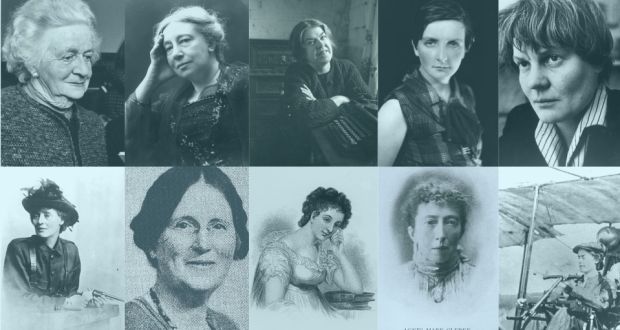
It has been more than 200 years coming, but better late than never: the provost of Trinity College Dublin wants the first woman to join the 40 men memorialised in marble busts in the Long Room of the Old Library. 


Worthy of honour:  all of these women, from Thekla Beere (top left) to Lillian Bland (bottom right), are ideal candidates for Trinity College Dublin's Long Room bust

Patrick Prendergast has asked for nominations for who should sit alongside Aristotle, Isaac Newton, Edmund Burke and Jonathan Swift, among others. The woman needn’t have a Trinity connection nor be Irish, just be a scholar who is no longer alive. 

To get the ball rolling, here are 30 Irish scholars, writers and thinkers worth considering for the honour. 

read more here @ Irish Times

Sunday, September 29, 2019

Bangladesh bride walks to groom's home in stand for women's rights

From BBC News
When 19-year-old Khadiza Akter Khushi led hundreds of people to the home of her soon-to-be husband, she didn't do it for her guests.

She did it for all the Bangladeshi women she hoped would follow in her footsteps.

The walk is thought to be a first in a country where, for centuries, the opposite has happened: men have walked to the homes of their brides on their wedding day.

Tariqul Islam (right) and bride Khadiza Akter Khushi pose for a photo during their wedding in Meherpur

"If boys can bring girls to marriage, why can't girls?" she asked BBC Bengali in the days after her wedding to Tariqul Islam had gone viral.

But it has both inspired and horrified. One man suggested the couple and their families should be beaten with slippers.

read more here @  BBC News

Mexico’s women protest violent status quo in a ‘feminist earthquake’

They were called vandals and provocateurs.

But Irinea Buendia didn’t mind. She was thinking of Mariana, chanting for an end to gender violence in Mexico, a photo of her murdered daughter hanging by a string around her neck.

This latest demonstration of women was organized under the hashtag #terremotofeminista (feminist earthquake) and controversially called on Sept. 19, the day the city marks two of its deadliest quakes. But it was just one that has gained force – and backlash – here in recent weeks.hey were called vandals and provocateurs.

But Irinea Buendia didn’t mind. She was thinking of Mariana, chanting for an end to gender violence in Mexico, a photo of her murdered daughter hanging by a string around her neck.

This latest demonstration of women was organized under the hashtag #terremotofeminista (feminist earthquake) and controversially called on Sept. 19, the day the city marks two of its deadliest quakes. But it was just one that has gained force – and backlash – here in recent weeks.

In a country where 41% of women say they’ve experienced sexual violence – and nine are killed each day, according to the United Nations – female anger is mounting. But with it has come even greater outrage directed back at them, with critics lobbing sexist slurs. Others support their goals, but not their methods. Yet far from viewing it as a step back, many of these women say the rejection of their movement is a sign that a paradigm shift is underway.

read more here @ Christian Science Monitor

Saturday, September 21, 2019

Frances Willard: Armenia’s Angel on Capitol Hill

Inside the National Statuary Hall in the United States Capitol, Washington, D.C., each state is represented by a statue of its most honored citizen. While most of the 50 states have chosen men to represent them, it was Illinois, the land of Abraham Lincoln, which became the first state to select a woman. Her name is Frances Elizabeth Caroline Willard.

When she died in 1898, flags flew at half-mast in New York, Chicago and Washington, D.C. Her body was transported by rail from New York to Chicago, pausing along the way for services like a presidential funeral train. In Chicago, tens of thousands of people passed by her casket in one day alone. Biographer Ruth Bordin wrote, “The nation mourned her with grief, admiration, and respect it would have bestowed on a great national hero or martyred president. No woman before or since was so clearly on the day of her death this country’s most honored woman.” The New York Independent wrote, “No woman’s name is better known in the English speaking world than that of Miss Willard, save that of England’s great queen.” Another declared that she was the most influential woman of the age and that her name would become more and more revered in ages to come.” Prominent British newspaper editor, W.T. Stead, went as far as calling her “the uncrowned Queen of American Democracy.”

read more here @ The Armenian Weekly

Medieval 'queen's head' carving discovered

From Fox News
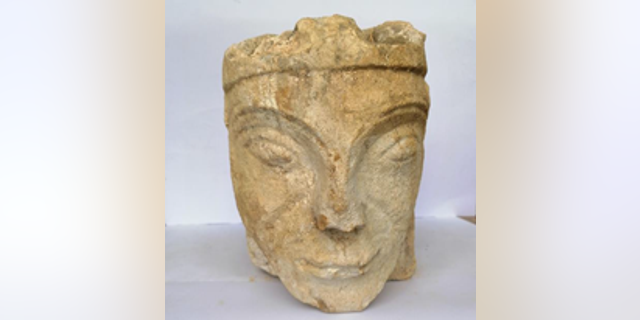
A medieval stone carving of a 12th-century queen has been discovered at an Abbey in southern England. Local officials in Milton Keynes unveiled the stone carving on Monday, explaining that it was found during conservation work at Bradwell Abbey, which dates back to the 12th century.  The carving depicts Eleanor of Aquitaine, a key figure in medieval history who was queen consort of France and, later, queen consort of England.

read more here @ Fox News

The stone carving discovered at Bradwell Abbey.

Sunday, August 18, 2019

Student reveals the face of Iron Age female druid

Student reveals the face of Iron Age female druidFrom Phys Org News
A University of Dundee student has revealed the face of one of Scotland's oldest druids, believed to have been more than 60 years old when she died during the Iron Age.

Karen Fleming, an MSc Forensic Art & Facial Identification student, has recreated the head of a woman believed to have been from Stornoway, on the Isle of Lewis.

The 3-D wax reconstruction depicts a toothless female, nicknamed "Hilda," believed to have been well into her 60s, an impressive feat itself. Karen says Hilda, although thousands of years old, displays many physical attributes that remain recognizable today.

read more here @ Phys Org News

Saturday, August 10, 2019

Meet Whang-Od, the Oldest Tattoo Artist in the Philippines

At 102 years old, Whang-Od Oggay (who also goes by Whang-od or Maria Oggay) is helping to keep an ancient tradition alive in the Kalinga province of the Philippines. She’s the country’s oldest mambabatok, a traditional Kalinga tattooist. Each morning at dawn, Whang-Od wakes to craft a mixture of ink from pine soot and water in preparation to apply hand-tapped tattoos on the bodies of people from around the world. Although many come to see her, their journey is no small feat. Visitors make a 15-hour drive north of Manila to the mountain village of Buscalan, which is only accessible by hiking a mile from the nearest dirt road through a forest and rice terraces.

Whang-Od inks multiple tattoos a day using a few tools—a thorn from a pomelo tree, a foot-long bamboo stick, coal, and water. The handmade ink is tapped deep into the skin using the thorn and bamboo to push it in. The results are permanent motifs that range from lines to simple shapes to tribal prints to animals. Each carries meanings such as strength, beauty, and fertility.

read more here @ My Modern Met

How to Silence Women

When classics professor Mary Beard tells the story of Tereus who, in Greek mythology, cuts off the tongue of Philomena after raping her, it is to point to a particularly grisly example of how women were silenced in ancient culture. 

That culture persists. Evidence lies in a Delhi hospital where the Unnao rape survivor and her lawyer remain on life support after the car they were travelling in was crushed by a truck, killing two other women in it. 

In Kerala, the Franciscan Clarist Congregation of the Catholic Church has expelled Lucy Kallappura, one of the five nuns who led the protest against bishop Franco Mulakkal, on bail on charges of raping a fellow nun. Sister Lucy’s sins? Publishing poems and learning to drive. The other four nuns have already been transferred. 

From Unnao to Wayanad, the lesson is clear. Women who speak up against sexual assault are sought to be silenced by men who are backed by institutional support.

read more here @ Hindustan Times