Sunday, November 26, 2017

Marie Lafarge - Celebrated French Poison Trial

In France, in 1840, a notorious murder trial put the young science of toxicology to a dramatic test. Rumored to be unhappy in her marriage, Marie Lafarge, age 24, was charged with poisoning her husband Charles. Witnesses had seen her buying arsenic—to exterminate rats, she claimed—and testified that she had stirred a white powder into her husband's food. The prosecution sought to build on this by introducing the findings of local doctors who performed chemical tests on Charles Lafarge's stomach and on the white powders that had been gathered as evidence.


At the resulting trial, the raven-haired Marie at first excited great sympathy. Her lawyer, Hempel says, made sure that the jury knew of “the excellence of her piano-playing, her delightful voice, her competence in more than one science, her reading and translation of Goethe, her fluency in several languages and composing of Italian verse.” She also had a flair for drama. When it was reported in court that a group of doctors had found no evidence of arsenic in the corpse, Marie responded, Hempel writes, by “clasping her hands, raising her eyes to heaven, and then fainting and having to be carried out of the court, while her lawyer sat weeping.” Other experts, however, believed that arsenic was present. About a year into the trial, the renowned toxicologist Mathieu Orfila was called upon to examine Lafarge’s remains.

read more here


This is the face of a woman who died 13,600 years ago


Researchers have revealed the face that once belonged to the oldest human remains unearthed at an ancient burial ground in Thailand.

The Late Pleistocene woman died more than 13,600 years ago, but has been resurrected in a two-dimensional image using facial approximation.

The results presented a women aged 25 to 35 years old, with a high jaw line and small almond shaped eyes – and it is believed she was just 5 feet tall.

read more here @ Daily Mail Online

Why was a teenager with bone cancer buried on Witch Hill in Panama?

IMAGEA new report by Smithsonian archaeologists and colleagues in the International Journal of Paleopathology identifies a bone tumor in the upper right arm of an adolescent who was buried in about 1300 AD in a trash heap at a site in western Panama called Cerro Brujo or Witch Hill. The reason for what appears to be a ritual burial in this abandoned pre-Colombian settlement is unknown.

The burial in question, in the largest of five ancient trash pits at the site, may have been placed there because it was the site where the individual's ancestors lived. A large town site nearby, Sitio Drago near Boca del Drago on Isla Colón, excavated by UCLA archaeologist Tom Wake was occupied from roughly 600 AD until 1410 AD.

read more here @ Eureka Alert - Science News


Grave of Disabled Prehistoric Woman


Human remains found buried in downtown Tempe, Arizona, are revealing a touching story about one young woman’s painful life and the community that cared for her more than 800 years ago.


The woman’s grave featured at least a half-dozen ceramic items, including a jar, a cylindrical vessel, a bowl placed near her head, another coated in the metallic mineral schist placed upside-down over her feet, and another bowl by her left side that contained a small ceramic effigy of a duck.

Regardless of what her medical history or social status really was, her treatment in death gives insights into what Cox and his colleagues describe as the bioarchaeology of care — a glimpse into how prehistoric cultures cared for their ill and infirm.

read more here @ Western Digs

Sunday, November 19, 2017

India's Outdated Dowry Practice is Killing Brides

Although anti-dowry laws have existed in India since 1961 (twelve years after Indian Independence), they are considered to be largely ineffective. The practice of asking for — and giving — dowry remains unchecked and rampant, and India has the largest number of dowry deaths in the world.

Under Hindu law, a woman cannot inherit ancestral property (although that seems to be changing slowly), which is how dowry must have evolved. The dowry would be registered in the bride’s name and would be under her control. It was referred to as Stridhan (woman’s property in Sanskrit). However, this was restricted to “upper castes;” lower castes practiced bride price to compensate the bride’s family for the loss of income.

read more here @ Wear Your Voice

Ancient Women & Ancient Laws

A series of articles regarding some new discoveries relation to ancient women. 

From Bangalore Mirror: Ancient Sati System
Image result for this hero stone of T DasarahalliSati was a dreaded practice among some Hindu communities in which a newly widowed woman committed suicide after her husband's death — this either voluntarily or forcefully. The widow jumping into the husband's funeral pyre was the infamous method of Sati. Over the centuries, social reformers and court orders ensured it died out.
A hero stone deciphered recently in Dasarahalli has images of a king and his two wives, who presumably had performed Sati after the death of the king in the battle. 


From the Times of Israel: 4000 Pre-Nup Agreement
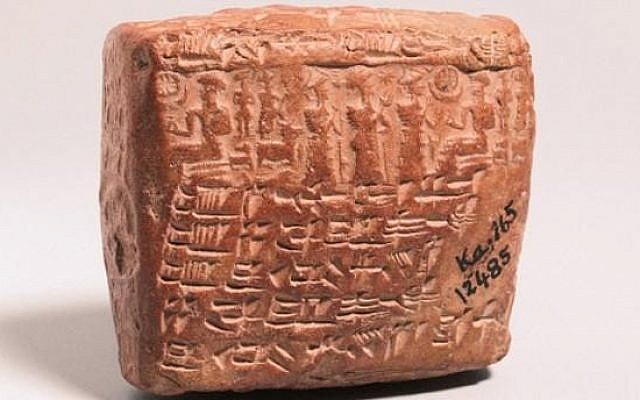
On the recently found prenup tablet, linguists uncovered what is now considered the first historical reference to infertility. According to the marriage contract, if within two years of marriage there is no issue, the couple’s infertility was to be remedied by surrogacy through the use of a hierodule, which Merriam-Webster Dictionary defines as “a slave or prostitute in the service of a temple.”

The tablet was found in Turkey’s Kültepe district, which from 2,100 BCE to 1,800 BCE was a thriving trade colony of the Old Assyrian Empire. Written in Old Assyrian and signed before four witnesses, the prenup states the wife could hire a sex slave to serve as a surrogate mother. 


From International Business Times: Ancient Surrogacy
A 4,000-year-old Assyrian tablet is the first evidence of surrogacy in infertility. (Istanbul Archaeology Museum)In the Mesopotamian civilization, society was monogamous. Hence, if one partner demands separation or divorce then according to the prenup, he would have to pay five minas of silver, which is some $1,500 in the present day, to leave the marriage.

The Assyrian idea of a wife hiring a handmaiden to give birth to her husband's child is similar to the story of Hagar and Sarai or Sarah from the Bible.

Tuesday, November 7, 2017

Archaeologists discover rare remains of pregnant woman in King Solomon’s Mines

A consortium of archeologists and researchers from Tel Aviv University have discovered the 3,200-year-old remains of a pregnant Egyptian woman in Southern Israel’s Timna Valley, adjacent to an ancient Egyptian temple in an area once known as “King Solomon’s Mines", according to a report in Haaretz.
Situated in an arid climate with scarce natural resources to sustain life, few human corpses – and no previous female remains – have been unearthed near the copper mines, which were believed to have been exploited for 500 years between the 9th and 14th centuries BCE.
“It is very rare to find human remains in Timna, and it is the first time we found a woman,” Ben-Yosef told Haaretz. “There are no water sources in Timna and it is very inhospitable, so no one ever settled there permanently,” he continued.
read more here @ Jerusalem Post

Sunday, November 5, 2017

The Lady of the Spiked Throne

Another fascinating article from Ancient Origins:
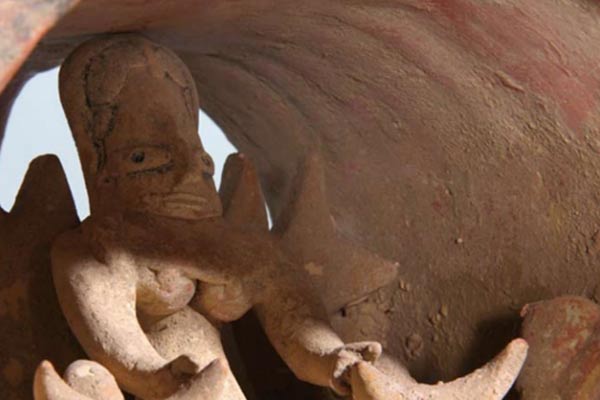
The Lady of the Spiked ThroneThe Lady of the Spiked Throne refers to a mysterious artifact from the Indus Valley civilization that has been dated to the 3 rd millennium BC. It depicts a woman in a position of power seated in a spiked throne in what has been described as a bull-headed boat or chariot. She and her crew display unusual features including large almond-shaped eyes, elongated heads or headdresses, and beak-like noses. The absence of information concerning the artifact’s provenance and archaeological context has made it difficult to determine its true origin and purpose.

[Italian archaeologist MassimoVidale questions: “Who is the lady on the spiked throne, a priestess, a queen or a divinity?”. It is a question we may never know the answer to, though it is clear that whoever she is, she is in a position of authority and is obviously held in high esteem.

Nadezhda Krupskaya – and the Russian Bolshevik Revolution

Nadezhda Krupskaya, c. 1890s Nadezhda Krupskaya was a Marxist activist, a revolutionary, and a dedicated advocate of educational reform in the Soviet Union. She was also the wife of Vladimir Lenin for 26 years, until his death in 1924.

In his [Leon Trotsky] words, Krupskaya was “at the very center of all the organization work; she received comrades when they arrived, instructed them when they left, established connections, supplied secret addresses, wrote letters, and coded and decoded correspondence. In her room, there was always a smell of burned paper from the secret letters she heated over the fire to read…”

Of course, she never thought that a critical mind could lead to individualism, which might bring capitalism and fill the spirit with consumerism. She truly believed in Marxism and that imagination could only become realistic once the nation was aware of its benefits.

read more here @ Kameni Spavač