Monday, January 29, 2018

New Website Explores the Women in Architecture

The project, titled “Pioneering Women of American Architecture,” currently features hefty profiles of 24 female architects. Another 26 profiles will be added to the collection in the future, reports Elizabeth Fazzare at Architectural Digest. To compile these biographies, a team of scholars relied on “hundreds of interviews and countless hours digging through archives,” according to the project’s website. The profiles also include photographic documentation of structures, layout plans and the women themselves, bringing the architects and their work to life.


All of the project’s featured architects were born before 1940 and worked during a time when, the website writes, women “struggled both to be allowed entry into the architectural profession and to be recognized for their work.” Visitors can learn about Louise Blanchard Bethune, the first woman to be admitted to the American Institute of Architects, and Mary Elizabeth Jane Colter, who drew on Native American construction traditions when designing landmark buildings in the Grand Canyon. The site also includes profiles of the likes of Norma Merrick Sklarek, who is lauded as one of the first African-American women to break into the field of architecture, who overcame workplace racism and oversaw major architectural projects in California.

Noeline Kyle’s significant service honoured

Lake Cathie resident Dr Noeline Kyle carved a career in higher education after returning to study as a mature age student.
The Emeritus Professor has been appointed a Member (AM) of the Order of Australia in recognition of her significant service to history, and to higher education, as a researcher, author and educator, and through advisory roles for arts funding programs.

Dr Kyle said she was absolutely gobsmacked.

She said it was important to ensure the honour highlighted not just her work but also the work of local history societies and family history societies.

Queen Nanny - Obeah Woman + Warrior

From Patheos:
Most of the time women’s history takes a back seat in the literature, this is the case with the legendary Queen Nanny. Known also as Nanny of the Maroons, this woman was a powerful leader, and a force to be reckoned with.

There are many differing reports of Nanny’s life. Some recount that she was an escaped slave, some say she may have had slaves of her own. It is irrefutable however that she was a hero of Jamaica who practiced that ancient african magick known as Obeah. Many prefer to downplay her connection to African healing methods and magicks.


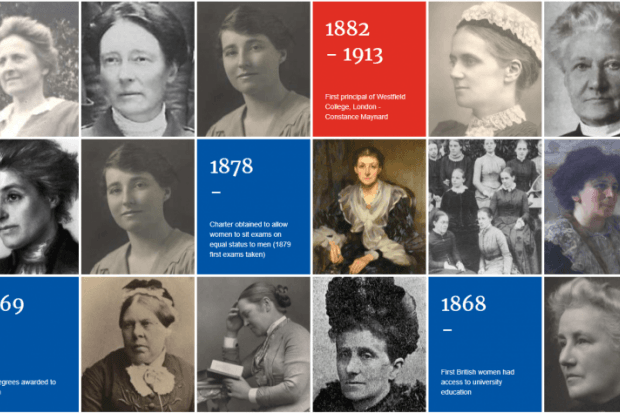
The first women at university: Remembering ‘the London Nine’


The University of London’s Leading Women campaign is celebrating the pioneering women who joined the university 150 years ago, writes Philip Carter.


At 2pm on Saturday 15 May 1869, the 17 examiners of the University of London gathered at Somerset House on the Strand. Their task that afternoon was an unusual one: to assess and grade the university’s first “General Examination for Women”, which nine candidates had sat earlier that month.

The examiners (all men) awarded honours to six of the nine women: Sarah Jane Moody, Eliza Orme,Louisa von Glehn, Kate Spiller, Isabella de Lancy West and Susannah Wood. The remaining three students – Mary Anne Belcher, Hendilah Lawrence and Mary Baker Watson – did not pass the examination. Regardless, all nine were pioneers in women’s higher education.


Why Europe was overrun by witch hunts in early modern history

From Quartz:
Why is it that early modern Europe had such a fervor for witch hunting? Between 1400 to 1782, when Switzerland tried and executed Europe’s last supposed witch, between 40,000 and 60,000 people were put to death for witchcraft, according to historical consensus. The epicenter of the witch hunts was Europe’s German-speaking heartland, an area that makes up Germany, Switzerland, and northeastern France.


As competition for religious market share heated up, churches expanded beyond the standard spiritual services and began focusing on salvation from devilry here on earth. Among both Catholics and Protestants, witch-hunting became a prime service for attracting and appeasing the masses by demonstrating their Satan-fighting prowess.

Sunday, January 21, 2018

Neolithic girl's reconstructed face unveiled

From Tornos News:

An 18-year-old girl who lived in Greece 7,000 years ago and was unearthed by archaeologists in Theopetra cave, near the city of Trikala, has had her face reconstructed and is about to officially introduce herself to the public.

Neolithic girl's reconstructed face unveiled at Athens Acropolis Museum on January 19th

Eight years after the revelation of Myrtis, the reconstructed head of a girl that once lived in Classical-era ancient Athens and died during the plague in Athens in the 5th century BC and following the international sensation that it caused, the Acropolis museum is ready to to introduce Dawn’s new face from an even earlier past, to Greek and international audiences.

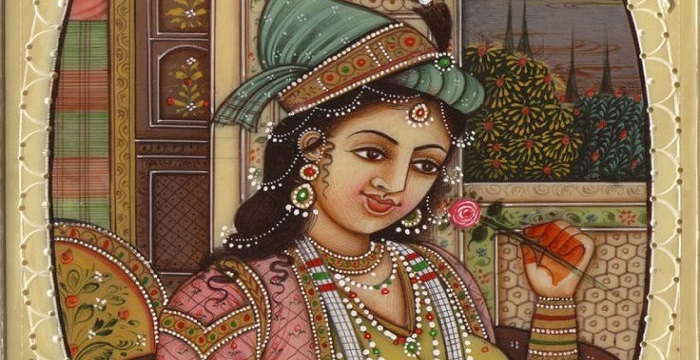
The only Empress of India was a Muslim


Not many Indians realise or remember that the only Empress of India lived and died 800 years ago.

Razia Sultana – Life History, Facts, Achievements & Death

India was ruled by slave dynasty from Turkey during 1206 and 1290 AD. Qutab-ud-din Aibak was the first emperor from slave dynasty and he set up the Delhi Sultanate. His son-in-law Iltutmish succeeded him. Razia was the daughter of Iltutmish and granddaughter of Qutab-ud-din, who had begun building the Qutab Minar in Delhi and who lies buried in Lahore.


Razia Sultan ruled over India for just about four years between 1236 and 1240, but she left an indelible imprint during this short period on Indian history.


More on Razia Sultan:

Further reading:
* The Legend Makers: Some Eminent Muslim Women of India by Gouri Srivastava
* Status of Muslim Women in India edited by Hajira Kumar
* Royal Mughal Ladies and Their Contributions by Soma Mukherjee

Tuesday, January 2, 2018

Women Around the World: Year in Review

So, another year is done. How did 2017 shape up for women and girls around the globe? Here is a selection of news:


  • Record-breaking Women's March on January 21, 2017
  • Global #MeToo campaign
  • Legal advances in the Middle East
  • U.S. Women, Peace, and Security Act is enacted
  • U.S. slashes funding for global women’s health
  • Legal reform on child marriage
  • Gains in women's political leadership
  • Low participation in peace talks
  • Global migration crisis grows
  • Female fighters combat terrorism
  • Almost four in ten businesses have no women in senior management positions in G7 countries
  • The proportion of senior business roles held by women globally stands at only 24%
  • There is an increase in the percentage of firms that have no places for women in senior management
  • In G7 countries only 22% of companies have women as part of their senior staff
    • 39% of companies have no women in senior roles whatsoever in G7 countries
    • In Japan, with its powerhouse economy, only 7 percent of companies have women in senior roles
    • Germany, another country with a strong economy, has only a 15% rate of countries with women in senior roles
  • women's march
  • U.S. cuts funding to UNFPA
  • Canada announces international assistance policy
  • Family Planning receives funding boost
  • advancements in women's rights globally
  • Global #metoo campaign
  • widening of the Global Gender Gap


  • the year in Movies

Rwanda: The Women Who Made a Difference in 2017

Rwandan women have over the years made progress in various sectors, taking on male-dominated fields with zeal and confidence. As the year comes to an end, Sharon Kantengwa looks at some of the women who made commendable strides in 2017:
  • - Jolly Mutesi
  • - Alice Umuhoza
  • - Vanessa Bahati
  • - Aimee Laetitia Umubyeyi and Malaika Uwamahoro
  • - Beth Gatonye
  • - Yvette Ishimwe and Kellia Uwiragiye
  • - Elsa Iradukunda
  • - Sonia Mugabo
  • - Hope Azeda
  • - Charly & Nina