Showing posts with label medieval france. Show all posts

Saturday, June 25, 2016

Researchers Unlock the Mystery of the Mummified Lung of a Merovingian Queen

Researchers Unlock the Mystery of the Mummified Lung of a Merovingian Queen | Ancient Origins

In 1959, an inexplicably well-preserved lung was found in a stone sarcophagus in the Basilica of St. Denis, Paris, France. Since then, researchers have often wondered just how the lung of the 6th century Merovingian Queen Arnegunde had withstood the passage of time so well. Now, an international team of researchers has found a somewhat surprising explanation.

The remains of Queen Arnegunde were found in 1959 by the archaeologist Michel Fleury. Along with the skeleton and preserved lung were a strand of hair, jewelry, and several fragments of textiles and leather. A gold signet ring, with the inscription "Arnegundis" showed that the remains belonged to the Merovingian Queen Arnegunde (c. 515/520-580) - one of the six wives of King Clotaire I (c. 497 – 29 November 561), and the mother of King ChilpĂ©ric I (c. 539 – September 584).
Read More at Ancient Origins

Monday, December 28, 2015

Ring 'belonging to Joan of Arc' is set to go under the hammer at auction

A 15th century ring believed to have been owned by Joan of Arc will go under the hammer in London.

The ring, thought to have been worn by the patron saint before her death and handed down through King Henry VII, is set to be auctioned in February.

The piece is said to have been given to the French heroine by her parents before she was burned at the stake by the British when she was just 19 years old in 1431.

The ring matches a description, revealed in transcripts, given by Joan of Arc herself during the trial which resulted in her death.

She said it has the inscription 'Jhesus Maria' as well as three crosses, and was made from either gold or brass. She claimed it was on her hand when she touched St Catherine, who appeared before her in a vision.


Sunday, June 5, 2011

The Maid: New Joan of Arc Novel

New book on Joan of Arc - The Maid by  Kimberly Cutter:
It is the early part of the fifteenth century and the tumultuous Hundred Years War rages on. The French city of Orleans is under siege, English soldiers tear through the countryside wreaking destruction on all who cross their path, and Charles VII, the uncrowned king, has neither the strength nor the will to rally his army. And in the quiet of her parents’ garden in Domremy, a twelve-year-old peasant girl, Jehanne, hears a voice that will change her life – and the course of European history.

Monday, March 14, 2011

Joan of Arc - Another Theory

I have shamelessly poached this topic from a history forum, which posed the question back in 2006 - was Joan of Arc really a man.  Now, the thinking behind this was related to a medical condition known as "testicular feminization syndrome" or "complete androgen insensitivity syndrome".

From the website: "The complete androgen insensitivity syndrome is usually detected at puberty when a girl should but does not begin to menstruate. Many of the girls with the syndrome have no pubic or axillary (armpit) hair. They have luxuriant scalp hair without temporal (male-pattern) balding. They are sterile and cannot bear children."

What do we know of Joan that might fall into the above catergory.
1. There was no obvious signs of menstration.
2. She bore no children - child bearing would have been common for a girl of her age - and engaged in no known sexual activity.
3. Despite the saintly modern day depictions, Joan was, by nature of her ancestry, considered to have been short, dark complexioned and swarthy - almost masculine in appearance.
4. Yes she did undergo an "inspection" to ascertain that she was still "virgo intacta" - but would those women who examined her have been at all familiar with a medical condition in which a male took upon, to all intents and purposes, female form.  And quite frankly, no man would have undertaken such an intimate examination of a woman.
5. The Duke of Alencon, in his later reflections on Joan, was said to have remarked "... it was if she had known how to be a man-at-armss following the wars since her youth.."  And the Burgundian Chronicler Georges Chastellain also commented on her manly skills.

So, just as there is the mystery of Pope Joan - could we have the mystery of John of Arc??

Thursday, December 16, 2010

Henri IV of France Identified

The skeletons of kings and queens lying in mass graves in the Royal Basilica of Saint-Denis in Paris could finally have the solemn funeral ceremonies they deserve, say experts in the Christmas issue published in the British Medical Journal.

Many of the graves in the Royal Basilica were destroyed by revolutionaries in 1793 and very few remains of the mummified bodies have been preserved and identified.

Dr Philippe Charlier led the scientific breakthrough that has identified the head of the French King, Henri IV.

A team of scientists from different fields of expertise including anthropology, pathology, forensic medicine and genetic studies worked together to make the identification.

Henri IV was known as the "green gallant" because of his attractiveness to women or "good King Henry" because of his popularity amongst his people.

Despite his popularity, Henri IV was assassinated in Paris at the age of 57 on 14 May 1610 by Francois Ravaillac, a fanatical Catholic. Along with the bodies of other French kings and queens, his remains lay in the graves of the Basilica of Saint-Denis, before the graves were desecrated and the corpses mutilated in the wake of the French Revolution.

The authors conclude that "similar methods could be used to identify all the other kings' and queens' skeletons lying in the mass grave of the basilica, so that they can be returned to their original tombs."

See also this post from BBC News

Monday, November 8, 2010

Review: The Last Duel

My rating: 5 of 5 stars

The story of the Last Duel focuses on the last "legalised" duel to be held in medieval France in which one man seeks justice through trial by combat.

The two protagonists are a knight and a squire. First, these are misleading titles. Both are military men of comparable age; both men were - in the few years prior to the duel - of the rank of squire. One man was knighted on the field of battle - the other on the field of justice - therefore at the time of the duel both men were of equal rank. The title of squire or "escuier" was ascribed to a "battle hardened veteran" rather than the romanticised vision of a youth attending to his master. Though squire did serve their superiors, the context, in this case, as with the title of knight, is purely a military one.

Now to the protagonists themselves. There was a long period of friendship between the two, which slowly dissolved as one received preference over the other; and one felt that he was more deserving of preferment than the other. Tensions finally boil over when one man accuses the other of rape and violence against his wife, culminating in the long drawn-out process of having the case examined and pondered before (to the delight of all), the duel to the death is granted.

Jager goes to great lengths to fill in the background information on those involved and to enlighten the reader on the intracies of medieval French politics and law. In bringing the suit forward, the women herself, if her testimony proves false, faces a most grusesome end - to be burnt alive - and her champion, certain death. There is no half measures - at the end of the day, someone will die.

I have been wanting to read this book for some time since it was recommended to me about four years ago. And I highly recommend it myself.

Monday, November 1, 2010

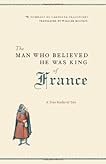
Review: The Man Who Believed He Was King of France


Interesting - a switched-at-birth story based in France during the reign of King Philip IV and his sons.

The first five chapters of the book deal with the story of Giannino di Guccio who is told that he is the real King of France, though switched at birth, by Colia di Rienzo, Senator (sometime Dictator) of Rome. We follow Giannino as he leaves his home in Siena to set out to prove (by what ever means) that he is indeed Jean I, King of France.

France at this period was locked in a bitter struggle with England over who was entitled to inherit the French throne after the death of Phillip the Fair and his sons. It it the time of the Hundred Years War - and there are many factions eager to see a destablising of political power in France.

The second half of the book deals with the author Tommaso di Carpegna Falconieri's search for the truth behind the story. Was Giannino myth or real? Was his story real or a complete fabrication? Was there any historical "truths" that could support or not such a story.

Falconieri was not the first author to write of Giannino - those who have read Maurice Druon's "Les Rois Maudits" would be familiar with his story.

So fact or fiction - I'll let you decide.

Friday, January 1, 2010

D'Artagnan's Grave

From the Ottawa Citizen (November 2008):
"A five-year quest to locate the tomb of d'Artagnan -- the inspiration for Alexandre Dumas's novel The Three Musketeers -- has led to a small Dutch church where new research suggests the swashbuckling hero is buried.

Charles de Batz de Castelmore d'Artagnan died during the Siege of Maastricht on June 25, 1673, and, according to a leading French historian, was laid to rest only few kilometres away at Saint Peter and Paul Church in Wolder."

I recently read "The Man in the Iron Mask" by John MacDonald. It is an indepth research into 17thC France and the secrecy surrounding the identity of the Mask. Apparently all four Musketeers were real - and the MitIM was not Fouquet as is popularly believed. There were three other important "political prisoners" jailed with Fouquet one of which was the Mask. Whilst 17thC France is not my forte, this makes for very interesting reading.

Friday, December 25, 2009

Diane de Poitiers

From the Telegraph:
The mistress of France's 16th century King Henry II was poisoned by a gold elixir she drank to keep herself looking young, scientists have discovered.

Diane de Poitiers was renowned for her youthful looks and porcelain skin and thought the concoction preserved her youth.

Experts say she was up to 20 years older than the king but her appearance made them look the same age. One courtier said she was "as fresh and lovable" in her final years as when aged 30 and had skin "of great whiteness".

But her secret was the elixir she drunk every day made up of gold chloride and diethyl ether.

The breakthrough came when they [the scientists] studied locks of her hair kept at the chateau d'Anet: these were found to contain gold 500 times above normal levels, as well as mercury – used as a "purifier" in the elixir.

Friday, November 20, 2009

Review: Women & Aristocratic Culture

Valerie Garver's book "Women and Aristocratic Culture in the Carolingian World" is reviewd by Matt Liporata @ Northern Star Online.

Valerie Garver, assistant professor of history, wrote the book “Women and Aristocratic Culture in the Carolingian World,” published earlier this month by Cornell University Press. The book, as the title implies, focuses on aristocratic women’s roles during the eighth and ninth century.

In the book, Garver illustrates that women played integral roles in Carolingian society despite legal and social restrictions. The Carolingian dynasty was one of the largest empires in medieval European history. Occupying much of western Europe, the dynasty served as an influence on many other empires of the era, bringing cultural renaissance to the area.

Sunday, September 20, 2009

Maggie Anton: Rashi’s Daughters

From Heritage Florida Jewish News:
The Sabra Group of the Orlando Chapter of Hadassah and Congregation Ohev Shalom Sisterhood present Maggie Anton, author of “Rashi’s Daughters,” for an afternoon of discovery and discussion on Sunday, Oct. 18. It’s an opportunity to meet the author learn about Jewish life in 11th-century France. The event, scheduled for 3 p.m. at Congregation Ohev Shalom, will include a lecture, a tea and dessert reception with the author, book purchases and signing. The cost is $25.

Anton has written a trilogy of novels entitled “Rashi’s Daughters: A Novel of Love and the Talmud in Medieval France,” based on historical facts known about Rashi’s life and extensive research by Anton about what life was actually like during the 11th century in France. Rashi (1040-1105) wrote the greatest commentaries in Jewish exegeses on the Talmud. It is a known fact that Rashi, who had no sons, secretly imparted his passion and knowledge of the Talmud to his three daughters.