Tuesday, December 25, 2018

The modern Amazons: an island in Brazil, where women live alone.

The tradition of the “female tribe” is not so ancient as the Amazons described by the ancient authors, and warlike, and the more wild these ladies will not name.

The only thing that distinguishes these “ladies” from us to you, is the complete lack of men in the County.

In Brazil there is a village “Cordeira de Noiva” , which has existed for more than 100 years. It is home to about 600 representatives of the fair half of mankind, and their children, rather, only daughters.


read more here


Saturday, December 15, 2018

Protection or Profit? The 1000 Prostitutes Employed by the Church in 12th Century London

The modern Christian church does not condone prostitution and would never consider getting involved with it. However, in 12 th century England, a borough of London known as Southwark had eighteen licensed brothels with about one thousand prostitutes employed therein! All of these brothels were run by the church and brought in large sums of money for building churches and other ecclesiastical duties.

Officially, the church could not condone prostitution. However, there were no rules against them profiting from it. It's important to understand that bishops in medieval England were not just churchmen, but politicians and statesmen too. St. Thomas Aquinas likened the place to “a cesspool in the palace; take away the cesspool and the palace becomes an unclean evil-smelling place.” Therefore, prostitution was seen as a necessary evil to gain revenue for the church.


read more here @ Ancient Origins

see also @ The Malta Independent - Nuns Who Lived Off Prostitution

The sexual assault case that shook Ancient Rome

From The Week:
Image result for ancient roman actresses"You say that he raped an actress," Cicero told the court. "And this is said to have happened at Atina, while he was quite young."

There was a low, subdued chuckle from the crowd. They were all men — women weren't allowed inside the courtroom — most from the town of Atina themselves. They'd made the 80-mile trip to support a man they respected, whom they believed had been unfairly accused.

His name was Gnaeus Plancius (Quaestor in Macedonia in 58 BCE), and in the year 54 B.C., he was one of the most powerful men in Rome.  She was just a little girl when Plancius attacked her. 

Her name has been lost to time — nobody bothered to write it down. To the Roman Republic, she was just some woman in Atina who'd flaunted her skin on stage and then acted surprised when a red-blooded man couldn't control himself.

read more here @ The Week

Egypt’s female pharaohs and what really stood behind their power

A woman has yet to be elected to the highest office in the United States, but 3,000 years ago in ancient Egypt it wasn’t unusual for women to rule—and some became all powerful, like Cleopatra and Nefertiti. Yet as Kara Cooney explains in her new book, When Women Ruled the World: Six Queens of Egypt, those women were ultimately only placeholders for the next male to take the pharaoh’s throne.

When National Geographic caught up with Cooney by phone in Los Angeles, she explained why Hatshepsut was so perfect; how Cleopatra grew up in a family that makes the Sopranos seem like lambs; and what these women symbolize for their society—and ours.

read more here @ National Geographic

Saturday, November 3, 2018

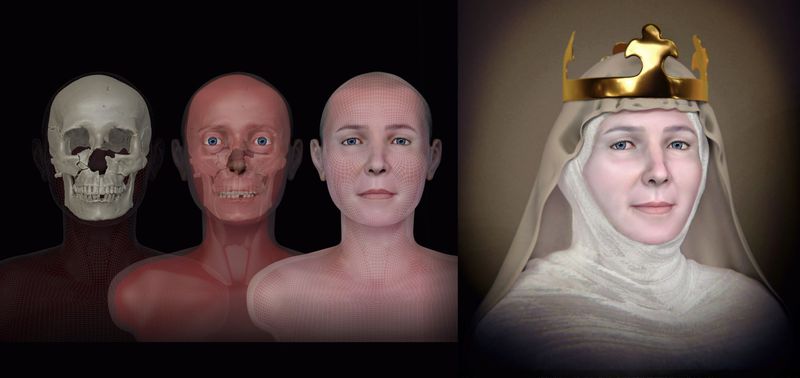
Putting a face to Queen Judita, Saint Zdislava, and the ‘Vampire of Čelákovice’

Her beauty and mind were said to have been beyond compare. But when the remains of Judita of Thuringia were first unearthed sixty years ago in the Benedictine monastery of Teplice, there was no way to tell whether the royal chronicler hadn’t rather exaggerated the feminine charms of the Queen consort of Bohemia. After all, she’d been dead for more than eight centuries. But now, thanks to a team of Czech scientists, archaeologists, artists – and a Brazilian expert in digital facial reconstruction – you can judge for yourself.

Queen Judita, photo: archive of Cícero André da Costa Moraes

Writing in the year 1167, the chronicler Vincentius described Queen Judita, by then in her early thirties, as a “lady of stature whose beauty exceeds the human form, almost as if she were divine offspring.” The venerable scribe goes on to praise her enterprising spirit, exemplary knowledge of the arts, science and literature, and fluency in Latin and the affairs of men – politics.

read more here @ Radio Prague

Saturday, October 27, 2018

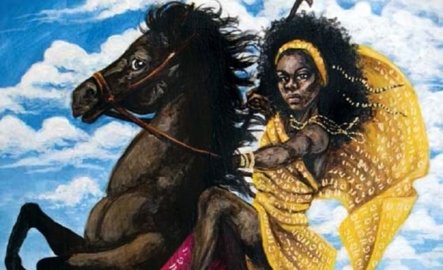
Akua, the influential slave healer who became queen in Jamaica

The Queen of Kingston in Jamaica or Cubah Cornwallis, as she is popularly known, is lost in history due to the improper documentation that makes it hard to follow or believe in her existence. In trying to read about the adventurous life of this woman who took the unwilling journey into slavery from Africa and was later executed for resisting oppression, it is easy to think that one is reading about two different women while trying to make sense of her story. That withstanding, it is equally important to attempt to make sense of her story and tell it as it is – an important part of history.

Cubah Cornwallis’s real name was Akua from the Ashanti Empire in Ghana which was then the Gold Coast. Nothing much is said about her life before being captured and sold off as an enslaved girl to the Carribean, but through historical readings, it can be speculated that she was captured during the early years of the many Ashanti Empire wars in an attempt to expand their Empire and have more power than the British.

read more here @ Face2Face Africa

Savitri Devi: The mystical fascist being resurrected by the alt-right

From BBC News:
Savitri Devi, a mystical admirer of Hitler and a cat-loving devotee of the Aryan myth, seemed destined to fade into obscurity after her death 25 years ago. But thanks to the rise of the extreme right, her name and her image now crop up online more and more, writes Maria Margaronis.

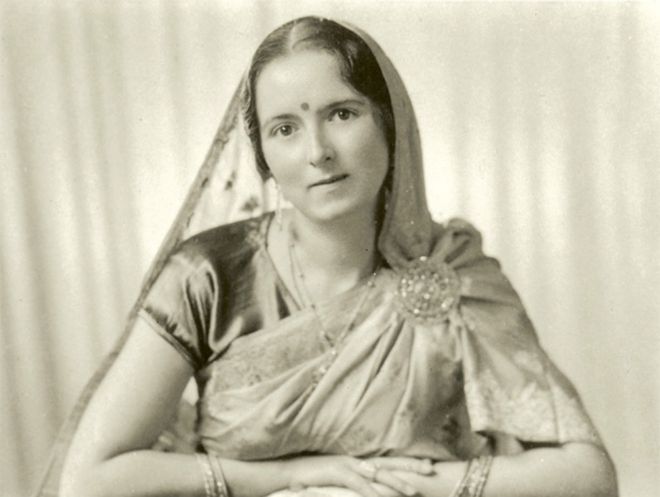
Savitri Devi

Who was Savitri Devi, and why are her ideas being resurrected now? Despite the sari and the name she was a European, born Maximiani Portas to an English mother and Greek-Italian father in Lyon in 1905.

Savitri Devi herself is almost forgotten in India now, but the Hindu nationalism she espoused and helped to promote is in the ascendant, much to the concern of her nephew, the veteran left-wing journalist Sumanta Banerjee.

"In her book A Warning to the Hindus, which came out in 1939, she advised the Hindus to cultivate a 'spirit of organised resistance throughout Hindudom,'" he says. "The targets of this resistance were the Muslims, who were a threat, according to her, to the Hindus. And this is the same fear that is being echoed today."


read full story here @ BBC News and @ Savitri Devi Archive

China's "leftovers" are rejects in a man's world

In China, hysteria is growing about a rising number of so-called “leftover women”, who are highly successful but remain unmarried. A new study suggests that the country’s traditional, patriarchal society may be to blame.

Successful Chinese women who have been publically shamed as “leftovers” because of their failure to marry, often remain single because men are uncomfortable with their careers and achievements, a study has found.
As the derogatory term implies, the “leftovers”, all in their late 20s or early 30s, are typically scorned for having only themselves to blame. In 2007, the Chinese Ministry of Education attributed their failure to find a husband to their “overly high expectations for marriage partners”, in an official explanation of what sheng nu means.

Now a rare investigation into the experiences of the women themselves has reached a rather different conclusion. The study, by sociologist Dr Sandy To, found that these women struggle to find a lasting relationship because of the constraints of the conservative, patriarchal society in which they live. Far from spurning suitors, they badly want to be married, but find that men reject them.

read more here 

Differences Found in Women's Birth Canals Are Contradicting What Evolutionary Science Told Us

An analysis of hundreds of women's skeletons from across the world dating as far back as 2000 BCE shows birth canals exhibit more diversity than scientists ever realised. And we missed those differences due to medicine's historical focus on one particular body type.

"An obstetrician's training is based on a model of the pelvis that has been developed from European women," evolutionary anthropologist Lia Betti from the University of Roehampton in the UK told AFP.

"But the typical pelvic shape and typical childbirth pattern can differ among populations. An update seems necessary, especially in a multi-ethnic society."

read more @ Science Alert