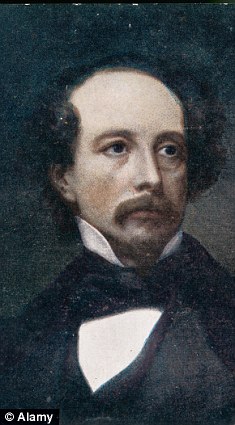
Perhaps no Prince of Wales in history has been less trusted — or more spied upon — than the boy everyone knew as Bertie.
Showing posts with label victorian england. Show all posts
Thursday, August 16, 2012
Queen Victoria's Bad Boy Bertie
From Mail Online:
Perhaps no Prince of Wales in history has been less trusted — or more spied upon — than the boy everyone knew as Bertie.
When he attended a military summer camp, at age 19, the future King Edward VII was surrounded by minders: two stern Grenadier officers, a colonel and a general. He even had to share a general’s quarters.
Happily, however, they had not thought to lock Bertie’s bedroom window. So, one night, the heir to the throne wriggled out, made a beeline for the camp prostitute — one Nellie Clifden — and triumphantly lost his virginity.
Nor did it help that the birth of her son and heir was difficult: the baby was exceptionally large, and Victoria — at 4ft 11in — exceptionally small. Afterwards, she was dogged by post-natal depression for nearly a year.
Bertie, named after his father, was tossed to a wet-nurse — a woman called Mrs Brough, who later murdered her own six children in a fit of madness.
So needy was Victoria for Albert’s love that she had little affection to spare for her second child. In any case, she thought Bertie was ugly — ‘too frightful’ and also ‘sadly backward’.
A royal wedding, she decided, presented the perfect solution: it would not only remove the presence of her irksome son but also stop him lusting after loose women. Bertie must wed the unprepossessing Alexandra.
Desperate to please her, he did precisely as he was told. But as I will reveal on Monday, far from taming him, marriage would turn Bertie into a world class womaniser, who justly deserved his nickname ‘the Prince of Pleasure’.
Excerpts from "Bertie: A life of Edward VII" by Jane Ridley
Mary Pearcey - Jill The Ripper?
From History Channel:

It’s true that while many theories about the killer’s identity have emerged over the years, some of them more implausible than others (Lewis Carroll of “Alice in Wonderland” fame?), the police only had four actual suspects—all male. But after a witness said she saw the fifth Ripper victim, Mary Kelly, hours after she was murdered, the chief inspector in the case suggested it might have been the female killer escaping in Kelly’s clothing. Later proponents of this “Jill the Ripper” theory suggest that a midwife (possibly an abortionist) would have had the anatomical knowledge usually attributed to the Ripper, and would have had easy access to her female victims.
As the theory goes, the most likely suspect may be Mary Pearcey, who was convicted and hanged in 1890 for the murder of her lover’s wife and child—and who had used a method similar to the Ripper’s to commit the crime.
Tuesday, July 24, 2012
Historic Newspapers
If you do not know already about this great service, then here is the lowdown.
They were carefully wrapped and boxed for the long journey down under - and arrived in very good condition!
Historic Newspapers offers you a selection of original newspapers dating back as far as the 1800’s. The archive is made up of of over 7 million editions from all over the world. To date the UK titles have been catalogued as far back as 1900 by date and title, there are also lots of US and regional issues, as well as many from the Victorian era.
These have proved to be popular gifts for milestone events, particularly birthdays and anniversaries, but also for historians and schools. In addition, Historic Newspapers offer free teaching history resource packs and also have a newspaper research facility with a dedicated team in place for special requests.
My copies arrived yesterday - thanks Thomas!
- Times 18 August 1820 Trial of Queen Caroline
- Times 4 April 1913 Trial of Mrs Pankhurst (Suffragette leader)
- Times 5 July 1934 Death of Marie Curie
They were carefully wrapped and boxed for the long journey down under - and arrived in very good condition!
I urge you all, researchers and readers alike to avail yourselves of this wonderful service. And folks, the kind people at Historic Newspapers are offering readers a special discount on all purchases over £5.00 - just type in the code: 15TODAY when finalising your order.
Happy reading!
Saturday, May 26, 2012
Hysteria or The Invention of the Vibrator
From the Examiner:

Hysteria deals with a rather dark period in women's history, and especially that of the medical profession. Set in 1880 Victorian London, where doctors still rely on blood sucking leeches as a regular form of treatment, medical science was even more clueless when it came to the care of women. It didn't help that health care was basically an all boy's club, and that guys knew even less about females than we do now, which is still extraordinarily little. Women were thought to be joyless, sexless creatures. It was either that or they were promiscuous lunatics needing to be institutionalized. There was no middle ground. So when it came to women dealing with common issues like depression, anxiety, or discontentment, guys just conjured up a catch-all by labeling it "female hysteria".
See also: Female Hysteria from wikipedia and The Victorian Era website.
Monday, December 26, 2011
Was Dickens Anti-Women?
From the Mail Online:
For all his genius, the writer was an abusive husband who seduced a woman 26 years his junior and virtually abandoned his children.
Yet, as we near his bicentenary, we should remember that this was a man tortured by the memory of poverty as a child, thin-skinned, cruel to his wife (Catherine Hogarth), dismissive of his children, a slave to overwork and, ultimately, victim of an early death, worn out not least in the effort to support himself, his estranged wife, and his mistress (Ellen Ternan)and her family.
His is a very Victorian story of social mobility, sexual hypocrisy, and tortured genius.
Of Interest:
Friday, May 6, 2011
Fleet Street Editor: Rachel Beer
From the Jewish Chronicle Online:
Until very recently if you Googled the name Rachel Beer you would not come up with anything very much, certainly nothing to suggest that she did what no woman has done before or since - edit both the Observer and the Sunday Times. Indeed, for eight years she was in editorial control of both papers.
Israeli writers Yehuda Koren and Eilat Negev, who have written a book, The First Lady of Fleet Street, about her life, only happened upon her by chance on a visit to London. The Jerusalem–based married couple discovered the story during a visit to Highgate Cemetery.
Koren recalls: "We took a guided tour of the cemetery five years ago and came across the grave of a man called Julius Beer. He had built a mausoleum to block the view of the Victorian aristocrats who had ostracised him. It was an act of revenge. The name sounded Jewish but if he was Jewish what was he doing in Highgate Cemetery? We started looking for information and one thing led to another - we unearthed the story of his daughter-in-law, Rachel."
Saturday, December 11, 2010
Historic Hospital Admission Records Project
A fascinating and rare set of hospital records dating from Victorian times has been put online.
The records tell the stories of poor, sick children who were admitted to Glasgow Hospital for Sick Children from 1883 to 1903.
It is part of the Historic Hospital Admission Records Project being run by Kingston University in London.
The records give an insight into the common diseases and conditions of Victorian times.
Very few records from children's hospitals have survived from Victorian times.
Only two more sets are known to exist in the whole of Britain: for Edinburgh and Aberdeen hospitals.
Historians at Kingston University hope to digitise these remaining records in future.
Tuesday, October 13, 2009
London: Sin City
I came across this ever so interesting article on London, 18th century city of vice and immorality posted on Canadian Content. Hope you enjoy this snippet:
Eighteenth century London evokes images of fine Georgian buildings, many of which are still standing, and fine art.But in reality, it more of was a modern day Sodom, the biblical city synonymous with sexual depravity, and from which English gets the word "sodomy" (to North Americans, the eighteenth century is ancient history, but to the British it is relatively recent).It was a city of depravity and vileness (as for it high crime and murder rate, and the brutal methods of punishment, that's another story).It is thought that there were almost 63,000 prostitutes in London in the 1700s and that a staggering one in five of London's women were "harlots."In fact, London's prostitutes generated an estimated gross turnover of around £20 million (£1.5 billion in today's money).This was big business. Famous prostitutes became the celebrities of their time in Britain, including Lady Hamilton, the mistress of Lord Nelson. The fictional Moll Flanders is reputedly based on the real life Moll King. One of her customers was the author of Moll Flanders, Daniel defoe.The 18th Century British artist William Hogarth, who painted scenes of London that were as accurate as he could get them (18th Century London is often referred to as Hogarthian London), immortalised London's prostitution industry in A Rake's Progress (1732-33).Grotesquely (though, remember, only to the eyes of someone in the 21st Century) child prostitutes also plied their trade in London, some as young as eight. The British even believed that sexual intercourse with a child cured veneral diseases.And, of course, veneral diseases were rife, such as syphilis and gonorrhea.
Saturday, October 10, 2009
Killer Revealed
Further on from my post: Ripper's Victims, comes this article from the Telegraph:
Mei Trow used modern police forensic techniques, including psychological and geographical profiling, to identify Robert Mann, a morgue attendant, as the killer.
His theory, the result of two years intensive research, is explored in a Discovery Channel documentary, Jack the Ripper: Killer Revealed.
Trow makes another startling conjecture, that the Ripper killed another two women.
He believes Martha Tabram, found with 39 stab wounds to her body in Gunthorpe Street, was the first of Jack's victims, and Alice Mackenzie, brutally murdered eight months after the confirmed five killings, was his last.
JACK THE RIPPER: KILLER REVEALED will be aired on the Discovery Channel on Sunday October 11 at 9pm. The accompanying book, Jack the Ripper: Quest for a Killer, is published by Pen & Sword.
Tuesday, September 22, 2009
Ripper's Victims
I must admit that when it comes to Jack the Ripper, I am a bit of a ghoul. I have a fascination with the whole case and the mystery surrounding these brutal crimes.
So I was particularly interested by this article from the Mail Online about the earlier lives of the victims of the Ripper: How Jack the Ripper's five victims turned to prostitution after their marriages failed.
And for those of you like myself, the Casebook Forum may be of interest.
So I was particularly interested by this article from the Mail Online about the earlier lives of the victims of the Ripper: How Jack the Ripper's five victims turned to prostitution after their marriages failed.
Over the last century they have passed into gruesome folklore, but Victorian census records on Jack the Ripper's victims cast new light on the lives of some of the murdered prostitutes.An online genealogy website which trawled the 1881 census - taken seven years before their deaths - has pulled together information on the women that 'provides a small window onto the past' and dispels the myth that they had been teenage street walkers.
The five - Mary Ann Nichols, Annie Chapman, Elizabeth Stride, Catherine Eddowes and Mary Jane Kelly - were all brutally murdered in London's East End between August 31 and December 20, 1888. Their bodies were left horribly mutilated on the streets of Whitechapel. Their murderer was never caught.
Although prostitutes at the time of their violent murders, three of the five had previously been married, according to records taken on April 3, 1881.
And for those of you like myself, the Casebook Forum may be of interest.
Subscribe to:
Posts (Atom)