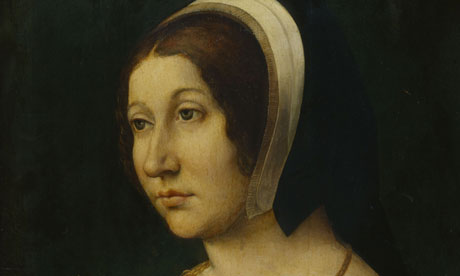
|
| Mona Lisa |
With interest in the Mona Lisa
in the media over the past few years, I have decided to share with readers some
of the more interesting articles that have appeared.
From
BBC News: Mona Lisa pregnancy mooted –
The famous smile on Leonardo Da Vinci's Mona Lisa could be because she is
pregnant or had just had a baby, research suggests.
"This
type of gauze dress ... was typical of the kind worn in early 16th Century
Italy by women who were pregnant or who had just given birth," said Bruno
Mottin of the French Museums' Center for Research and Restoration.
From
Live Science: Amateur historian claims he has found Mona Lisa’s resting place –
An amateur historian said Friday that he has found the final resting
place of the woman some believe inspired Leonardo da Vinci's most renowned
painting, the "Mona Lisa.''
A death certificate shows that Lisa Gherardini—the
Renaissance woman some believe was the model for the "Mona Lisa''—died on
July 15, 1542, in Florence and is buried in a convent in central Florence,
Giuseppe Pallanti said.
From The
Telegraph: Riddle of Mona Lisa solved: she was the mother of five –
Leonardo Da Vinci's Mona Lisa, the world's most enduring
symbol of feminine mystique, is actually a portrait of the virtuous wife of a
family friend, who had five children including two daughters who became nuns.
"The portrait of Mona Lisa, done when Lisa Gherardini was aged
about 24, was probably commissioned by Leonardo's father himself for his
friends, as he is known to have done on at least one other occasion.
"This would have been Ser Piero's way of
giving a helping hand to his son, who was hopelessly vague when it came to
money matters."
Mr Pallanti also found the registration of the
wedding on March 5, 1495, between Lisa, then 16, and Ser Francesco, who was 14
years her senior. His first wife, Camilla Rucellai, had died the previous year.
 |
| Nude Mona Lisa |
From
Discovery News: Nude, Mona Lisa like painting surfaces –
Leonardo da
Vinci, in a Renaissance version of Mad Magazine, may have painted his famous
Mona Lisa in a number of ways, including nude. Now, a painting has surfaced
that looks much like the original, sparking debate over just how far the master
took his iconic painting.
The
newly revealed painting, hidden for almost a century within the wood wall of a
private library, shows a portrait of a half-naked woman with clear links to the
famous (and clothed) Mona Lisa.
A note dating
to 1845 records that the Cardinal bought "the portrait of the Mona Lisa,
mistress of Francis I, by Leonardo da Vinci," from the Rospigliosis, a
rich aristocratic Roman family.
From
IOL News: The eyes have it –
Hidden in the dark paint of her pupils are tiny
letters and numbers, placed there by the artist Leonardo da Vinci and revealed
only now thanks to high-magnification techniques.
Experts say the barely distinguishable letters and
numbers represent something of a real-life Da Vinci code.The revelation could
have come straight from the pages of Dan Brown’s best-seller “The Da Vinci
Code”, in which the Mona Lisa is said to contain hidden clues about the Holy
Grail.
From
Live Science: 25 Secrets of the Mona Lisa Revealed –
New images uncover 25 secrets about the Mona Lisa, including
proof that Leonardo da Vinci gave her eyebrows, solving a long-held mystery.
"The face of Mona Lisa appears slightly wider and the
smile is different and the eyes are different," Cotte said. "The
smile is more accentuated I would say."
From
The Telegraph: Identity of Mona Lisa revealed –
However, academics at Heidelberg University say scribbled notes in the margin of a
book 500 years old are the evidence that proves the woman with the strange
half-smile, whose portrait hangs in the Louvre in Paris, is Lisa Gherardini,
the wife of Giocondo, a Florentine merchant.
Many aficionados have long supposed La Gioconda, as she was also known,
was the sitter, from comments made by Giorgio Vasari in 1550.
But Vasari's identification was made 50 years after Leonardo painted the
Mona Lisa, and, the university said he was noted for elaborating the truth.
Now notes written by Agostino Vespucci, who knew
Leonardo, found in the university library, confirm the sitter as Lisa del
Giocondo.
From
Discovery News: Was Mona Lisa a dude? –
Italian
researchers who specialize in resolving art mysteries said Wednesday they have
discovered the disputed identity of the model for Leonardo da Vinci's Mona Lisa
-- and claimed he was a man.
 |
| Mona Lisa |
 |
Salai as da Vinci's
John the Baptist |
Salai, real
name Gian Giacomo Caprotti, an effeminate young artist who worked with da Vinci
for 25 years, is thought to have served as a model and muse for several of his
paintings. The pair had an "ambiguous" relationship and were probably
lovers, Vinceti said.
Comparisons
between the facial characteristics of figures from several of da Vinci's works
-- such as "St. John the Baptist" and the "Angel Incarnate"
-- reveal striking similarities with the Mona Lisa's nose and mouth, he said.
From
SIFY News: Hunt for Mona Lisa: Archaeologists Find New Tomb –
Archaeologists digging for the remains of a 16th-century
woman believed to be the model for Leonardo da Vinci's Mona Lisa have found a
crypt and a stairway to a second tomb inside a medieval convent in Florence.
But most modern scholars now agree the Mona Lisa sitter was
Del Giocondo, the wife of a rich Florentine silk merchant, who according to
Leonardo expert Giuseppe Pallanti became a nun after her husband's death and
died in the convent July 15, 1542, aged 63.
 |
| Mona Lisa Excavation |
From
The Telegraph: Mona Lisa “Crypt” Found –
Professor Silvano Vinceti is leading the hunt for Lisa Gherardini Del
Giocondo who is widely believed to be the mystery woman behind the 500 year old
painting of Mona Lisa.
The crypt was found under the floor of the St Ursula convent in Florence
after a foot of modern concrete was removed and unearthed a layer of ancient,
35 inch wide bricks.
The aim of the dig is to find Mona Lisa's remains, compare
her DNA with that of two her children buried in Florence's Santissima
Annunziata church, then reconstruct her face and compare it to Leonardo's
painting.
From
CBS News: Is Buried Skeleton What Remains of Real Mona Lisa –
Archaeologists
searching for the remains of Leonardo da Vinci's Mona Lisa have uncovered a
skeleton that may belong to the mysterious woman.
The
skeleton was unearthed in a Florence convent where researchers are searching
for the remains of Lisa Gherardini Del
Giocondo, the women believed to be the model for da Vinci's famous
painting. Based on an early look at the cranium and pelvis, the skeleton
appears to be female, Bologna University anthropologist Giorgio Gruppioni told news agencies Friday (May 27).
From
The Telegraph: Attempt to return Mona Lisa to Italy dismissed –
The 500-year-old Leonardo da Vinci masterpiece was painted in Florence
before he took it to France where it has lived ever since.
Art historian professor Silvano Vinceti, who is
currently looking for the final resting place of the women believed to have posed
for the painting, had launched a campaign to bring the painting back to
Florence.
From
The LA Times: And you think you knew the Mona Lisa –
This much is
well established: On Aug. 21, 1911, an Italian house painter named Vincenzo
Peruggia, who had briefly worked on a project at the Louvre, walked out of the
Paris museum with the celebrated masterpiece by Leonardo da Vinci. He kept
police and newspapers speculating about the crime for more than two years
before sending a letter to a Florence art dealer signed "Leonard V."
offering him the painting. Peruggia was soon caught and successfully tried. But
in 100 years of fascination with the theft that has produced books, articles
and even a documentary, a number of odd or puzzling facts have emerged — some
more compelling than the question of who did it.
From
ADNKronoso International: Archaeologists hunting for Mona Lisa unearth tomb and
staircase –
Archaeologists digging for the remains of a 16th-century
woman believed to be the model for Leonardo's Mona Lisa masterpiece have found
a crypt and a stairway to a probably second tomb inside a former medieval
convent in central Florence.
The dig began on Wednesday in the hallways of the convent and
Roman said the team's radar had shown there could be burials there dating back
to Gherardini's time as little as two metres below the surface of what was
formerly a cloister.
From
Hispanic Business dot com: Search for Mona Lisa’s remains to resume –
Archeologists
will resume the search for the remains of the noblewoman who posed for Leonardo
Da Vinci's Mona Lisa masterpiece 500 years ago.
Florence
province, owner of the site that once was the convent of Saint Orsola where
Lisa Gherardini was buried in 1542, has requested that the search continue.
Archeologists
in May 2011 thought they had found her remains when they located a grave containing
a woman's skeleton.
From
the Herald Sun: Archaeologists uncover Mona Lisa model’s remains –
IT'S the face that launched a thousand
imitations. Now, archaeologists are convinced they've found the body of the
real Mona Lisa.
Buried
in a crypt beneath a convent in Florence, Italy, archaeologists believe they
have uncovered the skeleton belonging to the model who posed for Leonardo da
Vinci's masterpiece in 1504.
The
wife of a rich silk merchant, Lisa Gheradini, is generally accepted by
historians to be the woman with the mysterious smile.
Lisa
Gheradini, whose married name was Giocondo, became a nun after her husband's
death. She was buried in the grounds of the Convent of Saint Ursula where she
died in 1542, aged 63.
 |
| Mona Lisa Skeleton |
From ABC Radio Australia: Italian archaeologists
have unearthed a skeleton which they think may belong to the real-life Mona
Lisa –
Italian
archaeologists have found a skeleton buried inside the Sant'Orsola monastery in
Florence that could belong to Lisa Gherardini, the woman who inspired the famous
Leonardo da Vinci painting.
Several
bodies have been discovered in the hunt to find the mortal remains of Lisa
Gherardini, the Florentine noblewoman widely believed to have served as
Leonardo's muse.
Although the researchers had previously discovered bits of bones and two
sets of remains in the convent, the latest skeleton to be unearthed is the best
preserved, crucially, with the skull intact.
It also lies close to the tiny nunnery's Franciscan
altar, thereby placing the grave in the right historic period.
But as with the previous remains, this skeleton may
also prove to be unrelated.
In that case, new digs will begin in September, to
unearth other bodies the researchers believe lie on the other side of the
altar, in a larger grave.
From
Discovery News: Mona Lisa’s skeleton
found –
Known for
controversial claims, like that letters and numbers are hidden inside the Mona Lisa
painting, Vinceti has based his search in the convent on documents found by
historian Giuseppe Pallanti some years ago.
"Lisa
Gheradini did exist and lived a rather ordinary life," Pallanti, who is
not involved in the project, told Discovery News.
The
historian traced back Lisa's life from her birth on June 15, 1479, to her death
at the age of 63.
In his
research, Pallanti found several important documents, such as Francesco del
Giocondo's will. There, the merchant asked his younger daughter, Marietta, to
take care of his "beloved wife," Lisa.
At
that time, Marietta, one of Lisa and Francesco's five children, had become a
nun, thus she brought her mother to the nearby convent of Sant'Orsola.
Lisa
remained there until her death, according to a document known as a "Book
of the Dead," found by Pallanti in a church archive.
"Lisa
di Francesco Del Giocondo died on July 15, 1542 and was buried in
Sant'Orsola," the document stated.
From
France 24 International News: Louvre's Mona Lisa may be copy of an 'earlier
version’ –
A
Swiss art foundation claims it has proof that an “earlier” version of Leonardo
Da Vinci’s Mona Lisa masterpiece at the Louvre is a genuine painting by the
Italian master.
“The Louvre version is far more advanced and of far
higher quality, but it is a copy made by Leonardo himself from the earlier one.”
Feldman
believes that the Swiss painting was probably left unfinished before Leonardo
painted the second version that now hangs in the Louvre.
From Time
Newsfeed: Mona Lisa: was there more than one –
Could it have
been possible that Leonardo da Vinci painted Lisa del Giocondo, the wife of a
wealthy Florentine merchant, twice? According to Mona Lisa Foundation, the
answer is yes. The Zurich-based organization made buzz last week by announcing
that an earlier version of the famed painting — in which Mona Lisa appeared
younger, slimmer and happier — is authentic.
Link: http://newsfeed.time.com/2012/10/01/mona-lisa-was-there-more-than-one/
From
The Art Newspaper: Earliest Copy of Mona lisa found in Prado –
 |
| Prado Mona Lisa |
Conservators at the Prado in Madrid recently made an
astonishing discovery, hidden beneath black overpaint. What was assumed to be a
replica of the Mona Lisa made after Leonardo’s death had actually been painted
by one of his key pupils, working alongside the master. The picture is more
than just a studio copy—it changed as Leonardo developed his original
composition.
But what is most exciting about the Prado replica is what it
reveals about Leonardo’s original. In the Madrid copy there are areas that are
better preserved than in the Louvre painting. The replica gives us more detail
of the spindles of the chair, the frill on the edge of the fabric on Lisa’s chest
and the semi-transparent veil around her left shoulder, arm and elbow.
 |
| Isleworth Mona Lisa |
From Time
Newsfeed: “Second” Mona Lisa deemed authentic –
New tests
appear to have confirmed that the Isleworth Mona Lisa — a painting thought
to be an earlier version of Leonardo da Vinci’s famous portrait — is indeed
authentic, reports the Guardian.
According to a carbon-dating test by the Zurich
Institute, the canvas of the Isleworth painting dates to somewhere between 1410
and 1455, refuting claims that it was a late 16th century copy, the Huffington Post reported,
which appears to depict a younger version of the same woman in the Mona Lisa
hanging in the Louvre in Paris.
From The
Star: Lost diaries hold key to mysterious Mona Lisa –
A package of diaries said to have been posted to
the US from Britain in the 1960s could provide a vital clue to the origin of a
controversial portrait presented in Geneva last month as Leonardo da Vinci’s
original Mona Lisa.
But notes by early 20th century British connoisseur
and collector Hugh Blaker disappeared and the address they were sent to seems
to have never existed.
The diaries would also help establish if the
so-called Isleworth variant of the world’s most famous painting could indeed be
an earlier portrayal by Leonardo of the enigmatic smiling lady.
From
Discovery News: Is this the Mona Lisa’s first smile –
In his work "Lives of the Artists,"
16th century painter and art historian Giorgio Vasari(1511–1574) named Lisa
Gherardini, the wife of the wealthy Florentine silk merchant Francesco del
Giocondo as the subject of the portrait. He dated the painting shortly after Leonardo’s return to Florence in 1500,
and stated that it was left unfinished after four years.
Vasari's version is
confirmed by an acquaintance of Leonardo da Vinci, Florentine city official
Agostino Vespucci, a relative of the explorer, navigator and cartographer
Amerigo Vespucci.
Perhaps the earliest
witness of the masterpiece, Agostino Vespucci wrote in October 1503 that
Leonardo was working on three paintings at the time, including a portrait of
Lisa del Giocondo. Vespucci's annotations were found in 2005 at the Heidelberg University's library
(Link: http://www.ub.uni-heidelberg.de/Englisch/news/monalisa.html).
Another account can be
found in the travel journal of Antonio De Beatis, the secretary of the cardinal
Louis d'Aragona. Written between 1517and 1518, the diary reported that Leonardo
had finished the Mona Lisa by 1517, and that it was completed for Giuliano de’
Medici.
To add to the
contradiction, the account of the Renaissance historian Gian Paolo Lomazzo
(1538 – 1592) referred in his 1584
Treatise on Painting, to "a Gioconda and a
Mona Lisa."
The Louvre – Mona Lisa