Showing posts with label modern women. Show all posts

Saturday, October 1, 2016

Australian Woman Head of Knighthood Order


After 20 years as a dame of the Queensland chapter of the legendary Equestrian Order of the Holy Sepulchre of Jerusalem, Dr Monica Thomson adds a black cape and a gold mantilla to her hooded robes to distinguish herself as the new chapter leader.
Her robes were blessed during the installation by Brisbane Archbishop Mark Coleridge. “I am very proud to be the first woman in Australia, and the seventh worldwide,” Dr Thomson, 65, mother of three sons and grandmother of eight, said. “I was one of the original members when our chapter was formed and I hope to carry on the good work during my term as lieutenant.”
Knights and dames of the Equestrian Order of the Holy Sepulchre are devoted to building up the faith and practice among members, and sustaining the spiritual, charitable, and social works of the Church in the Holy Land including Israel, Palestine, and Jordan.
In 1888, Pope Leo XIII authorised the order to give women similar honours to men.


Read rest of article here at The Record

Saturday, May 26, 2012

Women From the Ankle Down


Rachelle Bergstein's "Women From the Ankle Down" traces this quest through the lives of American women over the past 100 years. Ms. Bergstein, a first-time author and self-described shoe obsessive, claims that if you look at the shoes women wore—or aspired to wear—you'll understand who they were. In an effort to prove this, she takes us on a zigzagging tour through well-trodden history.
The start of the 20th century, Ms. Bergstein tells us, was a sad time for both women and their footwear. Most shoes were still stitched by hand, so there were just a few styles, mostly in black, brown and white. Cobblers had only recently started using different patterns for left and right feet. Only the very rich owned more than a few pair. A poor woman could expect to wear the same two shoes all of her adult life.

Thursday, January 26, 2012

Bizarre History of the Pregnancy test

From i09:
Nowadays, finding out if you're pregnant is relatively easy — but it wasn't always that way. Over the centuries, people have come up with downright strange and sometimes revolting tests to figure out whether or not a person is knocked up. Some of them were useless, some required being a chemist in the bathroom, and some caused major ecological disasters.


The thing about pregnancy, as a condition, is most people eventually figure out their status on their own. Pregnancy tests, for much of history, have seemed unnecessary.


Still, people have always tried to find ways to peek inside themselves. Some people want to make an early announcement to family. Some need to put their names on a six-year-long waiting list for a private kindergarten, and hope that a year's worth of kids drop out of the running. Some just wish to experience the sheer joy of peeing on something scientific. Whatever the reason, all those who grab a stick and run to the ladies' room are participating in a long, occasionally-destructive, and sometimes outright loony march of scientific progress.

Tuesday, January 17, 2012

Saudi Women Target Guardianship Laws

It’s the law of the land. A woman must carry around a permission slip from a man to function in Saudi society.

As violent protests roil through the Middle East with ruling monarchies facing uncompromising demands from its citizens for a greater voice, women’s rights is emerging as Saudi Arabia’s own Arab Spring, albeit in a less demonstrative manner. Emboldened by the role women played in the Egyptian and Tunisian revolutions, Saudi women are beginning to challenge the core of the kingdom’s interpretation of guardianship in Islam. A male family member supervising all aspects of a woman’s life is a belief among Saudis who view guardianship as a sacred duty.

It is also perhaps the most abused tenet of Islam. The Qur’an is clear on the issue of employment of women: Islam permits women to work with some conditions. Women can work as long as the job does not interfere with being a wife and mother. The job should also not force women to mix with men. Women should also have special skills, such as in teaching or medicine. Islamic scholars generally agree that women seeking employment do not need a guardian’s permission. Nor does a government have the authority to demand that a woman receive such permission.

History - Elizabeth Arden

Skincare, cosmetics and fragrance brand Elizabeth Arden is one of the oldest around. Starting in New York in 1910 with a salon on New York's Fifth Avenue, Miss Elizabeth Arden grew her company at an impressive rate and became one of the wealthiest women in the world. Now, over 100 years after its conception, Elizabeth Arden products are sold in more than a hundred countries and, at the last count, the company was estimated to be worth $1.3bn.

In 1912, Arden participated in the suffrage movement and played her part by supplying red lipstick to the suffragettes. The striking shade became part of standard rally uniform and something of a symbol of female emancipation. Later, the brand not only survived the depression but actually blossomed. In the 1930s, the company employed more than a thousand people and grossed more than $4m a year.

Monday, December 19, 2011

Why Women Need Fat

From Salon:
On any given day, more than half of women in the U.S. are on a diet. In hopes of slimming their figures, millions take on Atkins, South Beach, Lean for Life or Hollywood 48. Some never eat after 5 p.m.; others only eat Subway sandwiches. While the diet industry has a less than noble reputation, it’s clear that American women, far more than men, remain obsessed with dieting. But what can evolutionary biology tell us about gender difference and eating habits?

In a new book called “Why Women Need Fat,” Steven J.C. Gaulin, an evolutionary biologist, and William D. Lassek, a retired doctor of public health at the University of Pittsburgh, explain the science behind women’s unique relationship to their diet. In the book, Lassek and Gaulin make a surprising argument for a more positive outlook on fat and illustrate the differences between the ways women and men gain weight. Think of it as the evolutionary biology diet.

Sunday, September 25, 2011

Women in Wartime

From the Star Tribune:
Sorry, but to address the disconnect between what nurses do in a war zone and life on the front lines, this story must be told. It comes from Lynn Bower, an Army nurse in the emergency room in Long Binh, South Vietnam, in 1971. She needed to cut away a soldier's uniform to treat his wounds. Struggling, "I went to grab his belt at the waist and when I pulled ... he came apart at the waist. He just opened up."

Bower's story is on page 43 of "Sisterhood of War: Minnesota Women in Vietnam" by Kim Heikkila, a new book published by the Minnesota Historical Society Press. It is perhaps the most traumatic story amid the next hundred or so pages, but it provides a necessary underpinning to the accounts from 14 other nurses who served with little public notice during the Vietnam War.

The story explains, for instance, Kay Bauer's barely stifled snort at the suggestion that nurses knew little of the front lines. "There is no such thing as a front line," said Bauer, who now lives in Coon Rapids. "The war is everywhere."

Friday, September 2, 2011

Mistresses Who Changed History

From Slate:
Before Monica Lewinsky, Camilla Parker Bowles, or Marilyn Monroe, there was Hagar—the world's first known mistress.

Several millenniums later, the mistress remains a tenuous position, as historian Elizabeth Abbott explores in her new book, Mistresses: A History of the Other Woman, out this week. Since Hagar's era, however, a handful of women have learned to parlay their scandalous relationships into positions of power—and some have changed history in doing so.

The accompanying gallery illuminates the lives of 10 women who used their time wisely. Each won a place in the history books because of their male attachments. But without their own formidable talents and intellects, most would not have been so admired by their lovers in the first place. Beauty, for these seductresses, was only the beginning.
See also: "Why mistresses have everything to do with marriage" from Huffington Post.

Tuesday, August 23, 2011

Archaic Laws Regarding Women Repealled

From RedBank:
When governing bodies enact legislation in any era, it’s done with the expressed interest, one can only hope, in being not only fair and just, but representative of an entire citizenry.

Well, about that. Sure, men, namely white men, have acted in what they believe have been the country’s best interest since, um, forever, but that’s a difficult notion to honestly believe considering just how unequal representation has been since, um, forever.

On Monday, State Sen. Jen Beck (R-12) announced that several obsolete statutes concerning the status of women, enacted well before women had the right to vote, have been repealed from New Jersey State Law.

Monday, May 16, 2011

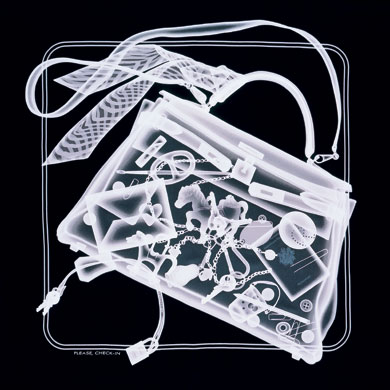
Secret Life of Handbags

From the Irish Times: 
For many women, their handbag is more than something to carry their make-up – it’s their whole life in a leather cocoon. So what do handbags say about their owners and are they really a potent symbol of women’s emancipation, writes FIONOLA MEREDITH

FOR SOME WOMEN, it provides a simple way to carry a purse, mobile phone and keys, along with a random assortment of everyday bits and pieces. But for others, the handbag is much more than that. Media commentator Yasmin Alibhai Brown may have been only slightly overstating it when she observed that handbags have become potent symbols of “politics, economics, social mobility, pre-feminist proclivities or post-feminist liberties, ethical living, advanced capitalism, the ebb of socialism and possibly the end of history”.

Now French sociologist Jean-Claude Kaufmann has written a book – Le Sac, un Petit Monde d’Amour (or The Bag, a Small World of Affection) – examining the contents and the meanings of the female handbag. Having interviewed 75 women over the course of 18 months, Kaufmann concludes that, despite its frivolous image, the handbag is actually a symbol of female emancipation.

Saturday, December 4, 2010

Oral Contraception: a History of Social Reform, Empowerment and Health Concern


The article below was written by Matt Phillips and submitted to Women of History.  Issues concerning fertility and childbirth are important to all women, and the advances made over time should not be taken lightly.

Many thanks to Matt for his most welcome contribution.


Despite its relatively short history, oral contraception has had a tremendous impact on numerous aspects of modern society. However, its role in recent movements that won women legal equality stands out more than any other outcome. Nevertheless, this modern method of birth control, which is the most popular today, represents just one in a long succession of contraceptive devices that enable women to enjoy physical intimacy while decreasing the risk of pregnancy.

One of the most striking aspects of birth control is the history it has. Although many tend to view contraception as a fairly modern development, historians point out that individuals attempted to control family size in Mesopotamian and early Egyptian times. However, these methods were generally lacking in safety and sophistication, involving infanticide or the use of questionable barrier mixtures that sometimes contained materials like honey or animal excrement. Prolonged lactation and spermicidal chemicals were also used in ancient societies to prevent pregnancy. The ancient Chinese even produced a chemical women could ingest to produce sterility.

However, historically recent developments show social motives behind the use of contraception, while past fertility control generally centered on practical issues like the economic strain another child would bring. During the 19th century in the United States, women’s medical care was passed from midwives to male doctors. At that time, because of the social, economic and religious climate, few male doctors were willing to sanction the use of contraception and give them that power, an illustration of the general opinion regarding women’s rights at the time. Although the use of condoms gained acceptance and popularity after WWI, it wasn’t until February 15, 1961 that women gained full control over their fertility, with the FDA approval of Enovid, an oral contraceptive, for public contraceptive use.

The popularity of this drug increased rapidly after its introduction as it gave women more control of their fertility than they ever had before. Its introduction also coincided with the great social restructuring that was occurring at the time. Many women looked to these pills as a way to advance both socially and economically. Indeed, after the introduction of oral contraception, female college attendance and graduation saw a sharp rise. Its use signified more than just a fertility tool, but a complete reevaluation of women’s role in the workplace as well. Now that women could delay pregnancy indefinitely, long-term career goals became the focus of individuals that might have previously settled for early marriage and economic reliance on their spouse.

However, social and economic changes were not the only trends seen with these drugs. Since their introduction, cancer cases among U.S. women have also seen a jump. Although doctors now generally agree today’s forms of oral contraception, which contain far lower hormone doses, do not significantly increase the risk of cancer, other serious side effects have been seen. Specifically, the hormonal ingredient, estrogen, acts as a blood coagulator, leading to an increased risk of cardiovascular complications, among other dangers. One recent Yaz lawsuit even involves a woman who developed blood clots in her lungs after correctly using this particular product.

While modern oral contraception has empowered women with independent, discretionary control over their fertility, it has also been blamed for several direct health impacts, as well as indirect social consequences. Some opponents of the medication fear that this drug has led to a rise in sexually transmitted disease spread by encouraging physical intimacy and removing the fear of pregnancy. Despite the social strides women have made since using this contraceptive tool, critics continue to voice their opposition loudly, much like past opponents of female fertility control who denounced these practices on moral, economic and social grounds.


Sunday, September 5, 2010

Poll: World's Ugliest Women

British women won 22.4 per cent in the survey conducted by the Real Holiday Reports website, followed by American women with 16.7 per cent.

The results suggest that while many British women are attracted to the ladette image, the rest of the world does not share their opinion.

The results of the survey were published in today’s Daily Mail. Germany came in third place with 15.7%, followed by Eastern Europeans, Spaniards and Turks.

Gary Hewitt, who runs the website, said Britain women needed to sharpen up their behaviour abroad.

Every Body Counts

Fifteen Perth women ranging in sizes from eight to 16, including one sprightly 60-year-old wannabe model, will hit the catwalk for the Every Body Counts show.

The parade aims to showcase 'real women', as opposed to the typical skinny tall model that graces the average catwalk.

Each of the women chosen to participate have enjoyed a photo shoot and clothes fitting and will get the rundown on ruling the runway this weekend before hitting the stage in front of the Perth Fashion Festival crowd.

Women - their own worst enemies

From the Herald Sun:
FORGET the so-called men's club - Tracy Grimshaw reckons women are their own harshest critics.

This TV journalist, an experienced professional who survived the blokey times of the 1980s and '90s, thinks the way women treat other women is sometimes disgraceful. It's borne of competitiveness and unwarranted insecurity.

"Women can be extremely judgmental of other women. It's not like it's one big happy sisterhood out there ... I think it would be nice if we cut each other a bit of slack," she says.

Saturday, August 21, 2010

Embracing Facial Hair

From Julie Bindel at the Guardian:
As a proud lesbian feminist I have campaigned for years against the beauty industry and cosmetic surgery. I have never worn makeup, except once, as an experiment for these pages, and for years I even refused to wear a bra – until I had to dress up in vaguely smart clothing occasionally for work.

But we all have an achilles heel, and mine is facial hair. I hate it, both on myself and other women. I have a particular terror of fuzz appearing on my face, and always carry one lone item of beauty equipment: tweezers. Luckily, I am not particularly afflicted, although in recent years I have noticed one long black hair that sprouts from my left cheek, another under my chin, and a few barely noticeable ones above my lip. The second they appear they are instantly torn asunder.

My fear of the fuzz is hardly unusual. Even in the thick of the late 1970s women's movement, I remember a close friend – a fellow lesbian and hard-line feminist – confessing, "I'm so glad I discovered electrolysis before feminism!"

Thursday, July 1, 2010

Dating Violence

From the Vancouver Sun:
The rates of dating violence nearly doubled for both men and women between 2004 and 2008, a new study shows, although victims were mostly grown women.

While teenage girls experienced 10 times as much violence as boys their age, a Statistics Canada study released June 29 says that rates of police-reported dating violence are actually highest for those in their 30s.

Between 2004 and 2008, rates of reported violence rose 40 per cent for women and 47 per cent for men. Women were victims of dating violence 80 per cent of the time, with a majority of incidents occurring after the relationship ended.

In 2008, there were 23,000 incidents of dating violence, with over half of incidents described as common assault — the least serious form of physical assault.

The incidents accounted for more than one-quarter of police-reported violence, and represented seven per cent of total violent crimes in Canada that year.

Teenage girls age 15 to 19 were more often victimized by an older partner, the study found. According to police data, 71 per cent of incidents against women resulted in charges, compared with 57 per cent of men.

Wednesday, June 23, 2010

Women: We Won't Put Up & Shut Up

From Sydney Morning Herald:
It is unlikely a little more than 200 complaints go anywhere near demonstrating the true extent of sexual harassment in the workplace. Many women will not know they can lodge a complaint and others will shrug their shoulders and deal with the behaviour as best they can. Women who eke out existences in poorly paid casual positions are never going to complain. And some women won't even know that a reference to the size of their tits is sexual harassment.

Sex Discrimination Commissioner Elizabeth Broderick has been quoted as saying there is continuing confusion about what constitutes sexual harassment. Some of this confusion may well rest in the language we use: McInnes's behaviour has been described in various accounts as ''flirtatious'', ''unbecoming'' and ''inappropriate''.

Legal System Inaccessible For Women With Mental Illness

From ABC News:

A report looking at the ACT's legal system has found many women with mental illness find it impossible to access support.

The report by the Women's Centre for Health Matters tells the stories of Canberra women with mental illness and their dealings with the legal system.

It says women with mental health issues feel discriminated against and socially isolated, and often simply give up.

One of the report's authors Kate Judd says the legal profession and the mental health sector need to work more closely together.


Saturday, May 29, 2010

Women: The Invisible Homeless

From the Sydney Morning Herald:
Homeless women are vulnerable and terrified of being attacked in cities across Australia and the community must open its heart to them, the Prime Minister's wife says.

Ms Rein, who is patron of homeless organisation Common Ground, told the audience homeless women often couch-surfed to avoid rough sleeping.

"Sleeping rough is even more dangerous for women," she said.

"They're sleeping in hidden nooks and crannies, wandering the streets until they collapse with exhaustion, terrified they'll be attacked."

She said a new model of care, pioneered by Common Ground in America, and now being set up across cities in Australia, aimed to give homeless people tenancies.

Permanent housing allows homeless people the ability to rebuild their lives, Ms Rein said.