Friday, January 3, 2020

Indian women are 'creating terror' abroad for their runaway husbands

From IOL News
In a pink-walled room of a government office at the foot of the Himalayas, Indian women spend their days cancelling the passports of runaway husbands.

Midday on a Monday, the father of a woman who married a merchant marine is explaining how the husband lied about being single and failed to disclose the fact that he had a child and a warrant for his arrest. The case, says worker Amritpal Kaur, should qualify for immediate impoundment of the man's passport.

Kaur isn't your usual Indian bureaucrat. She isn't a government employee at all. She and the other women who work in the passport office are abandoned wives, volunteering their hours at the office to help women like them.

Sibash Kabiraj, regional passport chief in the city of Chandigarh, says it all began when the wives started coming to him and pleading for help.


A lifelong civil servant with a taste for the fine print, Kabiraj realized Indian law would allow him to suspend – and even cancel – the passports of overseas Indian men who had misled their wives. The Passport Authority requires approval from the central government to take away a passport but can do so if the holder lies or withholds information, or if there is a warrant or court summons, among other reasons.

But there was a problem in this country notorious for its bureaucracy. "One suspension of a passport, it requires a lot of paperwork," he says.

Not one to be stopped, he explained passport law to the women, gave them a room with a computer, printer and fax machine, and told them if they would do the paperwork, he would sign it.

It's the women's best way of seeking justice from their far-away husbands, he says.

read more here @ IOL News

Taiwan election campaign unkind to women

Taiwan election campaign unkind to womenFrom Asia Times
Taiwan has forged a reputation as Asia’s most progressive democracy and it boasts a higher proportion of women in parliament than anywhere else in the region – yet misogynistic insults have littered its presidential race.

The campaign for the January 11 polls has exposed an undercurrent where female politicians face a gauntlet of personal abuse and jibes that their male counterparts rarely suffer.

The island’s most prominent female politician is President Tsai Ing-wen, 63, who is seeking a second term.

She has once again faced insults based on her gender, much of it focused on the fact she is not married and does not have children.

read more here @ Asia Times

Tomb with three generations of ‘Amazon’ warrior women found in Russia

Female Scythian warriors have been found before, but this is the first time multiple generations were found buried together – with a golden headdress and other grave goods that thieves missed.


For the first time, archaeologists found a magnificent headdress in situ, still wrapped around the skull of its possessor, archaeologist Valerii Guliaev and colleagues explain this week in the journal of the Akson Russian Science Communication Association. Also a first, the researchers’ study suggests that although the “Amazons” were buried together, they belonged to three different generations.
The archaeologists also found dozens of iron arrowheads, as well as iron knives and animal bones.

read more here @ Archaeology @ Haaretz

Sunday, December 1, 2019

Marilyn Yalom, Feminist Author and Historian, Is Dead at 87

In books about the history of wives, the history of the breast and other subjects, she examined how cultural forces led over time to feminist thinking.

Marilyn Yalom, a prolific feminist author and cultural historian whose subjects included the history of women as partners in marriage as well as the history of the female breast, died on Nov. 20 at her home in Palo Alto, Calif. She was 87.  Her son Reid Yalom said the cause was multiple myeloma.

The author Marilyn Yalom in 2007. Among the subjects she examined were the history of women as partners in marriage, the history of the female breast and the changing role of the queen in chess.

Ms. Yalom was a professor of French language and literature in the mid-1970s, as the women’s movement was gaining steam, when she segued into feminist scholarship at what is now Stanford University’s Clayman Institute for Gender Research.

While she had already written a number of academic works, she did not start writing her more notable books until her late 50s. One of the first was “Maternity, Mortality, and the Literature of Madness” (1985), which suggests a link between madness and motherhood in some female writers, including Sylvia Plath and Virginia Woolf.

Her best-known works include “Blood Sisters: The French Revolution in Women’s Memory” (1993), “A History of the Breast” (1997), “A History of the Wife” (2001), “Birth of the Chess Queen: A History” (2004) and “How the French Invented Love” (2012).

read more here @ The New York Times

Tuesday, November 26, 2019

The Aberdeen woman who helped the world learn more about ancient Egypt

Stories of tomb-raiders, ancient worlds and mysterious gods can still send a shiver running along the spine but not many people are aware it was an Aberdeen-born woman who helped shape our interest in Egyptian history and archeology, and that even today, experts rely on her work and drawings to help them put together pieces of the puzzle surrounding ancient Egypt.

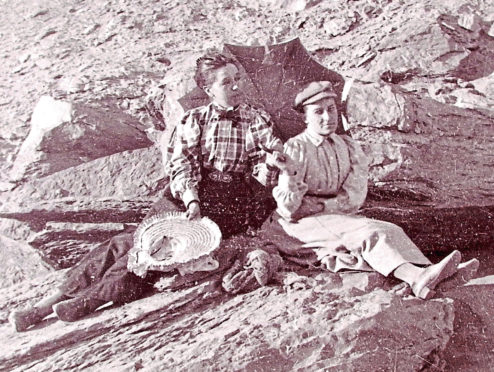
Aberdeen-born Annie Abernethie
Pirie Quibell (pictured on left )

Annie Abernethie Pirie Quibell was a fascinating, extraordinary woman, says Dr Daniel Potter from the National Museums Scotland (NMS).  Her name may not be too familiar but she’s considered to be so important that she was chosen by NMS to be a woman worth celebrating this year on International Women’s Day.

read more here @ Press and Journal


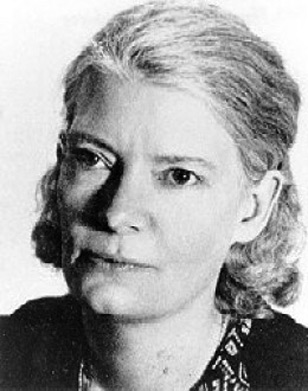
Historical Reformer: Dorothy Day

Image result for dorothy dayFrom Nations Media
Writer. Activist. Reformer. Socialist. Bohemian. Mystic. Rabble-rouser. Single mother. Pioneer of advocacy journalism. Catholic convert. Servant of God. 

Words so seemingly disparate it’s hard to believe they’re often used to describe one woman and candidate for sainthood: Dorothy Day. 

What to say about Dorothy Day? It’s nearly impossible to synthesize such an expansive life and legacy, but it is easy to trace the message she lived, stunningly simple in its essence: love is the final word. It was love that saved Day’s life. It was love that allowed her to see the face of Christ in her neighbor. And it was love that compelled her to live in alignment with His message.

“Our arms are linked—we try to be neighbors of his, and to speak up for his principles. That’s a lifetime’s job,” she once said. 

And what a lifetime it was! To understand Day’s impact on society and the larger Church, one must look at the kaleidoscope of experiences that compelled Day’s conversion; one must “follow the breadcrumbs” that led her to Catholicism and a life of service and activism. Her path is a winding one, and perhaps its unconventional nature is what makes her a saint for these tumultuous times.

 read more here @ Nations Media

Map of Scottish Witches

logoMap of places of residence for accused Witches from the University of Edinburgh

The Data and Visualisation internship project at the University of Edinburgh had as its core aim to geographically locate and visualise the different locations recorded within the Survey of Scottish Witchcraft Database.


You can read an excellent summary of the project to date on Anne-Marie Scott's blog here: Some witchy history and a very smart woman in data science

Sunday, November 17, 2019

Gaddafi's special team of female bodyguards: A dark story of rape and violence

At the peak of his power, Gaddafi was unavoidable. Perhaps, what he lacked in words was expressed in the mixed bag of atrocities he masterminded as well as all the good he did for the Libyan people.

The man was what he did not say but showed. And one of the things he showed – a thing that made him the “one to see” on the international scene – was his team of exceptionally trained and dramatically named Revolutionary Nuns.

The group was formed in the early 1980s, after Gaddafi's official resignation as Libyan head of state in favour of the title of "Brotherly Leader and Guide of the First of September Great Revolution of the Great Socialist People's Libyan Arab Jamahiriya".  According to Joseph T. Stanik, Gaddafi reportedly employed a cadre of female bodyguards because he believed that an Arab gunman would have difficulty firing at women. However, it has also been submitted by other authors that Gaddafi's female bodyguards were, in reality, just an aspect of the dictator's well-known eccentric showmanship and his fondness of surrounding himself with young women. Gaddafi would usually travel with 15 of his Amazonian Guards assigned to security or housekeeping.
Revealed: Dirty secrets of Gaddafi's harem
It should come as very little surprise that in selecting who gets to put their life on the line for the president, some moral and spiritual significance is attached to a woman who has never had sex.  In recent times, however, it has been reported that becoming a member of the guard was not optional for some women. They are pried away from their families at the threat of dire consequences should they refuse.

read more here @ Face2Face Africa

see also:
Gaddafi's Harem: The Story of a Young Woman and the Abuses of Power in Libya by Annick Cojean

900-Year-Old 'Grand Lady' Skeleton Emerges from Watery Coffin

From Live Science
An exquisitely preserved skeleton of a woman dubbed the "Grand Lady" has been discovered in a water-filled coffin within a tomb at Tieguai Village in China. The coffin dates back 900 years.

The archaeologists who discovered the remains found that the body was buried with numerous grave goods, including a model house that has tiny furniture inside — a dollhouse of sorts — and a silver pendant depicting two dragons chasing pearls. A banner found on top of the inner coffin (which was in turn buried within an outer coffin) says that the tomb occupant is a "Grand Lady" who lived in "Ankang Commandery." Though her real name was hard to make out on the banner, the archaeologists said that it may be née Jian.

"The skeleton [of the Grand Lady] is essentially preserved, complete with fingernails and hair," a team of archaeologists wrote in a report published recently in the journal Chinese Cultural Relics.

Image result for grand lady tomb artefacts   Image result for grand lady tomb artefacts

She still had silver and gold hairpins on her head; "there were silver bracelets on her arm and a string of bronze coins on her abdomen, 83 coins altogether," the archaeologists wrote, adding that "underneath her right hand were two zongzi [which are the remains of two sticky rice dumplings], and embroidered shoes were on her feet."

read more @ Live Science