Wednesday, January 18, 2023

Tom Felton film unearths ‘epic story’ of female archaeologist


He is one of the most recognisable actors in the world, known for his role as Draco Malfoy in the Harry Potter franchise. But now Tom Felton wants to use his platform to spotlight someone whose historical achievements have been obscured for decades.

Felton has produced his first feature film, Canyon Del Muerto, recounting the story of Ann Axtell Morris, one of the US’s first female archaeologists, who worked with the Navajo in the 1920s to uncover North America’s earliest civilisation, the Anasazi.

“It’s an epic story that hasn’t been told before,” Felton said. “Ann Morris was only recently acknowledged as a credible archaeologist, even though she set the tone for the next 100 years of young women having the opportunity to enter the field.”

The film, expected to be released this spring, also stars Felton as Morris’s husband, Earl, who is often cited as the model for George Lucas’s Indiana Jones character. It explores how Morris’s accomplishments were overshadowed by her husband’s fame and prejudices against women.

The film was the first to be granted access to shoot in the sacred and culturally significant landscape of Canyon de Chelly on Navajo tribal lands in Arizona. It has been praised by Jonathan Nez, the president of the Navajo Nation, who called it “an extraordinary showcase of our land, our people and our culture”.

Read more here at The Guardian


Monday, January 2, 2023

Dorothy Pitman Hughes, pioneering feminist who co-founded Ms. Magazine, dies at 84

From NBC News:
Dorothy Pitman Hughes, a pioneering Black feminist, child welfare advocate and activist who co-founded Ms. Magazine with Gloria Steinem, formed a powerful speaking partnership with her and appeared with her in one of the most iconic photos of the feminist movement, has died. She was 84.

Hughes died Dec. 1 in Tampa, Florida, at the home of her daughter and son-in-law, said Maurice Sconiers of the Sconiers Funeral Home in Columbus, Georgia. The home said it did not know the cause of death.

Hughes was not as well known as Steinem, but the two forged an important partnership at a time when feminism was viewed as a very white, middle-class movement. Steinem credited Hughes with helping her become comfortable speaking in public.

In one of the most famous photos of the movement, taken in October 1971, the two raised their right arms in the Black Power salute.


Hughes, a pioneering voice in child care, organized the first shelter for battered women in New York City and co-founded the New York City Agency for Child Development.

She met Steinem in 1968, according to a biography on the Ms. Magazine website, when Steinem, then a journalist, was writing a story for New York Magazine about Pitman Hughes’ child care center. From 1969 to 1973, they spoke across the country at college campuses, community centers and other venues on gender and race issues.

Hughes was born Dorothy Jean Ridley on Oct. 2, 1938, in Lumpkin, Georgia, her family wrote in an obituary posted by the funeral home.

Saturday, June 25, 2022

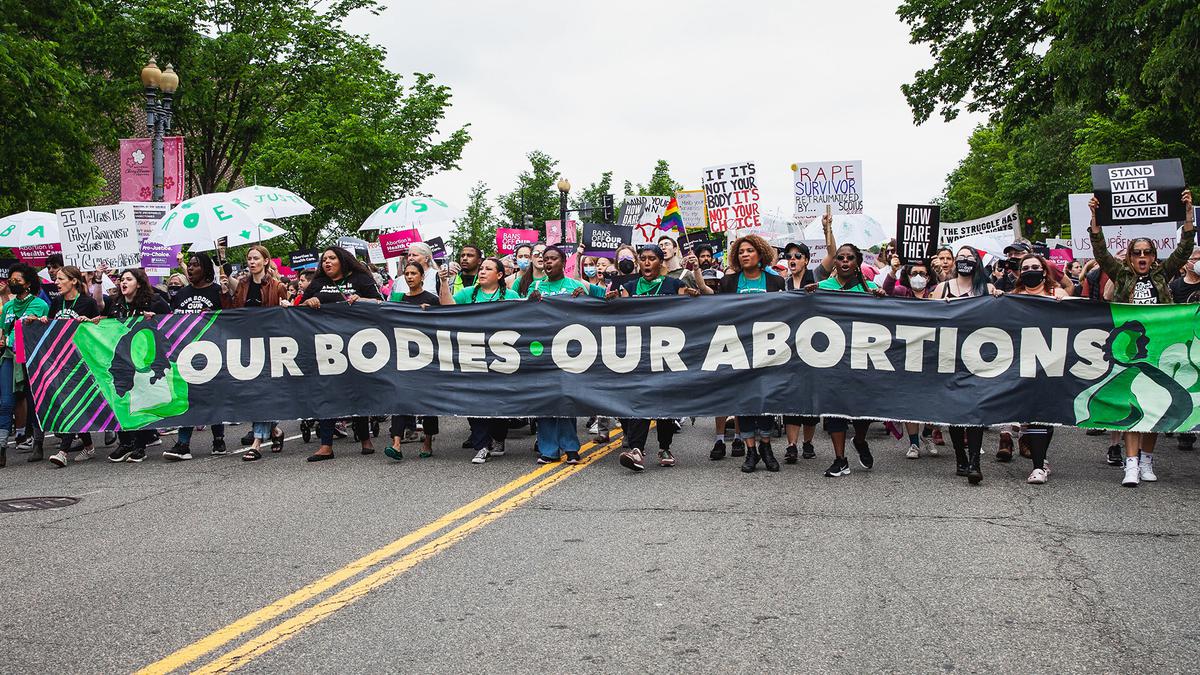
Outrage: U.S. Supreme Court Takes Away Federal Constitutional Right to Abortion

The fears of millions were realized today, as the U.S. Supreme Court ended the federal constitutional protection of abortion — robbing people of the fundamental right to control their own bodies.

In a decision with devastating consequences, the court overturned Roe v. Wade — throwing out the 1973 decision that recognized abortion as a constitutional right, and handing politicians across the country the power to make decisions about our bodies, our lives, and our futures.

This historic action means the Supreme Court — now dominated by justices hostile to our freedom — is reneging on a constitutional right it previously granted.

Across the Country, Life-changing Implications
With the federal constitutional protection of our right to abortion now ended, states in more than half the country stand poised to ban abortion. That would leave 36 million women of reproductive age, plus even more people who can become pregnant, without access to abortion.


Through this ruling, the Supreme Court will force an unknowable number of people to choose between either traveling hundreds or perhaps thousands of miles for care, or remaining pregnant.

Make no mistake: This decision goes beyond abortion. This wrongful ruling is about power and control. What rights will this court take away next? Who has power over you, who has the authority to make decisions for you, and who can control how your future is going to be? It goes against the will of the American people and overturns nearly 50 years of precedent.
A Shameful Day

We’re outraged — and ready to fight like hell.
Everyone’s body is their own, and theirs alone. You must have the freedom and power to control your body and life. That means no judge, no politician, no ban should ever block your personal medical decisions or set the course for your life. Abortion access should not be based on your ZIP code, income level, or immigration status.

Abortion bans do the most harm in Black, Latino, and Indigenous communities and other communities of color, which already face barriers to health care and economic opportunity because of this country's legacy of systemic racism and discrimination. The court's ruling will add further insult to health disparities that have long plagued too many communities.

We’re Fighting Back
We vow this: The Supreme Court’s shameful decision won’t stop us. We will rebuild and reclaim the freedom that is ours.

It’s already crystal clear that these politicians plan to completely end access to abortion, one state at a time. For decades, narrow-minded politicians have built a coordinated strategy toward this moment. And politicians aim to outlaw abortion across the United States, no matter where you live. Texas and Mississippi are just the opening fronts in a campaign to destroy abortion access across the country.

Generations before ours fought tirelessly to gain and protect our rights. With this ruling, the next generation will have fewer rights — unless we fight on. Every day in every way, all of us must stop at nothing to make sure people have access to the essential health care they need to control their bodies and build their futures.

This is far from over. We have strength in numbers and power in our united voices.

Monday, December 27, 2021

8 powerful female figures of ancient Rome

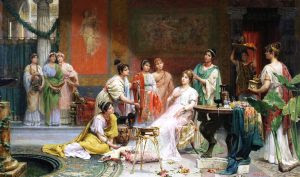
Women in ancient Rome held very few rights and by law were not considered equal to men, according to a 2018 article on The Great Courses Daily. Roman women rarely held any public office or positions of power, and instead their role was expected to be caring for children and looking after the home.

Most women in Roman society were controlled by either their father or husband. Especially among richer families, women and young girls were married off in order to form political or financial relationships, and rarely could choose their partner.

Despite this lack of rights, there is evidence of a few exceptional women who managed to attain great power and influence in ancient Rome. While some controlled events from the sidelines, others took matters into their own hands, forming conspiracies and even assassination plots to seize control of the Roman empire.


read more here @ Live Science

The woman restoring ancient Chinese makeup

By examining references in ancient books, Wang Yifan, a 29-year-old woman from Northeast China's Liaoning Province, has recovered 39 types of cosmetics and makeup tools from China's different dynasties including a powder used by Wu Zetian, China's only female emperor, during the Tang Dynasty (618-907) and bath beans, a type of facial cleanser used by the Empress Dowager Cixi in the Qing Dynasty (1644-1911).

Currently, Wang's recovered cosmetics cannot be sold, they are just for display as they still need further refinement.

read more here @ Global Times


Digs reveal seals of Hittite female administrator in SE Turkey

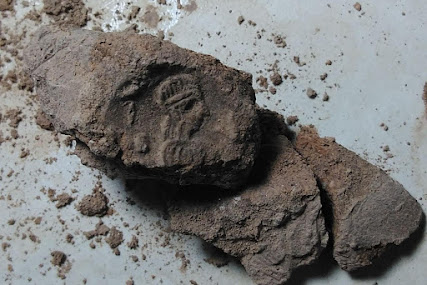
Archaeologists discovered seals and prints of a female administrator during their archaeological digs in the ancient city of Karkamış in southeastern Turkey’s Gaziantep province.

Karkamış was the most important administrative center in the region of the Hittite Empire, which ruled over Anatolia and Mesopotamia for centuries.

The findings were among dozens of clay seals belonging to the highest officials in a hierarchical order unearthed by an excavation team headed by Nicolo Marchetti, an archaeology professor at the University of Bologna in Italy, according to a statement by the Gaziantep metropolitan municipality.

It was determined that two-thirds of the Anatolian hieroglyphic seal impressions belonged to a female administrator named Matiya from the period defined as the "Late Bronze Age."

The new discoveries are expected to shed light on the role of women in state governance during the Hittite Empire.


Philosophy and sex work: how courtesans in Ancient Greece crossed the mind/body divide

Sex workers in Ancient Greece divided into two somewhat overlapping types. The most common were those who lived in brothels, often enslaved sex workers providing a sanctioned service to the men of the ancient Greek city. The word for this role was porne, from where we get the English word pornography.

Not only did these women lack freedom, but their profession could also be dangerous. Women consigned to this life had no leisure and no expectation of education.

But there was another kind of sex worker who gripped the imagination of writers in the ancient world. These women did not live in brothels, but in their own homes. They granted favours, rather than being bought for a fee, and participated in the language of aristocratic exchange of goods.

They were called “friends”, hetairai in Greek, or, as they came to be known in English, courtesans.

These women were seen as having captivating minds, not just captivating bodies. They could be conversation partners and were allowed unprecedented freedom in the ancient world.


read more here @ The Conversation

Remembering the Remarkable Queens Who Ruled Ancient Nubia

Scholar Solange Ashby is uncovering the once-revered, now little-remembered female leaders of the Kushite kingdoms.

While Egypt’s Cleopatra and Hatshepsut are household names today (by ancient Egyptian standards), few people have heard of Nubia’s mighty queens. Atlas Obscura spoke with Ashby about the Nubian legacy, expressions of female power, and how the study of ancient Nubia connects to Black Lives Matter.

read more here @ Atlas Obscura

Tuesday, September 7, 2021

Ludmila, the first Czech saint, grandmother of Wenceslas, martyred 1100 years ago

Saint Ludmila, the first historically documented Duchess of Bohemia, was martyred 1100 years ago this September – strangled by assassins sent by her own daughter in law. Best known today as the grandmother and educator of the Czech patron saint “good King Wenceslas”, Saint Ludmila was among the few women in history to de facto rule over Bohemia.

Princess Ludmila, as she is also known, was the wife of BoÅ™ivoj, founder of the PÅ™emyslid dynasty. Sometime in the late 9th century, he converted to Christianity during a visit to the court of Great Moravia, and was allegedly baptised by none other than Saint Methodius, the Byzantine missionary known along with his brother Cyril as the “Apostles of the Slavs”.

Little is known for certain about Ludmila’s life before the death of her husband, other than that she was the daughter of a Sorbian prince, likely born in MÄ›lník, central Bohemia, married BoÅ™ivoj in her teens, and had as many as six children with him.

But, says Dr Jakub Izdný of the Institute of Czech History at Charles University, author of a new book on Ludmila published ahead of the 1100-year anniversary of her death, she is the first historically known Czech woman, and quite likely the first woman to rule Bohemia.

read more here @ Radio Prague International

Kidnapped, raped, wed against their will: Kyrgyz women’s fight against a brutal tradition

Aisuluu was returning home after spending the afternoon with her aunt in the village of At-Bashy, not far from the Torugart crossing into China. “It was 5 o’clock in the afternoon on Saturday. I had a paper bag full of samsa [a dough dumpling stuffed with lamb, parsley and onion]. My aunt always prepared them on weekends,” she said.

“A car with four men inside comes in the opposite direction to mine. And all of a sudden it … turns around and, within a few seconds, comes up beside me. One of the guys in the back gets out, yanks me and pushes me inside the car. I drop all the samsa on the pavement. I scream, I squirm, I cry, but there is nothing I can do.”

image by Tatyana Zelenskaya


The man who kidnapped her would soon become her husband. At the wedding, Aisuluu discovered that she was not even the woman he had intended to kidnap for marriage. But in the haste of having to return home with a bride and after wandering the streets all afternoon, the man decided to settle for the first “cute girl” he saw.

This was 1996, and Aisuluu was a teenager. Today she has four children by her kidnapper-turned-husband, to whom she is still married.

Known as ala kachuu (“take and run”), the brutal practice of kidnapping brides has its roots in medieval times along the steppes of Central Asia, yet persists to this day. It has been banned in Kyrgyzstan for decades and the law was tightened in 2013, with sentences of up to 10 years in prison for those who kidnap a woman to force her into marriage (previously it was a fine of 2,000 soms, worth about $25).

read more here @ The Guardian

Taliban death squads ‘trawl porn sites to compile kill list of Afghan prostitutes after US withdrawal'

From the US Sun:
Taliban death squads are trawling porn sites to compile a kill list of Afghan prostitutes and are putting names to faces of brothel workers who have been filmed having sex during the 20-year allied occupation of Afghanistan.

Security sources told The Sun Online that videos featuring Afghan prostitutes have made their way onto niche porn sites and have been discovered by the jihadis.

Our source said the Taliban are now “hell-bent” on “hunting down” the prostitutes to publicly execute or “humiliate for their own pleasure”.

They added the women face being gang-raped by the terror nuts before being “beheaded, stoned or hung”.

Some of the videos allegedly feature the women having sex with Westerners - further raising the fury of the Taliban.

Women are expected to face the most vicious and brutal repression under the new Taliban regime, with strict new rules and morality codes expected to erase them from public life.

“The Taliban are displaying the height of hypocrisy with this horrific witch-hunt," a source said.

read more here @ US Sun

Nicolle Wallace blasts ‘gender apartheid’ in Texas

From the Raw Story -
MSNBC's Nicolle Wallace slammed an anti-abortion law passed by Texas Republicans after the United States Supreme Court refused to block the law in a decision released overnight. Wallace said "everything has changed" after the court decision.

"The U.S. Supreme Court, in a 5-4 decision, for all intents and purposes has green lit the reversal of Roe v. Wade, not just in Texas, but potentially all across this country," Wallace reported. "In refusing the block the draconian, near-complete ban in Texas, the Supreme Court has signaled its approval for what is the most restrictive abortion law in the country."

Wallace put the Texas law in context as part of a larger effort to restrict women's rights in red states.  "The court's decision last night is part of a larger battle playing out all across the country right now. If you didn't already know, now you do. 97 laws restricting abortion have been passed in 19 states since January of this year in what is the biggest wave of abortion restrictions since Roe v. Wade was decided in 1973," Wallace noted.

The host described the law as "medieval state of affairs" and said "it feels like gender apartheid on the medical front for women."

read more here @ Raw Story

In India, Muslim women advertised for 'sale' on the 'Sulli Deals' app defy trolls who tried to silence them

From CNN: In India, Muslim women advertised for 'sale' on the 'Sulli Deals' app defy trolls who tried to silence them 

Hana Mohsin Khan says she knows why she was targeted on a website that appeared to offer her for sale.   "(It's) because of my religion. Because I am Muslim," she said.

In early July, the 32-year-old pilot and proud feminist was among more than 80 Muslim women -- journalists, writers and influencers -- whose photos were posted on a mock app called Sulli Deals, a derogatory term for Muslim women typically used by right-wing Hindu men.

Users were offered a chance to "buy" the women like commodities in an auction -- and while the women weren't actually for sale, they say it left them scared, traumatized and angry.

Two months later, the site has been taken down by US-based platform GitHub, but the women are still angry none its creators have been detained or arrested. They say the lack of action highlights the discrimination Muslim women face in Hindu-dominated India, where outspoken advocates of women's rights are singled out for attack on social media.

They say they won't be silenced.


read more here @ CNN

Saturday, August 21, 2021

On the trail of Roesia de Verdun: Ireland’s only female castle builder

From the Irish Examiner:
It feels like glorious serendipity that a project aimed at revealing more about the only woman known to have built a castle in Ireland is taking place during National Heritage Week.

I’m a huge fan of castles and, in particular, of castlebuilder Roesia de Verdun, or Rose of the Rock as she is known locally. The 13th-century noblewoman built an impressive fortress on a rocky outcrop in Castleroche, Co Louth, and then supposedly pushed the master mason out of the window so that he wouldn’t replicate the building’s design.

To this day, one of the castle’s windows is known as the “murder hole”.

Once ensconced in palatial splendour, the formidable Roesia went about her business as a no-nonsense châtelaine, managing her estate and riding out on horseback, in full armour, to keep her Gaelic enemies at bay. Or so the local legend tells us.


As female villains go, here is one unscrupulous and brave enough to head up an entire TV series.

But perhaps it’s time to commission a different kind of series; one that charts the progress of ‘Revealing Roesia’ (pronounced Ro-he-sha), the archaeological survey that is taking place in the castle’s grounds this week.


read more here from Clodagh Finn @ the Irish Examiner
read more on Roesia @ Women's Museum of Ireland

Sunday, June 13, 2021

Bronze Age burial site of powerful woman discovered under ancient palace in Spain

Archaeologists excavating at La Almoloya, Spain, have discovered a grave filled with precious items and the remains of a woman, who may have been a ruler or powerful member of society. The woman was buried alongside a man in a large pot in around 1700 BC, beneath the floor of what may be western Europe’s earliest palace.

The majority of the grave’s objects, and particularly those of silver, were found with the woman, including a rare silver diadem, still worn on her head. Scholars argue that this was a symbol of power in El Argar society, which existed in south-eastern Spain from around 2200 to 1550 BC. Among the woman’s other grave goods were a set of silver earlobe tunnel-plugs; silver spirals that were perhaps part of her headdress; two silver bracelets; a necklace; and a silver ring on one of her fingers. In total, the burial contained about 230g of silver. The man’s objects, by contrast, were less prestigious.

read more here @ The Art Newspaper

BMA Opens Women Behaving Badly: 400 Years of Power and Protest

From the heroines of ancient myth to the female trailblazers of the modern era, centuries of independent and rebellious women have been trivialized or condemned through the degrading myths and gendered stereotypes perpetuated in printed imagery. 

From July 18–December 19, 2021, the Baltimore Museum of Art (BMA) presents an exhibition that captures visual representations of independent, defiant, and sometimes misunderstood women and explores the role of European and American art in both continuing their condemnation and celebrating their achievements. 


Women Behaving Badly: 400 Years of Power and Protest features over 75 prints, photographs, and books from the Renaissance to the early 20th century drawn from the BMA’s vast works on paper collection and supplemented with loans from the Library of Congress, Smithsonian Institution, Johns Hopkins University, Princeton University, Maryland Center for History and Culture, and private collections.

read more here @ Cecil Daily


‘It’s infuriating and shocking’: how medicine has failed women over time

From The Guardian: In the eye-opening new book Unwell Women, Elinor Cleghorn uses her own misdiagnosis at the hands of male doctors as a jumping point for an alarming history lesson.

Cleghorn’s new book, Unwell Women, enumerates a litany of ways in which women’s bodies and minds have been misunderstood and misdiagnosed through history. From the wandering womb of ancient Greece (the idea that a displaced uterus caused many of women’s illnesses) and the witch trials in medieval Europe, through the dawn of hysteria, to modern myths around menstruation, she lays bare the unbelievable and sometimes horrific treatment of women for millennia in the name of medicine.


read more here @ The Guardian

Church replaces ancient carvings with inspiring women sculptures

From BBC News:
A church is to replace its crumbling medieval carvings with sculptures of inspiring women to honour their "extraordinary" achievements.

Many of the stone sculptures at St Mary's Church in Beverley, East Yorkshire, are now unrecognisable.

Carvings of Queen Elizabeth II, feminist Mary Wollstonecraft and nurse Mary Seacole are among the notable women set to replace them.

Rev Rebecca Lumley said they would "help to inspire the next generation".

Work to install characters from CS Lewis' Chronicles of Narnia on the outer wall of the church has recently been completed, with the same small team of sculptors used for the latest project.

Clay prototypes of the women are currently being created, with the church aiming for the stone versions to be ready for public viewing by November.

"Pioneering women" who worked in traditionally male-dominated arenas including maths, the sciences and engineering, were prioritised.

read more here @ BBC News

Saturday, April 10, 2021

The Hidden History of Women and the IRA

Women have been part of the IRA from the start, but their stories remain largely untold. Their roles—their radicalization, training, combat, and varying levels of conviction or remorse—form a hidden history. During the Troubles, dozens of women were imprisoned for IRA activity. Some who survived the conflict have renounced their former army; others remain committed to the armed struggle into their seventies.

“Women terrorists are more fanatical and have a greater capacity for suffering,” says theorist Walter Laqueur. “Their motivation is predominantly emotional and can not be shaken through intellectual argument.”

Perhaps we prefer to believe that the girls and women of the IRA and other radical groups were somehow tricked into joining, that they were naïve, that a man was somewhere in the background pulling the strings. We tend to assume that women are inherently peaceful, especially once they have children. But motherhood can actually be a spur to join a terror movement, not a deterrent. Some IRA women viewed their struggle as a way to provide a different sort of life for their children, a peaceful one.

read more @ CrimeReads

Friday, January 1, 2021

Research into 9,000-year-old Wilamaya Patjxa burial site suggests women were big-game hunters

A new discovery of an ancient burial site shows just how much we still don’t know about ancient societies. A 9,000-year-old burial site in southern Peru potentially shows that what we’ve longed believed about gender roles in hunter-gatherer societies might be a bit off.

Anthropology professor Randall Haas and a team of experts have published a report that “challenge[s] the man-the-hunter hypothesis” concerning the division of work amongst males and females in ancient times. Published in Science Advances, the study titled “Female hunters of the early Americas” builds upon the discovery of remains and more than 20,000 artefacts in the Andean highlands at a 9,000-year-old burial site called Wilamaya Patjxa.


The study points out that in recent hunter-gatherer societies, big-game hunting has been “overwhelmingly male-biased.” But, Haas and his team have shown evidence from Wilamaya Patjxa that this may not have always been the case amongst ancient societies that would have required all-hands-on-deck to procure big-game. In addition to communal hunting, Wilamaya Patjxa findings suggests that child rearing would have been a shared task, freeing up more men, women, and children to partake in hunts.


read more here @ Art Critique