Showing posts with label 19th century. Show all posts

Thursday, October 29, 2020

Lady Judith Montefiore: A Brief History

It was, in the words of Charles Dickens, “The best of times and the worst of times.” While revolution and political strife roiled Continental Europe, Britain in the 1780s and beyond was home to progressive social change, and to a growing community of educated, cultured Jews who flocked to England.

This group of highly educated, ambitious Jews called themselves the “Cousinhood” – brilliant Jewish families who built empires of business and service, married into each other’s families and created a new, vibrant Jewish community. One of the most prominent of these immigrant Jews was the Dutch-born Levi A. Barnet Cohen who moved to London in the 1770s and eventually became one of a dozen Jews newly elected to Parliament, without compromising his Orthodox Jewish faith. He married a brilliant Jewish woman named Lydia and together they raised an observant Jewish family. Their daughter, Lady Judith Montefiore, became a great – and little known – patron of Jewish life.

Judith used her wealth to support poor Jews, helping build the Jewish Ladies’ Loan and Visiting Society, a Jewish orphanage in London, and educational programs for girls at Jews’ Hospital. Moshe also rose in British society. He was knighted in 1837 (Judith gained the honorific Lady then); that year he was also elected the Sheriff of London – only the second Jew ever elected to that post. Yet despite the Montefiore’s high social position, they were dogged for years by anti-Semitism and snide anti-Jewish remarks.

read more here @ aish dot com

Saturday, October 5, 2019

Trinity College’s new sculpture: 30 women to put on a pedestal

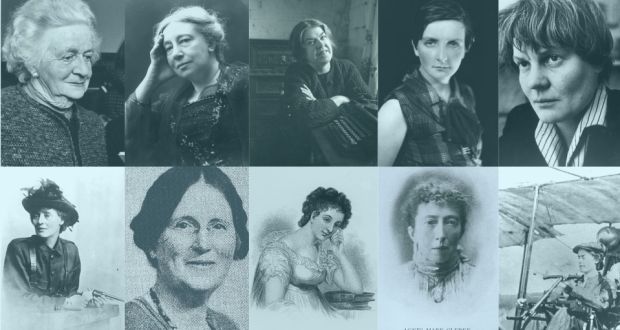
It has been more than 200 years coming, but better late than never: the provost of Trinity College Dublin wants the first woman to join the 40 men memorialised in marble busts in the Long Room of the Old Library. 


Worthy of honour:  all of these women, from Thekla Beere (top left) to Lillian Bland (bottom right), are ideal candidates for Trinity College Dublin's Long Room bust

Patrick Prendergast has asked for nominations for who should sit alongside Aristotle, Isaac Newton, Edmund Burke and Jonathan Swift, among others. The woman needn’t have a Trinity connection nor be Irish, just be a scholar who is no longer alive. 

To get the ball rolling, here are 30 Irish scholars, writers and thinkers worth considering for the honour. 

read more here @ Irish Times

Sunday, November 26, 2017

Marie Lafarge - Celebrated French Poison Trial

In France, in 1840, a notorious murder trial put the young science of toxicology to a dramatic test. Rumored to be unhappy in her marriage, Marie Lafarge, age 24, was charged with poisoning her husband Charles. Witnesses had seen her buying arsenic—to exterminate rats, she claimed—and testified that she had stirred a white powder into her husband's food. The prosecution sought to build on this by introducing the findings of local doctors who performed chemical tests on Charles Lafarge's stomach and on the white powders that had been gathered as evidence.


At the resulting trial, the raven-haired Marie at first excited great sympathy. Her lawyer, Hempel says, made sure that the jury knew of “the excellence of her piano-playing, her delightful voice, her competence in more than one science, her reading and translation of Goethe, her fluency in several languages and composing of Italian verse.” She also had a flair for drama. When it was reported in court that a group of doctors had found no evidence of arsenic in the corpse, Marie responded, Hempel writes, by “clasping her hands, raising her eyes to heaven, and then fainting and having to be carried out of the court, while her lawyer sat weeping.” Other experts, however, believed that arsenic was present. About a year into the trial, the renowned toxicologist Mathieu Orfila was called upon to examine Lafarge’s remains.

read more here


Saturday, October 21, 2017

The forgotten 'female Lawrence of Arabia' - Gertrude Bell


In a picture taken to mark the Cairo Conference of 1921, Gertrude Bell - characteristically elegant in a fur stole and floppy hat, despite being on camel back - sits right at the heart of the action. To one side is Winston Churchill, on her other TE Lawrence, later immortalised in David Lean’s 1962 epic, Lawrence of Arabia.

Bell was his equal in every sense: the first woman to achieve a first (in modern history) from Oxford, an archaeologist, linguist, Arabist, adventurer and, possibly, spy. In her day, she was arguably the most powerful woman in the British Empire - central to the decisions that created the modern Middle East and reverberate still on the nightly news.  Yet while Lawrence is still celebrated, she has largely been forgotten.

read more her @ The Telegraph


About Gertrude Bell
  • The Extraordinary Gertrude Bell edited by Mark Jackson & Andrew Parkin
  • Gertrude Bell: Queen of the Desert, Shaper of Nations by Georgina Howell
  • Queen of the Desert: The Extraordinary Life of Gertrude Bell by Georgina Howell
  • Daughter of the Desert: The Remarkable Life of Gertrude Bell by Georgina Howell
  • Desert Queen by Janet Wallach
  • Gertrude Bell: The Lady of Iraq by H.V.F. Winstone


Written By Gertrude Bell:
  • Persian Pictures
  • Syria
  • A Woman In Arabia
  • The Hafez Poems of
  • The Desert & The Sown: Travels in Palestine and Syria
  • The Arabian Diaries, 1913-1914
  • Review of the Civil Administration in Mesopotamia
  • The Letters of Gertrude Bell - Volumes 1-2
  • Tales from the Queen of the Desert
  • The Arab of Mesopotamia

Sunday, September 10, 2017

Mother, dancer, wife, spy: the real Mata Hari

As the centenary of Mata Hari’s execution approaches (15th October), there are signs of renewed interest in her story.

Here is an article by Julie Wheelwright in the Guardian:
Since her execution on the outskirts of Paris almost a century ago, the Dutch exotic dancer Margaretha “Gretha” MacLeod – universally known as Mata Hari – has been synonymous with female sexual betrayal. Convicted by the French of passing secrets to the enemy during the first world war, MacLeod’s prosecutors damned her as the “greatest woman spy of the century”, responsible for sending 20,000 Allied soldiers to their deaths. MacLeod’s status as both a foreigner and a divorcee, who was unrepentant about sleeping with officers of different nationalities, made her a perfect scapegoat in 1917.

Read more here:


Sunday, May 14, 2017

Women Who Defied Gender Roles Were Once Imprisoned In Asylums

Article by JR Thorpe @ Bustle:
Society always throws up a lot of roadblocks for women who want to break from oppressive gender norms — but women in the 19th century who spoke up and pushed back against sexist oppression faced a distinctly awful possibility: being locked away in mental institutions, which at the time were generally known as "asylums."
The trend of locking women in asylums was so widespread that Nellie Bly, the pioneering journalist, made her name by getting herself committed to a women's asylum, and reporting on abuses and mistreatment from the inside in 1887. But the real horror isn't just the way many women in asylums were abused — it's how they ended up in there. To be thrown in an asylum for the crime of, say, protesting your husband's affair with your niece was a real thing that happened — and a thing that happened not all that long ago.

read more here @ Bustle


How Women Fought For The Right To Be Educated Throughout History

Great little article from Bustle:

Women's pursuit of an equal, in-depth, high-level education as adults has met many stumbling blocks over the centuries: inferior standards (or the complete absence) of education for young girls, beliefs in women's intellectual inferiority, and worries that education in non-domestic subjects wouldn't adequately prepare women for their "natural" role as wives and mothers. To the women of a century ago, the fact that 11.7 million women started college in America in 2016 — a majority of the total number of new students — would seem like a miracle. The ability to get your degrees as a woman isn't something to be taken for granted, so let's have a look at the history of women who just wanted to have the same education as everybody else — and the incredible fight it took to get them there.

read entire article here @ Bustle


Dr Helen Pankhurst: 'The suffragettes were violent freedom fighters."


As a new exhibition about women's suffrage opens, Dr Helen Pankhurst, the great granddaughter of suffragette leader Emmeline, explains why it made her chuckle and recalls the truly damaging tactics of her ancestors.

One hundred years ago, the National Portrait Gallery was issued surveillance photographs of suffragettes, including my great-grandmother Emmeline Pankhurst, by the Criminal Records Bureau. It was hoped that, as a result, staff would be able to recognise women planning to attack the gallery’s artworks in their campaign of political protest. Such concerns were justified: on March 10 1914 Mary Richardson slashed the Rokeby Venus, hanging just a few steps away in the National Gallery, with a small axe. She was also arrested for arson, vandalising the Home Office and bombing a railway station.
Now the internal warning memos and surveillance images of my great-grandmother and her fellow campaigners are themselves part of a fascinating exhibition at the NPG, entitled “Suffragettes: Deeds not Words”. I must confess that I chuckled on first seeing the display. What a wonderful irony it is that the Gallery is now positively promoting those whom it once looked out for in fear. Trouble makers have, over time, become worthy of tribute.
Read entire article here @ the Telegraph

Friday, April 14, 2017

Violet Jessop: Miss Unsinkable

From the Vintage News comes this remarkable story of a woman - Violet Jessop "Miss Unsinkable" - who survived three historic shipping accidents:
White Star Line was a prominent British shipping company, famous for their luxurious liners. Founded in 1845, the company had their first liner, the Oceanic, built in 1870. The ship had a successful run; it was taking passengers across the Pacific until 1895 when it was decommissioned and sold for scrap. Encouraged by this success, White Star Line ordered three more vessels from Harland & Wolff, the same company that built the Oceanic. The new trio of luxurious ships were named Olympic-class ocean liners, which were constructed in the period from 1908 to 1914, and one of those ships later became the most famous vessel of all time.
These three ships where known as the Olympic, the Titanic, and the Britannic. Violet was aboard all three and survived to tell the tale. The story continues ....

Ship 1 - The Olympic:
In 1910, she became an employee of White Star Line and started working on the biggest civilian vessel of that time, the Olympic. On 20 September 1911, the Olympic collided with HMS Hawke, a British warship, specially designed to ram into other ships and sink them. The Olympic had its hull breached but still managed to sail into port. Violet Jessop was not harmed in the accident.
Ship 2 - the Titanic
Several months after the Olympic mishap, Violet joined the crew of the RMS Titanic. The luxurious and now biggest ship in the world left Southampton on 10 April 1912 and struck an iceberg in the North Atlantic Ocean four days later. Two hours after the accident, the ship sank, and 1503 passengers lost their lives.
Ship 3 - the Britannic
On 21 November 1916, the Britannic was in the Aegean Sea when she hit a mine planted by a German submarine. 57 minutes after that, the grandiose ship was already at the bottom of the sea. (Violet was working as a nurse).

Read More Here:

Monday, March 13, 2017

The Secret Diaries of Miss Anne Lister

Before the term lesbian was even coined, there was Anne Lister – a rich landowner who enjoyed a string of scandalous same-sex affairs during the buttoned-up 1800s.


She recorded her adventures in 26 volumes of secret diaries so saucy that her fearful family kept them hidden long after her death.

Lister also encrypted the sexual detail in a mix of Greek and her own codewords — for fear of the law of the time — and only in the 1980s was this ever translated.

To refer to orgasms, she wrote the word kiss, while diary entries had Xs in the margin for how many climaxes she had that day.

Now, the story of Britain’s “first modern lesbian” will be retold in Shibden Hall, BBC1’s eight-part series written and directed by Happy Valley creator Sally Wainwright.


Read entire article by Kate Jackson here @ The Sun

Sunday, March 12, 2017

Matilda Joslyn Gage - Forgotten 19th Century Suffragist

It’s easy to say that great strides have been made toward racial and gender equality in the last 150 years, yet one can’t help being struck by the parallel discourse surrounding human rights between then and now. Nowhere is this more evident than in the battles between women’s rights and the religious right. And nowhere is it more clear than in reviewing the works of Matilda Joslyn Gage.

From her first public speech, at age 26, in front of the 1852 National Woman’s Rights Convention in Syracuse, to her culminating thoughts in the 1893 book Woman, Church, and State, Gage used philosophy, theology, biblical studies, and science to rewrite the place of women in socio-political life throughout history.

What Gage saw was that you can’t just “get out the vote.” You have to change the mythologies. New stories need to be told, even if they are the old stories that have been forgotten.

Read entire article by Brent Plate here @ USC Annenberg - Religious Dispatches

Thursday, February 16, 2017

The Improbable Life of the Inventor of the Modern Bra

Mary Phelps, known as Polly to friends, was born in 1891 to a family that could trace its heritage to such luminaries as William Bradford, Plymouth Colony’s first governor, and Robert Fulton, the inventor of the steamboat. As New England royalty, Polly grew up in New Rochelle, New York, wanting for nothing.
It wasn’t until 1910 that Polly realized something important was missing from her life. She was busy one day preparing for a debutante ball when she looked in the mirror and realized she loathed the way a corset made her look. It bunched up her bodice and squished her breasts into a single, uncomfortable monobosom. In her memoir, The Passionate Years, she referred to it as “a box-like armour of whalebone and pink cordage.”
Like all great innovators before her, necessity was the mother of Polly’s invention. She grabbed a handkerchief, ribbon, and a needle, and before the party was off the ground, had fashioned herself a new undergarment: the modern bra.
Read More Here: Atlas Obscura

Saturday, October 1, 2016

No Scrubs: How Women Fought To Become Doctors


Women have always been intimately involved in medical matters – and not only through their familiarity with the act of expelling oversized babies from undersized pelvises. In the Middle Ages and beyond, women worked as midwives, nurses, apothecaries, bone-setters and surgeons. Yet, as the study of medicine became formalised, women were increasingly excluded. Henry VIII made a point of this in his 1540 charter forming the Company of Barber Surgeons, forerunner of the Royal College of Surgeons, in which it was decreed “No carpenter, smith, weaver or women shall practice surgery.”
By the mid-19th century, more women were demanding entry to medical school. The British Medical Journal at the time declared: “It is high time that this unnatural and preposterous attempt ... to establish a race of feminine doctors should be exploded.” Men expressed concerns that exposure to gore might pose a risk to delicate female health, apparently oblivious that women deal with blood on a monthly basis.
The first world war allowed women to take up posts in hospitals that would ordinarily have been occupied by men. But despite their competence, female physicians still faced major career obstacles in the interwar period, including discrimination on the basis of their marital status. In 1948, the educational reforms that came with the inauguration of the NHS required that a “reasonable proportion” of medical students were female.

Continue reading article by Farrah Jarral here at The Guardian


Thursday, September 15, 2016

Victoria Woodhull - Candidate For US President

From: The Times Leader:
Nearly a century and a half before Hillary Clinton, a fiery activist from Ohio became the first woman nominated for U.S. president.
Victoria Woodhull’s varied and colorful life makes her difficult to pigeonhole. The suffragist, medium, businesswoman, stockbroker and newspaper publisher was “Mrs. Satan” to some, a visionary champion of women’s and children’s rights to others.
She rode motorcycles, preached “free love” and followed the guidance of an ancient Greek orator she believed had presented himself to her as a spirit guide.
The Equal Rights Party nominated Woodhull to face incumbent Republican Ulysses S. Grant in 1872 and Democrat Horace Greeley, nearly 50 years before women had the right to vote. At 34, she was a few months shy of the required age, but most historians still view her nomination and run as the first.
Woodhull lost, of course, but by how much is unclear.

Read rest of article here at The Times Leader

Saturday, August 13, 2016

Search for Stirling's lost Iron Age roundhouse

Search for Stirling's lost Iron Age roundhouse - BBC News
An archaeologist whose research was ignored because she was a woman is being honoured in a new project set up to rediscover one of her key finds.
Christian Maclagan investigated the remains of an Iron Age roundhouse in her home town of Stirling in the 1870s.  Attitudes towards women at the time meant her academic paper on the broch structure was only accepted after it was transcribed by a man.
A small team of enthusiasts plan to search for the 2,000-year-old house  They have dubbed their project as a search for "the broch sexism lost".
Since Maclagan's discovery of the Livilands broch the site is thought to have been buried during the landscaping of a garden in Wester Livilands in Stirling. There is also an Easter Livilands in Stirling, but the other location is thought to be the most likely site of the lost ruins.

Monday, September 24, 2012

Women in Advertising

In the "Mad Men" view of the world, women were just beginning to make headway in the industry in the 1960s and Peggy Olson was an anomaly for a gender stuck in the steno pool. While it may be true that women's presence was limited in the ad world during that era, it's also true that they played a huge part in the development of the U.S. industry far earlier.

"Nothing is more proof that women are important in advertising than the plain fact that they have been in advertising, in one capacity or another, almost from the very beginning of the profession," said Christine Frederick, the founder of Advertising Women of New York.

That was in a speech Ms. Frederick gave in 1938.

In fact, though AWNY was founded a century ago, the first female-owned agency predates the organization by decades. Mathilde C. Weil opened the M.C. Weil agency in New York in 1880. She divided her clients into three categories: entertainment, education and profitable proprietary medicines.


Thursday, August 16, 2012

Manchester Female Reformers At Peterloo Massacre

From the Guardian:
The Peterloo massacre  on Monday 16 August 1819 - 193 years ago tomorrow - took place when a peaceful crowd, assembled to demand the reform of Parliament, was attacked by armed soldiers and yeomanry, leading to many deaths and injuries. The events of the day have been the subject of many books, novels, prints and poems, but the role of women has often been overlooked.


As the reform movement gathered momentum in the spring of 1819, women stepped onto the public stage, setting up Female Reform Societies  in a number of towns. Blackburn women led the way. On 5 July the Female Reformers, described as "very neatly dressed for the occasion", and each wearing a green favour in her bonnet or cap, attended an outdoor public meeting, at which they presented a Cap of Liberty made of scarlet silk to the chair, John Knight.

At least 18 people were killed on the field or died later of their injuries, of whom four were women. These were Margaret Downes – sabred; Mary Heys - trampled by cavalry; Sarah Jones – truncheoned on the head by special constables; and Martha Partington, – crushed to death in a cellar. Of the 654 people listed as being injured, 168 were women.


Tuesday, July 17, 2012

Most Beautiful Princess - Grand Duchess Elizaveta Feodorovna


Christina Croft talks about "Most Beautiful Princess – A Novel Based on the life of Grand Duchess Elizabeth of Russia".


In the early hours of the morning 18th July 1918, two carts left the small Siberian town of Alapaevsk and followed the Sinyachikhenskaya road to a disused mine. There, soldiers alighting from the carts, ordered eight blindfolded prisoners - six men and two women - to walk forwards and, striking their heads with rifle butts, forced them one after another into the waterlogged shaft. Having hurled hand grenades after them into the pit, the soldiers assumed their task was complete and were about to leave when to their amazement the sound of singing echoed from beneath the ground. From a ledge nineteen metres below a woman was singing the Russian Orthodox hymn: ‘Lord Save Your People.’

Some weeks later as the First World War drew to its bloody conclusion across Europe, battles still raged for control of revolutionary Russia. With the arrival of the White Army in Alapaevsk, the bodies were recovered from the mine: five grand dukes, a companion, and two middle-aged nuns. By the side of the incorrupt body of one of the nuns lay an unexploded grenade, on her breast an icon of Christ.

How did a fairy-tale princess, granddaughter of Queen Victoria, cousin of Kaiser Wilhelm II and King George V, and sister-in-law of two Russian Tsars come to so terrible an end? ‘Ravishingly beautiful’, ‘saintly’, ‘enigmatic’, revered as a saint by the poor of Moscow, what drove the Lutheran daughter of Princess Alice to turn her into the Russian Imperial Grand Duchess Elizaveta Feodorovna, then ‘Matushka’ mother of the poor, and finally Holy Imperial Martyr Saint Elizabeth? Why did the gentle Elizabeth of Hesse-Darmstadt, described by one her admirers as ‘the most beautiful creature of God I have ever seen’, die of infected wounds and starvation in a mineshaft in Siberia?

These were some of the questions which prompted me to write: Most Beautiful Princess – A novel based on the life of Grand Duchess Elizabeth of Russia (link: http://www.amazon.com/Most-Beautiful-Princess-Elizabeth-ebook/dp/B004JXVVQG/ref=pd_rhf_dp_p_t_1 ), whose life was so remarkable that it amazes me that so few people have even heard of her.

At the age of nineteen, ‘Ella’ married Grand Duke Serge Alexandrovich, a younger brother of Tsar Alexander III. From the moment she arrived in Russia, she became the object of both adulation and gossip, as rumours of her unhappy marriage and the alleged cruelty of her husband swept across Europe, even to the ears of her doting grandmother, Queen Victoria. Highly-strung, domineering and obsessed with order, Serge’s strong reactionary views had made him many enemies in Russia, and Ella’s absolute submission to his whims led to speculation that he treated her as little more than a glamorous ornament. The fact that the couple remained childless suggested that the marriage remained unconsummated, and increasingly salacious stories spread through Russia and beyond. For twenty years Ella endured the slanders and, following her conversion to Orthodoxy, found comfort in the practice of her religion, her devotion to charitable causes, and her overriding determination to bring to bring about the marriage of her younger sister, Alix, to the future Tsar Nicholas II. Despite immense opposition from both families – and especially from Queen Victoria - Ella ardently believed that this marriage was meant to be and promised Nicholas that she ‘move heaven and earth’ to bring Alix to Russia. For six years she argued and cajoled and when at last the engagement was announced, she could take pleasure in the knowledge that she had virtually single-handedly engineered the match...which, sadly, was to lead to such tragedy in 1918.

In 1905, in the wake of the disastrous Russo-Japanese War, discontent spread through Russia bringing the country to the verge of a revolution, which would claim the life of Ella’s husband, by then the Governor General of Moscow. One afternoon as Ella was working on a Red Cross project in the Kremlin, she heard the sound of an explosion outside and knew at once that something had happened to Serge. Running out into the snow she discovered her husband literally blown to pieces and, though the guards tried to hold her back, she gathered the remnants of his body in her own hands and had what was left of him taken to a nearby monastery. After spending the night in prayer, she visited the prison where his assassin was being held captive, to assure him of her forgiveness and to find out what had driven him to commit such a crime. From then on, Ella’s life changed dramatically. After twenty years of stagnation in a glittering palace, she gave away literally all she possessed – her palaces, furs, cars, even her wedding ring – and, purchasing a piece of land in the poorest district of Moscow, built a hospital, orphanage and convent where she trained as nurse and personally treated the most abject of patients. Wandering at night through the slums and backstreets, she gathered the orphans and child prostitutes and provided them with a home. Her schemes for the improvement of housing for students and young workers and her tireless efforts on behalf of the poor soon led the Muscovites to revere her as a saint. Wherever she went crowds gathered to ask for her blessing and to kiss the hem of her garment as she passed, but, while she won the hearts of the poor, the rich could only gaze askance in horror. To the aristocracy her way of life was a scandal, demeaning to the Imperial Family; and further divisions arose between Ella and her sister, Alix, due to Ella’s opposition to the Tsarina’s guide and friend, Rasputin.The First World War brought further heartache for Ella and Alix. Though both worked indefatigably for the Russian wounded, they could not hide their German origins and were accused of spying for the enemy. Spat at or even stoned in the street, Ella continued her work with the poor, while desperately pleading with Alix to part with Rasputin whose constant presence was bringing the dynasty to disaster. Alix refused to listen to the warnings and in one bitter scene, told Ella to leave the palace. They would never meet again.

In the early months of the Revolution, the Communists were so impressed by Ella’s care for the poor that she was allowed to continue her work unimpeded but the Bolsheviks seized power in 1918, the days of the Romanovs were numbered. Ella’s cousin and former suitor, Kaiser Wilhelm pleaded with her to escape to Germany before it was too late, but she refused to abandon her orphans. At Easter 1918, she was arrested and taken to Siberia where, the day after the massacre of the Tsar and his family, she was murdered.

Several weeks after her death, when the bodies were recovered from the mine, Ella’s alone remained incorrupt. Even a year later when the coffins were transported to China, Ella’s body remained intact. In 1921 her elder sister, Victoria (grandmother of the present Duke of Edinburgh), had her body taken to the Orthodox Church on the Mount of Olives in Jerusalem from where many miracles have been reported. Sixty years later, she was canonised by the Russian Orthodox Church and her statue now stands above the West Door of Westminster Abbey with those of other 20th century martyrs.

‘Most Beautiful Princess’ - based on my earlier biography of Ella, which was short listed for the Biographers’ Club Award in 2004 – is available in paperback and in Kindle, Nook and Apple format.

Please visit Christina at:


Monday, September 26, 2011

Forgotten Female Artists of the 19th Century

From the Epoch Times:
Although in Art History one hears a lot about artists from prior centuries, and recently more and more work is being done on women artists in general, there is one specific group of female painters that has been all but forgotten. The rare women artists who were Old Masters, such as Artemisia Gentileschi and Elisabeth Vigee-Le Brun, as well as painters from the Impressionist movement and forward such as Mary Cassatt and Georgia O'Keeffe have been given much acclaim. But what of female painters from the almost forgotten classical tradition of the 19th Century; names such as Elizabeth Jane Gardner Bouguereau, Elizabeth Southerden Thompson, Lady Laura Teresa Alma-Tadema, Evelyn De Morgan, and Eleanor Fortescue Brickdale? One does not often hear about these artists from this only recently reviving period of art, and this article will focus on these women and their accomplishments in paint.

Tuesday, September 21, 2010

Diary of a 19th century Military Wife

Modern military wives typically don't ship out alongside their husbands, but the young wife of a British naval officer did just that during the Napoleonic Wars of the 19th century. Now a historian who tracked down 40 unpublished volumes of her diaries has gotten the go-ahead to write a book investigating her life.

Elizabeth "Betsey" Wynne accompanied her husband aboard his warship during a disastrous British assault on the Spanish Canary Islands. She spent the voyage home-nursing the wounded Rear-Admiral Horatio Nelson, whom lost his right arm during the attack and would go on to become one of England's greatest military heroes of all time.