Showing posts with label abortion. Show all posts

Saturday, June 25, 2022

Outrage: U.S. Supreme Court Takes Away Federal Constitutional Right to Abortion

The fears of millions were realized today, as the U.S. Supreme Court ended the federal constitutional protection of abortion — robbing people of the fundamental right to control their own bodies.

In a decision with devastating consequences, the court overturned Roe v. Wade — throwing out the 1973 decision that recognized abortion as a constitutional right, and handing politicians across the country the power to make decisions about our bodies, our lives, and our futures.

This historic action means the Supreme Court — now dominated by justices hostile to our freedom — is reneging on a constitutional right it previously granted.

Across the Country, Life-changing Implications
With the federal constitutional protection of our right to abortion now ended, states in more than half the country stand poised to ban abortion. That would leave 36 million women of reproductive age, plus even more people who can become pregnant, without access to abortion.
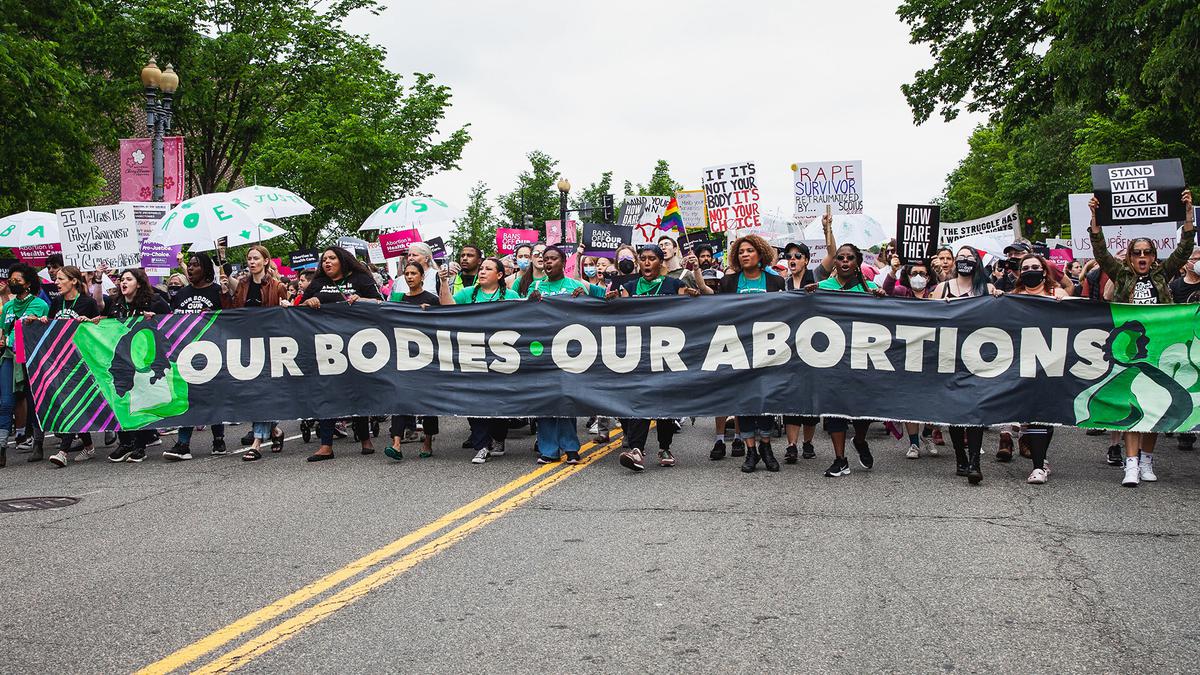

Through this ruling, the Supreme Court will force an unknowable number of people to choose between either traveling hundreds or perhaps thousands of miles for care, or remaining pregnant.

Make no mistake: This decision goes beyond abortion. This wrongful ruling is about power and control. What rights will this court take away next? Who has power over you, who has the authority to make decisions for you, and who can control how your future is going to be? It goes against the will of the American people and overturns nearly 50 years of precedent.
A Shameful Day

We’re outraged — and ready to fight like hell.
Everyone’s body is their own, and theirs alone. You must have the freedom and power to control your body and life. That means no judge, no politician, no ban should ever block your personal medical decisions or set the course for your life. Abortion access should not be based on your ZIP code, income level, or immigration status.

Abortion bans do the most harm in Black, Latino, and Indigenous communities and other communities of color, which already face barriers to health care and economic opportunity because of this country's legacy of systemic racism and discrimination. The court's ruling will add further insult to health disparities that have long plagued too many communities.

We’re Fighting Back
We vow this: The Supreme Court’s shameful decision won’t stop us. We will rebuild and reclaim the freedom that is ours.

It’s already crystal clear that these politicians plan to completely end access to abortion, one state at a time. For decades, narrow-minded politicians have built a coordinated strategy toward this moment. And politicians aim to outlaw abortion across the United States, no matter where you live. Texas and Mississippi are just the opening fronts in a campaign to destroy abortion access across the country.

Generations before ours fought tirelessly to gain and protect our rights. With this ruling, the next generation will have fewer rights — unless we fight on. Every day in every way, all of us must stop at nothing to make sure people have access to the essential health care they need to control their bodies and build their futures.

This is far from over. We have strength in numbers and power in our united voices.

Tuesday, September 7, 2021

Nicolle Wallace blasts ‘gender apartheid’ in Texas

From the Raw Story -
MSNBC's Nicolle Wallace slammed an anti-abortion law passed by Texas Republicans after the United States Supreme Court refused to block the law in a decision released overnight. Wallace said "everything has changed" after the court decision.

"The U.S. Supreme Court, in a 5-4 decision, for all intents and purposes has green lit the reversal of Roe v. Wade, not just in Texas, but potentially all across this country," Wallace reported. "In refusing the block the draconian, near-complete ban in Texas, the Supreme Court has signaled its approval for what is the most restrictive abortion law in the country."

Wallace put the Texas law in context as part of a larger effort to restrict women's rights in red states.  "The court's decision last night is part of a larger battle playing out all across the country right now. If you didn't already know, now you do. 97 laws restricting abortion have been passed in 19 states since January of this year in what is the biggest wave of abortion restrictions since Roe v. Wade was decided in 1973," Wallace noted.

The host described the law as "medieval state of affairs" and said "it feels like gender apartheid on the medical front for women."

read more here @ Raw Story

Saturday, December 12, 2020

Abortion and Contraception in the Middle Ages

Today, conversations around abortion in modern Christianity tend to take as a given the longstanding moral, religious and legal prohibition of the practice. Stereotypes of medical knowledge in the ancient and medieval worlds sustain the misguided notion that abortive and contraceptive pharmaceuticals and surgeries could not have existed in the pre-modern past.

This could not be further from the truth.

While official legal and religious opinions condemned the practice, often citing the health of women, a wealth of medical treatises produced by and for wealthy Christian women across the Middle Ages betray a radically different history—one in which women had a host of pharmaceutical contraceptives, various practices for inducing miscarriages, and surgical procedures for the termination of pregnancies. When it came to saving a woman’s life, Christian physicians unhesitatingly recommended these procedures.


read more here @ Scientific American


Saturday, May 6, 2017

Birth Control and Abortion in the Middle Ages

The use of birth control and abortion have a long history, and a long history of being contentious. The idea that pregnancies can be prevented or stopped has raised ethical and moral issues, and, like today, in the Middle Ages you will find many opinions about what should or shouldn’t be done. However, the medieval period might be unique in that it is perhaps the only time when you can read the same author in one work condemning the use of birth control and in another giving directions on how to use it.


In the end, much of the knowledge about birth control practices in the Middle Ages is lost to history – these were issues that women had to deal with on their own, and they could usually only turn to other women for help and guidance. Some could try a medical treatment that had limited chances of success, but many would have realized that an unwanted pregnancy was something that had to be managed and/or hidden. The fate of children born in this way varied – some might have been placed in the care of another family or given to a monastery, but others might also be killed and disposed of. It may have been that in the Middle Ages the most dangerous time for an unwanted child was just after birth.

read entire article here @ Medievalist 

read also "Abortion in the Middle Ages c500 - 900" by Zubin Mistry

Thursday, June 21, 2012

Beware The "Medicine Man"

From CBN:
Every 12 seconds, a baby girl is aborted in India. That's about 7,000 girls killed every day just because they are females. 

The United Nations now calls India the most dangerous place on earth for a girl. So why are these parents taking such action? 

CBN News went searching for answers in a remote village of Rajasthan in northeast India. In rural villages and big cities, millions of families are turning to men like Kilash Boria to help eliminate their girl children. For more than two decades, Boria's father was known around Rajasthan as the medicine man. He created a secret brew that he'd give to pregnant women to help abort their babies. 

Abortion is legal in India. Sex-selective abortion, however, is illegal but widely common. The impact is devastating, with census figures showing the child sex ratios getting worse. In 2001, there were 927 girls for every 1,000 boys. Now the girls in that ratio are down to 914. In some parts of the Indian state of Punjab, the ratio is as low as 300 girls.

Sunday, September 18, 2011

Text Reminders for Abortions

Disturbing article from the Telegraph:
Britain's largest abortion provider said it is introducing reminders because some girls and women had forgotten about their procedures.

Critics said the move, by the British Pregnancy Advisory Service (BPAS), gave a disturbing insight into casual attitudes to abortion.

BPAS, which carries out almost one third of NHS-funded terminations, likened the service, which begins in November, to reminders sent out by dentists before check-ups.

MPs and pro-life groups accused clinics of trivialising serious decisions. Dr Peter Saunders, Chief Executive of the Christian Medical Fellowship said the text reminders would exert pressure on women uncertain about whether to go ahead with an abortion.

"If you have got an unplanned pregnancy and you are in a crisis you would think it would be at the forefront of your mind," he said.

Meanwhile, those women who were agonizing about whether to go ahead with a termination, could feel pressured to go ahead because of the texts, he said.

Saturday, October 2, 2010

4000 Years of Choice

The imagery that springs to mind when we think about abortion is typically pretty bleak. Coat hangers, screaming protesters, and other symbols of struggle and tragedy have come to be associated with the evolution of reproductive rights.

4000 Years for Choice works to transform this narrative from cautionary and solemn to “personal, positive, and powerful,” with colorful posters celebrating various milestones in the age-old effort to prevent and terminate pregnancies. And for those who mistakenly think that controlling reproduction is strictly a modern issue relevant only in this post-Roe v. Wade era, the 4000 Years for Choice timeline, which begins around 3000 BCE, provides a thoroughly enlightening history of abortion and contraception. Artist and creator Heather Ault says the three goals of the project are to produce broader symbols of choice, illustrate the natural role of reproductive control in all previous societies, and celebrate and reclaim the women’s health clinics around which much of the modern abortion debate is centered.

Saturday, March 27, 2010

Kenya: Women & Abortion

From CNN News:
Women are being forced into backstreet abortions in Kenya because of the country's restrictive abortion law, a study says.

And the law could soon get even tougher with church groups urging a ban on almost all abortions.

The U.S.-based Center for Reproductive Health, which advocates abortions rights, found that women and girls in Kenya use metal wires, knitting needles and other unsafe practices to abort tens of thousands of unwanted pregnancies.

Musya said fetuses are dumped in the sprawling Kibera slum. She said that every week they find aborted fetuses in one garbage-filled stream. They wash away or get eaten by pigs, she said.

The report says that Kenya's current confusing abortion law forces women to the backstreets.

So in Kibera, where shacks are packed together on a warren of garbage strewn streets, they search out abortionists.

Now church groups in Kenya are pushing for the new constitution, coming up for a parliamentary vote soon, to make almost all abortions illegal. The church groups want to define 'life as starting at conception,' and heavily restrict abortion except for cases where a mother's life is in immediate danger.

Tuesday, October 20, 2009

Abortion: The True Cost

From Medical News Today:
"70,000 Women Die Annually From Unsafe Abortions, Guttmacher Study Finds"

Increased contraception use has contributed to a decline in global abortion rates, but unsafe abortions continue to kill 70,000 women and girls annually, according to a report issued Tuesday by the Guttmacher Institute, Reuters reports. The number of abortions decreased from about 45.5 million in 1995 to 41.6 million in 2003, a period during which many countries relaxed restrictions on the procedure, the report said (Kelland, Reuters, 10/13). The global abortion rate declined from 35 abortions for every 1,000 women of reproductive age -- ages 15 to 44 -- in 1995 to 29 per 1,000 women of reproductive age in 2003, according to the report (Feldmann, Christian Science Monitor, 10/13). In addition to the thousands of deaths from unsafe abortions, five million women experience complications from unsafe procedures each year, including about three million who go untreated (Guttmacher Institute release, 10/13).

According to the report, 40% of women live in nations with highly restrictive abortion laws (Reuters, 10/13). The report found that 19 countries have "significantly reduced restrictions in their abortion laws" since 1997, and three countries have "substantially increased legal restrictions," the Christian Science Monitor reports. Ninety-two percent of women in Africa live under highly restrictive abortion laws, while the figure is 97% in Latin America, the Monitor reports (Christian Science Monitor, 10/13).


Spain: Abortion Protests

From Associated Press:
Hundreds of thousands of people took to the streets of Madrid Saturday to condemn plans by Spain's socialist government to liberalise abortion laws in the overwhelmingly Catholic country.

In warm autumnal sunshine, protesters staged an early evening march across the city behind a huge banner reading "Every Life Matters" to protest the plan, which would allow girls of 16 to undergo abortions without their parents' consent.

The crowd, which included many families and people of all ages, rallied in the central Plaza de Independencia, where pop music blared over loudspeakers and 300 white helium balloons were released.

The proposed abortion law, approved by the cabinet last month, would allow the procedure on demand for women of 16 and over up to the 14th week of pregnancy, and up to 22 weeks if there was a risk to the mother's health or if the foetus was deformed.

Women could also undergo the procedure after 22 weeks if the foetus had a serious or incurable illness.

Spain decriminalised abortion in 1985, a decade after the death of right-wing dictator Francisco Franco, but only for certain cases: up to 12 weeks of pregnancy after a rape; up to 22 weeks in the case of malformation of the foetus; and at any point if the pregnancy represents a threat to the physical or mental health of the woman.


Wednesday, September 30, 2009

Abortion - and Medication

From the Korea Times:
Many pregnant women make the hasty decision to have an abortion because of medication they were taking when they became pregnant.

The practice is often based on unfounded fears that the medicine could lead to fetal deformities, says Dr. Kim Tae-yoon, head of the gynecological department of Miz Medi Hospital.

"Though doctors assure them that most of the drugs are okay and recommend them to keep the baby, they just ask for the procedure," he said.

Kim's remarks came in response to the Korea Food and Drug Administration's report that about 96,000 women, 10 percent of pregnant women, were having abortions for drug-related reasons each year.

These women say they were unaware of their pregnancy when they were medicated and want to err on the side of caution by having the procedure.

Most had taken weight-loss pills, painkillers, antibiotics, cough drops and anti-histamines.

Abortions are a serious social issue, with the number of procedures reaching 339,818 in 2005. Professor Kim Hae-jung of Korea University said that one out of every five fetuses conceived in Korea is aborted. This rate is nine times that of the United States and 2.5 times that of Japan.

Monday, September 28, 2009

Aborting Women's Rights

From Carolyn Cooper @ Jamaica Gleaner:
"If men could get pregnant abortion would be a sacrament." This famous feminist prick (as in sharp point) goes straight to the heart of the current debate about parliamentary reform of Jamaica's backward laws on abortion. The reproductive health and rights of women are not taken seriously in much of the talk on this inflammatory subject.

Instead, male authority figures (and their female surrogates) pontificate on a pregnant matter about which they simply cannot speak authoritatively. Who feels it knows it, intimately. It is true that there are enlightened men who try to understand this contentious issue from the woman's perspective. But they are relatively few.

Data from the Ministry of Health confirm that approximately 1,200 women are treated each year for complications arising from unsafe abortions. And those are just the official figures. In the 21st century, women in Jamaica are still risking their lives in order to claim reproductive rights that women in other countries simply take for granted.

Wednesday, September 9, 2009

Yakina: Womens' Clinic Turns 30

Article by Leah Beth Ward of the Yakima Herald Republic as reported in the News Tribune:
Beverly Whipple and Deborah Lazaldi
opened the Feminist Women's Health Center in Yakima [in 1979], which has been operating ever since, surviving the violence and turmoil of the anti-abortion movement at its height from the late 1980s to the mid-'90s.

Now in its 30th year of operation, the original clinic and two others in Renton and Tacoma operate under the umbrella of Cedar River Clinics, providing safe abortions, birth control services, testing and treatment of sexually transmitted diseases and Pap smears to about 11,000 visitors a year. The Yakima clinic provides approximately 1,000 to 1,200 abortions per year.

Friday, January 23, 2009

Roe V Wade

Yesterday marked the 36th anniversary of the historic Roe V Wade.

From the Examiner:
"Americans have witnessed a historic week as President Barack Obama became the first African-American U.S. president, and the celebration continues as today marks 36 years of Roe v. Wade, the landmark 1973 decision that recognized a woman's constitutional right to abortion.

Some view this reproductive day of emancipation as an opportunity to further their agenda to impose their view that women’s bodies belong under the jurisdiction of government. Pro-choice Americans believe that abortion should be safe, legal and rare; and a private matter between a woman and her medical provider.

Over the last several years, access to abortion has been restricted or made more difficult by many new state laws. These include requiring expensive ultrasound tests; mandated waiting periods that increase the cost of the procedure; parental involvement requirements; and targeted regulation of abortion clinics that make operations costly and difficult. Other state efforts, such as those designed to establish fetal personhood, are intended to create a test case for the Supreme Court to use in overturning or further limiting Roe."