Saturday, December 12, 2020

BC names new Calderwood University Professor in Islamic and Asian Art

Emine Fetvaci, a prominent scholar and accomplished teacher whose research areas include the arts of the book in the Islamic world, and Ottoman, Mughal, and Safavid art and architecture, has been appointed to Boston College’s Norma Jean Calderwood University Professorship in Islamic and Asian Art, effective January 1, 2021.
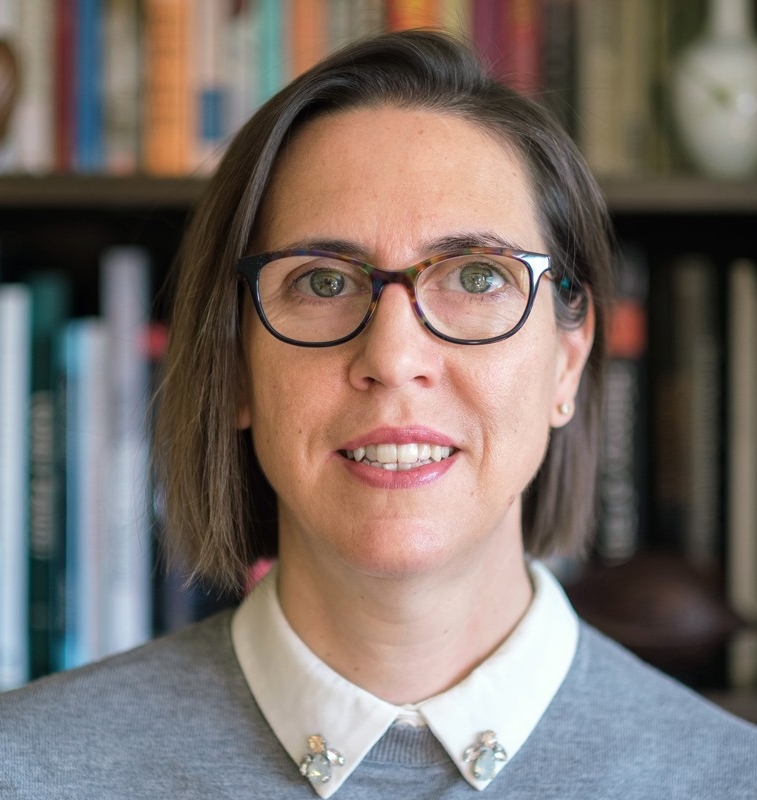
Emine Fetvaci

Emine Fetvaci (Daniel Star)

"Emine Fetvaci is one of the world's leading scholars of Ottoman painting, and she is playing an important role in redefining Islamic art history by exploring Islamic art in conversation with a broader early modern world,” said Boston College Morrissey College of Arts and Sciences Dean Gregory Kalscheur, S.J.

“She brings to Boston College both this scholarly expertise and a deep commitment to formative liberal arts teaching. I am delighted that she will be joining us as the Calderwood Professor of Islamic and Asian Art."

read more here @ Boston College


Four leading female academics enter race to become Trinity provost

Four leading female academics have put their names forward for the position of provost of Trinity College Dublin.

Prof Linda Doyle, former dean of research; Prof Linda Hogan, former vice-provost; Prof Jane Ohlmeyer, professor of history and chairwoman of the Irish Research Council; and Dr Sarah Alyn-Stacey, associate professor in French, have all confirmed to colleagues that they have applied for the position.

Provost Patrick Prendergast is due to finish his 10-year term on July 31st, 2021, and the next head of Trinity will take over the following day.


The identity of any other applicants is unknown as the initial interview process is confidential.

However, the number of senior female academics who have entered the race raises the possibility that Trinity could have its first female provost in its 428-year history.

Applications for the position of provost closed at midday on Friday, and initial interviews will take place during December and January.


read more here @ Irish Times

Abortion and Contraception in the Middle Ages

Today, conversations around abortion in modern Christianity tend to take as a given the longstanding moral, religious and legal prohibition of the practice. Stereotypes of medical knowledge in the ancient and medieval worlds sustain the misguided notion that abortive and contraceptive pharmaceuticals and surgeries could not have existed in the pre-modern past.

This could not be further from the truth.

While official legal and religious opinions condemned the practice, often citing the health of women, a wealth of medical treatises produced by and for wealthy Christian women across the Middle Ages betray a radically different history—one in which women had a host of pharmaceutical contraceptives, various practices for inducing miscarriages, and surgical procedures for the termination of pregnancies. When it came to saving a woman’s life, Christian physicians unhesitatingly recommended these procedures.


read more here @ Scientific American


Thursday, November 26, 2020

Scotland becomes first nation to provide free period products for all

Scotland has become the first country in the world to provide free and universal access to period products after a four-year campaign that has fundamentally shifted the public discourse around menstruation.

The Period Products (Free Provision) (Scotland) Act, which passed unanimously through its final stage on Tuesday evening, will place a legal duty on local authorities to make period products available for all those who need them, building on the work of councils like North Ayrshire, which has been providing free tampons and sanitary towels in its public buildings since 2018.


Period poverty – the struggle to pay for basic sanitary products on a monthly basis – has surged during the coronavirus pandemic, according to charities.

Earlier research by the grassroots group Women for Independence revealed that nearly one in five women had experienced period poverty, which has a significant impact on their hygiene, health and wellbeing. Women are estimated to spend an average of £13 a month on period products and several thousand pounds over a lifetime.

The legislation will also enshrine in law the requirement for schools, colleges and universities to provide the products for free, which was announced by first minister, Nicola Sturgeon, in 2017. This was then a world first, while the Scottish government has also funded a project in Aberdeen to deliver free period products to low-income households as well as a further £4m for councils to continue the roll-out to other public places.

In the interim, a number of individual businesses – restaurants, pubs and even football clubs – started providing free products independently. It has become increasingly common in Scotland to walk into a women’s toilet and find free products by the sinks, or with an honesty box.

read more here @ The Guardian

Sunday, November 15, 2020

The True Story of Rose Dugdale - The Woman Who Stole Vermeer

From CrimeReads:
When Rose Dugdale became international news in the mid-1970s, she emerged as an emblem of the times. Fiery, bold, and brash, she defied the conventions of her birth and of her gender in everything from action to attire. At the same time, she was generous, articulate, and unquestionably bright. Her criminality, combined with her lineage, her degree from Oxford, and her doctorate in economics, made her a curiosity to journalists not only in Ireland and Britain but in North America as well. She was media gold, having abandoned a life of wealth and leisure to take up arms in operations that would almost certainly, if not intentionally, lead her to prison.


Dugdale was also a radical, not just politically but criminally. No woman before her or since has ever committed anything resembling the art thefts for which she served as mastermind, leader, and perpetrator. For these and other crimes, she carries no regrets or remorse and offers no alibis. The ethical decisions she made during her life were her own, formed after years of intense study in universities and on the ground, from Cuba to Belfast.

Hers was an age of conflict. The antiwar movement, assassinations and riots in the United States, massive student protests in major cities in Europe, civil wars from Guatemala to Ethiopia, a recent revolution in Cuba, a coup in Portugal, and the Troubles in Northern Ireland— these were the fires burning around the world, and she studied all of them.

Her unbridled zeal for her causes was the topic of countless contemporaneous journalistic opinions, and they typically lay somewhere on a continuum, with “Reluctant Debutante Rebelling against Her Parents” at one end and “Poor Little Rich Girl Radicalized by Her Boyfriend” at the other. In fact, neither of these is completely accurate. Yes, there are elements of rebellion against her parents’ wealth, and it is indeed correct that her militancy intensified while she was with boyfriend Walter Heaton, but the truth is that her convictions were the result of her own studies, her own mind, and her own soul. Rose Dugdale was her own person—not her parents’, not Heaton’s, and not the IRA’s.


read more here from Anthony Amore @ CrimeReads

Thursday, October 29, 2020

Lady Judith Montefiore: A Brief History

It was, in the words of Charles Dickens, “The best of times and the worst of times.” While revolution and political strife roiled Continental Europe, Britain in the 1780s and beyond was home to progressive social change, and to a growing community of educated, cultured Jews who flocked to England.

This group of highly educated, ambitious Jews called themselves the “Cousinhood” – brilliant Jewish families who built empires of business and service, married into each other’s families and created a new, vibrant Jewish community. One of the most prominent of these immigrant Jews was the Dutch-born Levi A. Barnet Cohen who moved to London in the 1770s and eventually became one of a dozen Jews newly elected to Parliament, without compromising his Orthodox Jewish faith. He married a brilliant Jewish woman named Lydia and together they raised an observant Jewish family. Their daughter, Lady Judith Montefiore, became a great – and little known – patron of Jewish life.

Judith used her wealth to support poor Jews, helping build the Jewish Ladies’ Loan and Visiting Society, a Jewish orphanage in London, and educational programs for girls at Jews’ Hospital. Moshe also rose in British society. He was knighted in 1837 (Judith gained the honorific Lady then); that year he was also elected the Sheriff of London – only the second Jew ever elected to that post. Yet despite the Montefiore’s high social position, they were dogged for years by anti-Semitism and snide anti-Jewish remarks.

read more here @ aish dot com

Sunday, October 18, 2020

Local Mexican folk artist honors murdered or disappeared women

From SWNews4U:
Artist Gabriela Marvan’s ‘Dia de los Muertos’ (Day of the Dead) exhibit at VIVA Gallery in October is dedicated to the “souls of the 10 women who are killed or disappear each day in Mexico.” 

Gabriela Marvan is part of a collective of Mexican artists, which formed in the midst of the COVID-19 pandemic to face their struggles together.

“The origin of this idea began when I realized that my artist friends in Mexico were struggling with the pandemic situation. I know how talented they are, and I know that the world would be interested in knowing more about their art. Our goal with this collective is to develop a connection between the Mexican folk artists living in Mexico and the Mexican folk artists living in USA, empowering our art through sharing our process, our towns, our inspiration.”


Was Senenmut Queen Hatshepsut’s Secret Lover?

Was Senenmut Queen Hatshepsut's Secret Lover?Hatshepsut had a glorious reign over Egypt, but her personal life did not seem as glorious. She never mentioned her husband after he died, and she became the king. Her daughter, Neferu-Re died when she was a teenager, and her name was erased from her temple by Tuthmosis III to show that he was the legitimate king, like his father and grandfather. Did she get in a secret relationship with Senenmut to compensate for all this?

Senenmut was a wealthy commoner, an overseer of works, and the tutor of Neferu-Re. Many believed that he was the secret lover of Queen Hatshepsut as well, judging by the graffiti on a wall: the female pharaoh being made love to by an overseer. Widowed women in ancient Egypt did not remarry, but it did not mean they could never fall in love again.


read more here @ The Great Courses Daily

Footprints tell story of woman carrying toddler while dodging sabre-toothed cats

Locally known as "ghost tracks" because they can only be seen under certain weather conditions, the adult tracks were first discovered in 2017, followed by the child's.

The prints tell the remarkable story of a woman and a small child as they made their way across the mudflats with large predators crossing their path.

An analysis found the woman was moving at a rapid pace, intermittently carrying and putting down the child.

Incredible details of 10,000-year-old trek revealed in fossil footprints

On the outward journey, her prints show that she was slipping, suggesting conditions were wet and treacherous. But on her return, following the same path almost exactly, she was alone and no slipping marks were detected.

read more here @ The Telegraph