Tuesday, November 10, 2015

Joan of Arc – A Behind the Scenes Exclusive - Idol Chatter

Joan of Arc is a holiday season special airing on BYUtv on Thanksgiving, November 26 at 6 PM MT with rebroadcasts throughout the holiday season. It includes dramatized scenes of Joan’s life, filmed on location in France, and interviews with scholars and experts. The film is based on the true story of the courageous Joan of Arc. She heard a voice, was given direction and from there she forges forward with a journey.

Could a nineteen-year-old girl change the course of history simply by faith? From ordinary farm girl to extraordinary hero, the life of Joan of Arc was one of conviction and courage. Fifteenth-century France was devastated by an ongoing war in which women did not fight. Yet Joan heeded the counsel of angels and transformed into a military leader – something her country needed but many feared. In this BYUtv original special, discover the stalwart spirit, military prowess, and enduring influence of Joan of Arc.


Review: Stacy Schiff’s The Witches By John Semley

Review: Stacy Schiff’s The Witches is a nimbly woven tapestry - The Globe and Mail

The Witches is a book as sensitive to the practicalities and banalities of the colonies as the grander intellectual and religious forces that conspired to propel one of America’s earliest, most memorable and vicious ordeals. Like all historical traumas, the Salem trials linger in the imagination because they seem like nothing less than the structural collapse of the whole project of humanity; a failure of civilization itself. The evil that men do has a way of diabolically disguising itself in the trappings and suits of logic, reason and civility. But, in the end, such twisted, toxic rationales jury-rigged to justify barbarism, cruelty and the highest forms of inhumanity amount to just so much proverbial duck-weighing.

Tuesday, November 3, 2015

Judean Seal In 2,000-year-old Russian Warrior Woman’s Grave

A spectacular find was made near the Black Sea this summer: Excavating the 2,000-year-old grave of a Sarmatian noblewoman, which miraculously hadn't been looted, the archeologists found a wealth of artifacts – including a carnelian seal with ancient Hebrew letters, centuries older than the tomb.

The woman's grave, located at Rostov-on-Don, was replete with burial offerings. The items, dating from the 1st century BCE to the 1st century AD, included wooden dishes and a cup lying by her right hand. By her feet were pieces of a bronze bucket with a floral design and a ladle with the head of the Gorgon, and by her pelvis was a gold vial with a lid and fossilized contents. Four clay vessels were found in the northeast corner of the tomb, as well as knives, over a hundred arrows and a harness, and an unfinished sword with an intricate handle inlay.

2,500-year-old female Siberian warrior is beheaded by excavator

An ancient wealthy young woman was found laid to rest with her horse and weapons by workers who accidentally dug up her burial mound.  
The excavator smashed the prehistoric ceremonial burial chamber in the Altai Mountains, wrecking the grave of a suspected the grave of a suspected 16 to 20-year-old combatant from the colourful Pazyryk culture. 
Local culture heritage official Dr Vasily Oinoshev said: 'Only the human head and upper part of the horse remained intact in the burial ground. Unfortunately, the rest was destroyed by heavy machinery. 
'Apparently, this was a young woman, judging by the teeth. All of them are intact and in good condition. We attribute her to Pazyryk culture, and we have preliminarily dated the burial as being 2,500 years old.'

Monday, September 28, 2015

Indigenous Women In Bolivia Use Ancient Knitting Skills To Weave Devices For Congenital Heart Disease

To help the growing number of children born with heart defects, indigenous Bolivian knitters are putting their age-old craft to a more modern use. The Aymara women, who have been knitting intricate and distinct hats, sweaters, and blankets for centuries, are now using their skill to produce an innovative medical product that can seal holes in a baby’s heart.

The device, called Nit-Occlud was developed by cardiologist Dr. Franz Freudenthal. After setting up a clinic in La Paz for children with heart defects, Freudenthal knew he must develop a simple, inexpensive solution to help treat more patients. The occluder, the device's more common name, looks like a top hat and can be inserted into the heart without surgery to help fix the problem.

Tuesday, September 22, 2015

Glamour charts the evolution of the bra over the past 500 years in 2 minutes | Daily Mail Online

Whether they were meant to flaunt your breasts - or hide them - the first bras date back to ancient times, and like most fashions, they reflect the social and economic changes of that era. 

Today women have the option of pushing-up, covering-up, and everything in between, and a new video created by Glamour charts the evolution of the bra over the past 500 years. 

Beginning with the constricting mamillare from the Roman Empire and ending with a hypothetical design meant for robots in 2100, the clip highlights the prominent styles and history of the bras that debuted in various eras.

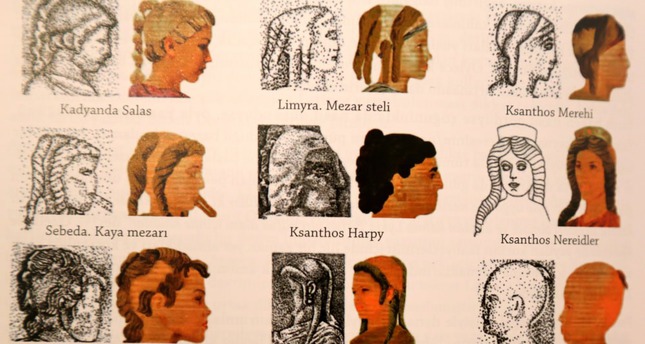
Women hairstyles were more extraordinary in ancient times

An archaeological team examining archaeological findings discovered ancient hairstyles. Reliefs found on rock tombs reveal the extravagant braided hairstyles of women living 2,400 years ago, which by today's standards might be considered strange. Professor Nevzat Çelik of Akdeniz University Archaeology Department said it is possible to understand the lifestyle of people living during this time by examining ancient buildings and artifacts found in Lycian tombs. Following a comprehensive study, the team found new information about Lycian lifestyles and social hierarchies.

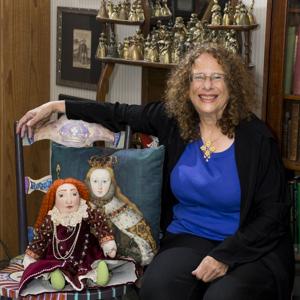
Carole Levin: A 'queen' of sorts in her medieval scholarship

Carole Levin is one of those people who seems to bring light into the room when she enters.

“Ph.D.,” “medieval” or “historical scholar” are not words likely to race to mind upon meeting her. With her radiant smile and youthful springy hairdo, one might not peg her as a Willa Cather professor of history at the University of Nebraska-Lincoln for the past 13 years or director of the Medieval and Renaissance Studies Program for the last seven. But she is both.

When she was a little girl growing up in the Chicago area, her father, who worked at an ad agency and taught college English, and her mother, who was an artist and homemaker, made sure she and her three sisters got to the public library. During a weekly visit when she was 10 years old, she found a book about one of the world’s greatest monarchs, England’s Queen Elizabeth I, who ruled alone from 1558 to 1603. Years later, she says, “Elizabeth Tudor is a woman who captures the imagination and does not let it go.”

Rediscovered cast skull of "father of English history"

Thieving monks and cathedral tombs: Rediscovered cast skull of "father of English history" could solve medieval burial mystery | Culture24
A Leicester academic says she has rediscovered the cast of the skull of The Venerable Bede – one of the most influential and idolised scholars in medieval Europe, known as the “father of English history" – in the anatomical collections of the University of Cambridge.

                                      
The front & back view of the cast of the skull of Bede, engraved V. Beda© J Story


The author of The Ecclesiastical History of the English People, which is regarded as perhaps the most important source for understanding early British history and the establishment of Christianity in England, was buried in a tomb in Durham Cathedral following his death in 735. But the location and authenticity of his skull has been the subject of fierce debate since the excavation of his venerated tomb by Dr James Raine in 1831, laying the bones out in a new burial in the Galilee Chapel at the cathedral’s western end.